Thomas Matthew Crooks was not a partisan zealot, but a consumer of high-profile vulnerability. New details from the FBI investigation, which concluded in late 2025, confirm that the 20-year-old gunman who nearly ended the life of Donald Trump in Butler, Pennsylvania, had spent months digitally stalking a wide array of federal targets. His browser history was a map of American power, featuring searches for President Joe Biden, Attorney General Merrick Garland, and FBI Director Christopher Wray. Even the British Royal Family, specifically Catherine, Princess of Wales, appeared in his search logs. This was a man shopping for a history-making moment, finally settling on the Butler Farm Show grounds because it offered the path of least resistance.
The traditional profile of an assassin—a radicalized loner with a clear political axe to grind—is becoming obsolete. Crooks represents a more erratic and dangerous evolution: the nihilistic opportunist. He didn't choose Trump because of a specific policy grievance. He chose the July 13 rally because it was a "target of opportunity," a phrase used by FBI officials to describe the intersection of his geographic proximity and the staggering security lapses that left a rooftop 450 feet from the stage completely unmanned.
The Digital Reconnaissance of a Nihilist
The investigative trail shows that Crooks began his descent into "attack planning" as early as 2019, focused primarily on explosives and the mechanics of mass casualty events. By the summer of 2024, his focus shifted to specific individuals. He wasn't just looking at Trump; he was tracking the schedules of both the Democratic and Republican National Conventions.
His search for "How far away was Oswald from Kennedy?" just one week before the shooting reveals a chilling focus on the technical execution of an assassination rather than its ideological aftermath. He was measuring himself against history’s most infamous snipers. This lack of a clear political motive has frustrated federal investigators for nearly two years. While the FBI discovered 17 different social media accounts linked to Crooks, they found no manifesto, no video confession, and no evidence of accomplices.
The Contrast with Florida
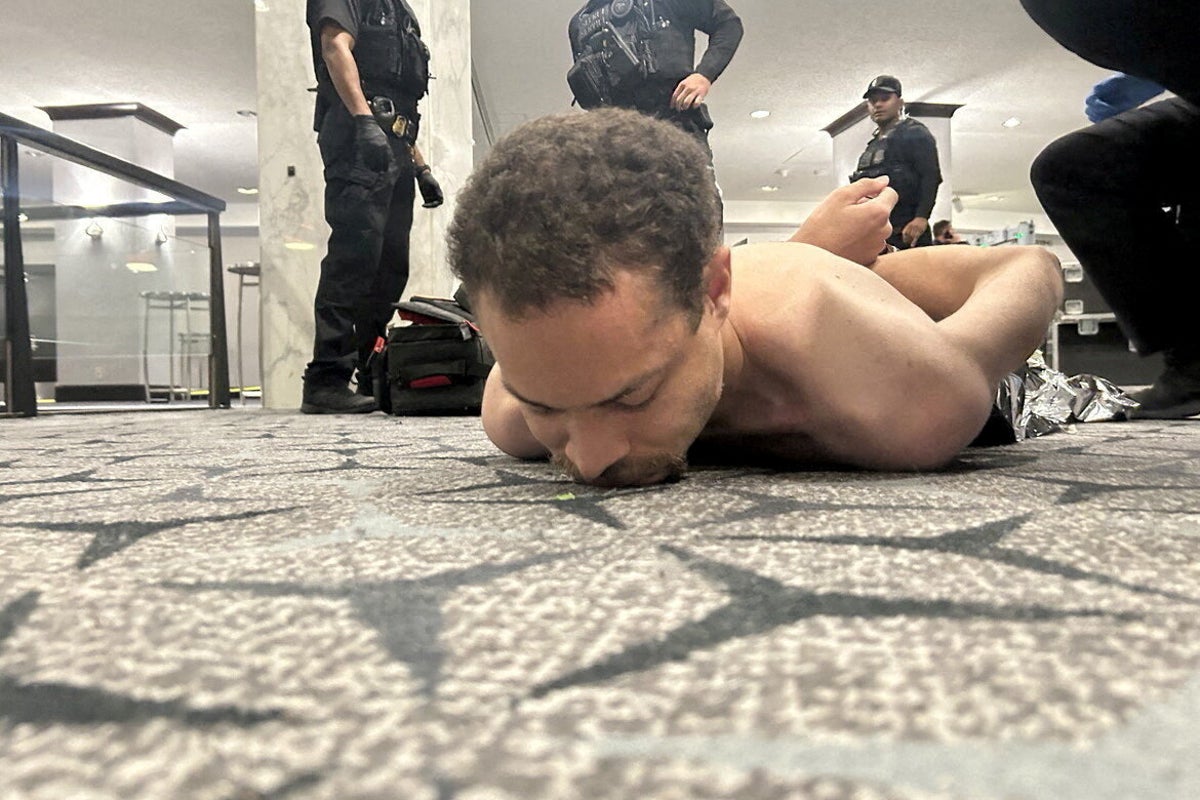
To understand why the Butler shooting happened, one must look at the second attempt on Trump’s life in West Palm Beach two months later. Ryan Wesley Routh, the man arrested at Trump International Golf Club, was the antithesis of Crooks. Routh was a vocal activist with a documented history of political obsession, specifically regarding the war in Ukraine. He left a letter explicitly stating his intent.
Crooks left nothing but a trail of data points. He was a dietary aide at a nursing home, described by neighbors as quiet and "normal." He was a registered Republican who once donated $15 to a progressive group. He was a member of a local shooting club who wore camouflage to school. These contradictions suggest a person who was not trying to save the country or change an election, but someone who viewed the American political theater as a stage for his own violent exit.
A Failure of Physical and Psychological Intelligence
The final reports from the House Task Force and the FBI highlight a catastrophic breakdown in the "closed-loop" security system that is supposed to protect presidential candidates. Local law enforcement had spotted Crooks more than 90 minutes before the first shot was fired. He was photographed, reported as suspicious, and seen with a golf rangefinder.
The most damning revelation is the "personnel shortage" that left the AGR building—the very roof Crooks used—completely empty. Police snipers were inside the building, but not on top of it. This gap provided the physical opportunity that matched Crooks' psychological readiness.
The Evolution of the Lone Wolf
Modern threats are no longer signaled by loud manifestos on public forums. They are buried in the banal daily habits of individuals who have become expert at hiding in plain sight. Crooks didn't have a criminal record. He had no documented mental health history. He simply had an AR-15-style rifle legally purchased from his father and the patience to wait for a gap in the perimeter.
The reality is that security protocols designed for the 20th century are struggling to keep pace with the 21st-century "threat of opportunity." When an attacker is motivated by the act itself rather than a cause, there is no ideological trail to follow. There is no radicalization pipeline to monitor. There is only the sudden, violent intersection of a broken mind and a broken fence.
The Butler assassination attempt was not a failure of imagination; it was a failure of the basics. It was the result of a shooter who realized that the most powerful people in the world are often protected by nothing more than a series of uncoordinated text messages and an empty rooftop. The investigation is closed, but the era of the opportunistic assassin has just begun. To prevent the next one, the focus must shift from searching for "why" a person might kill to "how" the environment makes it possible. Protection must be absolute, because for someone like Crooks, a 1% gap in the line is a 100% chance to change the world.