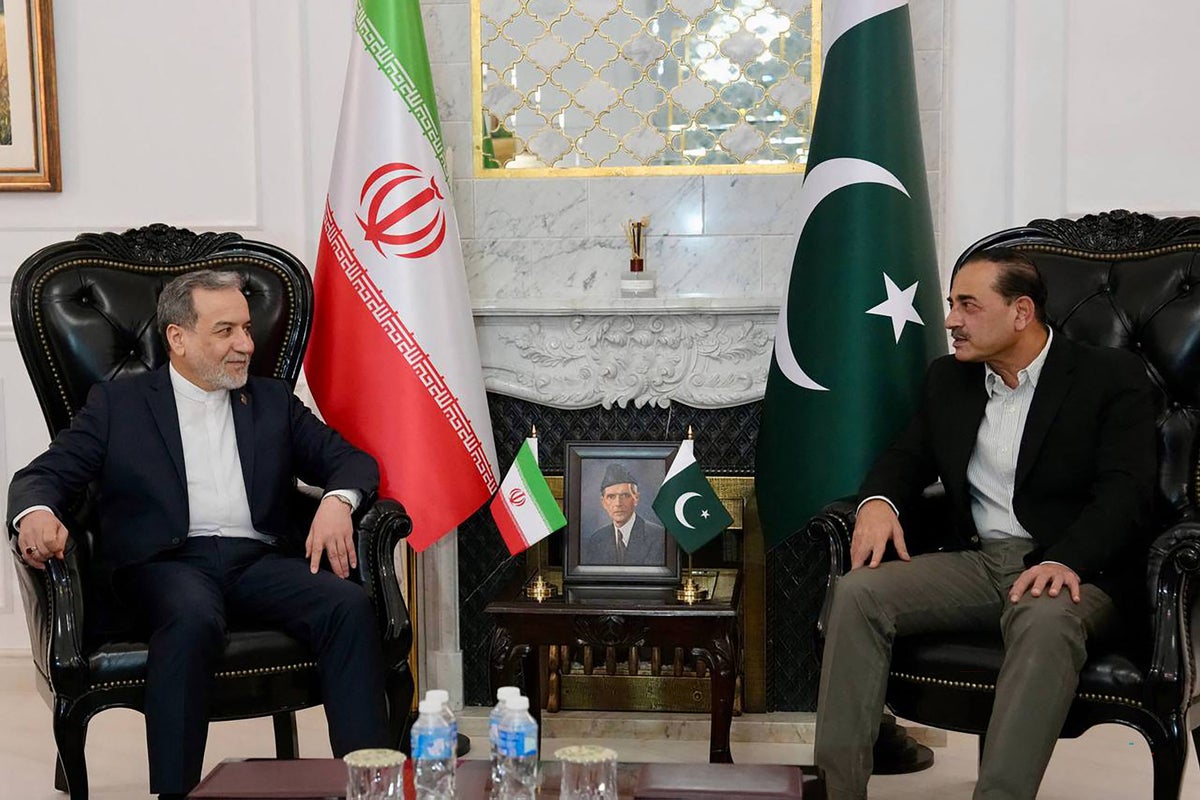
The plane was ready, the bags were likely packed, and the diplomatic world was holding its breath. Then, in a flurry of Truth Social posts and a quick chat with reporters in West Palm Beach, Donald Trump pulled the plug. Jared Kushner and special envoy Steve Witkoff aren't going to Pakistan. The high-stakes mission to negotiate an end to the two-month-old war with Iran is off—at least for now.
It's a classic Trump power move. He isn't just canceling a flight; he’s sending a message that the U.S. won't play the traditional diplomatic game. If Tehran wants a deal, they have to come to him.
The Art of the Blockade
The U.S. has spent the last several weeks tightening a literal and metaphorical noose around the Iranian regime. We aren't just talking about words or "strongly worded" memos. The U.S. Navy is currently enforcing a massive blockade in the Strait of Hormuz. CENTCOM recently confirmed that the USS Rafael Peralta and the USS Pinckney have been intercepting "shadow fleet" vessels, forcing them to turn back to Iranian ports.
War Secretary Pete Hegseth made the rules of engagement very clear: shoot and kill any Iranian fast boats attempting to mine the water or disrupt passage. This isn't a "wait and see" strategy. It's a "move and you're done" policy.
White House Press Secretary Karoline Leavitt says this pressure is working. She claims the U.S. is "strangling" the Iranian economy. From Trump's perspective, why send his top guys halfway across the world to sit in a room in Islamabad when he already has the leverage?
Why the Pakistan Trip Died
The plan was for Kushner and Witkoff to meet with Iranian officials in Islamabad, with Pakistan acting as the middleman. But Trump killed it for three blunt reasons:
- The "Inadequate" Offer: Trump says Iran sent a paper that wasn't good enough. Interestingly, he claimed that within ten minutes of him canceling the trip, a "much better" proposal suddenly appeared.
- Logistics and Cost: He explicitly complained about the time and expense. "Too much time wasted on traveling, too much work!" he posted. He's tired of his team spending 15 hours on a plane to get a deal that doesn't meet his standards.
- Iranian Infighting: This is the big one. Trump believes the Iranian leadership is in total chaos. He claims nobody knows who's in charge.
There's some evidence to back that up. Reports suggest Supreme Leader Mojtaba Khamenei is in poor health following war-related injuries, leaving a power vacuum. While Iranian President Masoud Pezeshkian tries to project a "unified front," the reality looks a lot more like a regime scrambling to figure out if it's "moderate" or "hardline."
The Nuclear Sticking Point
The war isn't just about fast boats and blockades. It's about the 440 kilograms of 60% enriched uranium Iran is sitting on. The U.S. is demanding an absolute end to nuclear enrichment and the surrender of that stockpile.
Iran's Foreign Minister, Abbas Araghchi, left Pakistan recently saying the U.S. isn't "serious" about diplomacy. But it's hard to be "serious" in a traditional sense when the other guy is telling you to just "call me" while his destroyers are parked in your front yard.
What Happens Next
The ceasefire is currently in an "indefinite extension," but it’s a fragile peace. Trump's "we have all the cards" approach is a gamble. He’s betting that the economic pain of the blockade will eventually force Iran to accept his terms without any more face-to-face meetings in neutral countries.
If you’re watching the markets, keep an eye on the Strait of Hormuz. Trump has already told other countries that rely on that oil to "grab it and cherish it," implying they should help secure it themselves. For now, the ball is entirely in Tehran's court. They can either keep trying to send "papers" through middlemen, or they can pick up the phone.
Immediate steps for regional stability:
- Monitor the Blockade: Watch for any IRGC fast boat activity in the Strait of Hormuz; this is the most likely flashpoint for renewed combat.
- Watch the "Shadow Fleet": Further seizures of Iranian oil tankers will signal if the U.S. is planning to escalate the "maximum leverage" campaign.
- Check for a "Direct Call": Any hint of a direct line between the White House and Tehran would mean the "call me" strategy actually worked.


