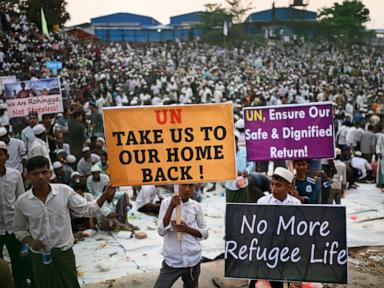
Every year, the press trots out the same comforting fiction. Officials in Naypyidaw announce hundreds of thousands of verified refugees ready for repatriation, human rights groups wring their hands over timing, and the international community nods along as if administrative checkboxes equate to structural safety. Nine years into this displacement crisis, the lazy consensus remains entirely intact: that the core problem is a bureaucratic logjam waiting to be cleared by bilateral paperwork.
It is a comfortable lie. It keeps donor conferences funded and diplomats employed. And it completely ignores the ground reality of what returning to Rakhine State actually means in the current century.
Let us dismantle the prevailing narrative piece by piece.
The Verification Trap
The entire architecture of the repatriation debate rests on the concept of verification. We are told that once lists are exchanged, fingerprint scans match, and identity documents are issued, the machinery of return can grind forward.
This is an administrative sleight of hand. Verification measures who exists on a spreadsheet, not whether their neighborhood has been bulldozed, militarized, or repopulated by proxy groups. Counting over three hundred thousand people as cleared for return without changing the security architecture they fled from is not diplomacy. It is statistical theater.
I have watched international bodies obsess over data reconciliation while ignoring the structural erasure happening on the ground. When you hand verification lists back to a government that still denies the fundamental citizenship and legal personhood of the population in question, you are not facilitating a homecoming. You are feeding names into a bureaucratic holding pattern.
The uncomfortable truth is that repatriation without civil rights is simply relocation into an open-air detention facility.
Why the Question of Timing Is a Red Herring
People ask: When will the conditions be right for return?
This is the wrong question entirely. It assumes a passive timeline, as if peace and security are weather patterns that eventually shift in your favor if you wait under an awning long enough.
Conditions in Rakhine State are not deteriorating or improving due to cyclical forces. They are the direct result of an ongoing civil war and a systematic state policy of demographic engineering. Asking when conditions will be right is like asking when a sinking ship will naturally stop taking on water without patching the hull.
The military junta currently clinging to power in Myanmar has zero strategic incentive to reintegrate hundreds of thousands of politically active, disenfranchised Muslims into a region it views as an existential security threat. Pretending otherwise requires a willful suspension of geopolitical disbelief.
The Myth of the Phased Rollout
Proponents of the official narrative love the phrase phased rollout. It sounds measured. It sounds like adult supervision in a chaotic room.
Imagine a scenario where you invite guests back into a house after burning down their rooms, replacing the locks, and installing hostile armed guards in the hallway. Then you suggest doing it ten people at a time so nobody notices the tension.
Phased repatriation in a conflict zone without rule of law is not a cautious strategy. It is a slow-motion containment exercise. The first waves become hostages to fortune, leveraged for international sanctions relief while the structural violence against the remaining population continues unabated.
The Economic Mirage of Camps Versus Integration
Another pillar of the conventional wisdom is that long-term refugee camp existence in Cox's Bazar is unsustainable, therefore any movement toward repatriation must be supported, regardless of quality.
Of course the camps are unsustainable. They are crowded, underfunded, and psychologically grinding. But the false binary presented to donors is insulting: accept unsafe repatriation or rot in tents forever.
This ignores the third option that nobody in diplomatic circles wants to fund or discuss: genuine local integration and legal empowerment within the host country, paired with regional labor mobility. Forcing a choice between two bad outcomes is a lazy way to manage a humanitarian portfolio.
When international organizations throw their weight behind voluntary return agreements that lack enforceable third-party monitoring, they are prioritizing diplomatic convenience over human survival. They want a closed file for their annual reports.
Dismantling the Aid Industry Comfort Zone
Let us be brutally honest about why this narrative persists. The humanitarian apparatus built around the refugee crisis has achieved a morbid sort of equilibrium. Agencies have budgets, researchers have data points, and diplomats have talking points for the UN General Assembly.
Admitting that bilateral repatriation agreements with a collapsed military regime are an exercise in cynical public relations would require tearing up decades of standard operating procedures. It would mean telling donors that their money has bought nothing more than expensive delays.
So the fiction continues. The numbers are published. The press releases go out. And another year passes while the people trapped in the middle wait for a reality check that the international community is too timid to deliver.
Stop pretending that counting heads solves a crisis of governance. Stop signing agreements that treat human beings as administrative inventory. Until the underlying architecture of apartheid and civil conflict is dismantled, every verified repatriation list is just a ledger of people being handed back to the fire.