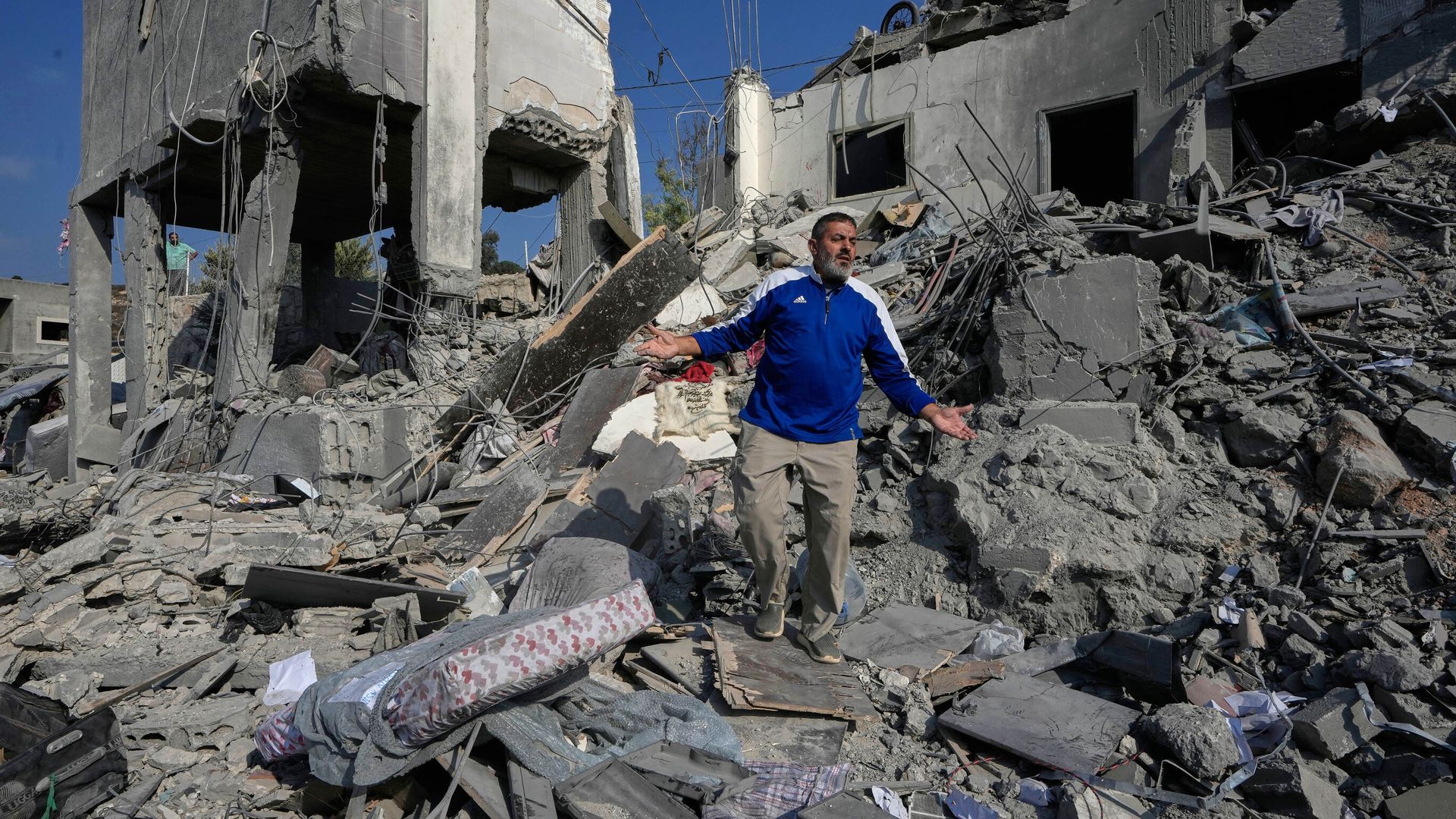
Headline news loves a tragedy packaged in clean, digestible binaries. Nine dead in Lebanon, including three children. The ticker tape rolls, the anchors adopt their grave expressions of institutional sorrow, and the public is funneled toward an inevitable, lazy conclusion: an unprovoked escalation of innocent lives snuffed out by uncaring machinery.
It is the oldest narrative trap in geopolitics. It relies entirely on stripping away context, operational reality, and strategic inevitability to sell outrage.
Let us be brutally clear about what is actually happening. Every time a strike hits a densely populated apartment block or a rural storefront in southern Lebanon, the knee-jerk media reaction treats the event as a isolated moral failing rather than the predictable mathematical outcome of a proxy war. For decades, non-state actors have integrated their military infrastructure into civilian population centers with cold, calculated precision. When you store precision-guided munitions in basements beneath residential apartments, you are not protecting families. You are using them as sandbags.
Yet the mainstream commentary refuses to address this structural reality. Instead, it feeds you a steady diet of moral equivalence. It asks you to look at the tragic toll on children and feel only righteous indignation at the trigger-puller, while completely erasing the strategist who placed the ammunition depot under a kindergarten.
I have spent years watching defense analysts and diplomats talk in circles about proportionality, ceasefire agreements, and de-escalation frameworks as if these tools operate in a vacuum of good faith. They do not. Appeasement does not buy peace; it buys a countdown timer to the next, larger catastrophe. When a sovereign state faces an adversary whose charter explicitly demands its destruction and which launches thousands of indiscriminate rockets across its borders, traditional rules of engagement cease to function.
The lazy consensus says that restraint is always a virtue and escalation is always a sin. That worldview sounds noble in a faculty lounge, but it gets people killed in the real world. Restraint in the face of an existential threat is not peace. It is slow-motion suicide. Every month that a terrorist organization is allowed to rebuild its tunnel networks, restock its missile arsenals, and calibrate its targeting systems under the diplomatic cover of a fragile status quo, the eventual cost in human life multiplies exponentially.
Let us dismantle the core falsehoods driving the current coverage of these strikes.
First, the myth of the accidental sanctuary. The conventional narrative treats southern Lebanon as a peaceful pastoral region suddenly disrupted by foreign aggression. The ground truth is entirely different. For years, entire villages have been converted into forward operating bases. Homes double as command posts. Olive groves conceal rocket launchers. When military assets occupy civilian infrastructure, that infrastructure loses its protected status under international law. Pretending otherwise is either a sign of profound operational ignorance or deliberate propaganda.
Second, the fantasy of diplomatic containment. We are constantly told that a diplomatic off-ramp is just around the corner if only both sides would talk. Talk about what? You cannot negotiate with an entity whose operational architecture requires perpetual conflict to justify its existence. Treaties require enforcement mechanisms. When one side violates every single agreement, weaponizes a civilian population, and answers restraint with increased rocket production, diplomacy becomes a stalling tactic for the aggressor.
Third, the distortion of proportionality. Critics love to point at casualty disparities as proof of moral turpitude. If one side suffers thousands of casualties and the other suffers few, the knee-jerk assumption is that the stronger force is committing atrocities. This is strategic illiteracy of the highest order. Air defense systems, bomb shelters, and early warning infrastructure save lives on one side, while deliberate human shielding and the absence of civil defense infrastructure multiply casualties on the other. Proportionality in war is not a scoreboard where you match body counts. It is a calculation of military necessity versus collateral damage. When an enemy embeds itself entirely within a civilian grid, every strike becomes a horrific trade-off forced upon the defending military by the aggressor's tactics.
The discomforting truth that nobody in the mainstream press wants to admit is that total deterrence is the only language understood in the region. Half-measures, pinpoint warnings, and calibrated responses only prolong the agony. They signal hesitation, and hesitation invites deeper aggression.
When you look at the nine dead in Lebanon, do not just look at the immediate tragedy of the moment. Trace the causal chain backward. Ask who brought the weapons into the neighborhood. Ask who chose to fire rockets from school yards. Ask who profits from the perpetual martyrdom of civilians.
Until we stop rewarding human shielding with diplomatic sympathy and stop punishing nations for defending their borders from extermination, the cycle will continue. The blood on those streets is real, but the narrative being sold to you about why it was spilled is a deliberate fabrication.
Stop buying the lie that self-defense is escalation.