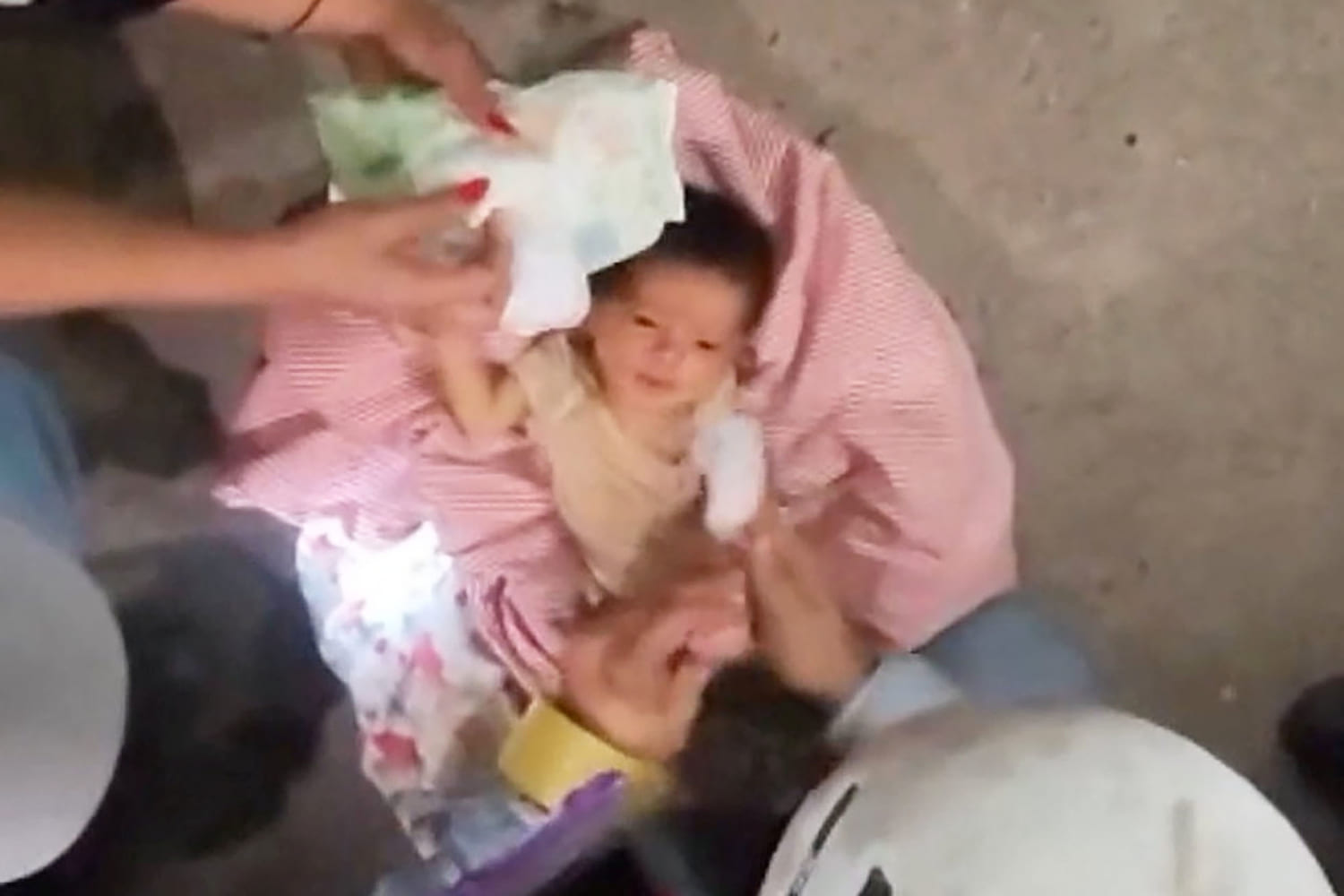
Dayana Patiño knew she had exactly one job. She had to keep her 18-day-old baby breathing. When twin earthquakes shattered northern Venezuela, flattening her eighth-floor apartment in La Guaira, she didn't let go of her son, Juan David Trujillo. They fell straight into a pitch-black pit of crushed concrete and dirt. They stayed there for 32 hours.
The viral footage of their rescue is tearing up the internet. It should. Amid a catastrophic disaster with a death toll hovering around 1,500 people and tens of thousands missing, this video isn't just a brief feel-good news clip. It's a stark look at raw human survival.
People are sharing the clip because they need hope. But if you look closer, the details of how this mother and child survived tell a much deeper story about human instinct and the sheer grit of first responders.
Inside the Thirty-Two Hours of Survival under the Rubble
When the 7.2 and 7.5 magnitude quakes struck, Dayana was doing the dishes. She thought it was a minor tremor. Within seconds, her world imploded.
She felt like she was flying, then sinking. She got slammed against furniture as the building pancaked. Somehow, her grip on her newborn didn't break. When the dust settled, she was trapped. A massive slab of concrete pinned her left leg. A rock pressed against her temple. She couldn't move an inch.
Most people would panic. Panic kills. Dayana didn't waste her oxygen. She screamed only when she heard footsteps or voices above her. The rest of the time, she focused entirely on her baby.
She later told reporters that her son gave her the motivation to stay alert. She kept touching his tiny nose in the dark. It was her only proof that he was still breathing. She also found a Bible crushed beneath her, which gave her mental strength when her body wanted to give up.
The Logistics of a Miracle Rescue
The rescue wasn't an accident. It required intense coordination under brutal conditions. Venezuela's infrastructure was already under massive strain before the disaster, making the response from emergency crews even more impressive.
First responders used specialized acoustic equipment to listen for signs of life beneath the ruins of the apartment complex. When they heard faint noises, they dug by hand and used light tools to avoid triggering another collapse.
They found the baby first. Workers carefully pulled 18-day-old Juan David from a tight gap in the debris. The video captures the exact moment rescuers passed the tiny infant down a human chain. Ninety minutes later, after hours of delicate digging to free her pinned leg, they pulled Dayana out alive.
Both were rushed to a clinic in Caracas. They are stable. It's a rare victory for search teams who are fighting a losing battle against the clock.
What This Means for the Ongoing Crisis in Venezuela
We can't ignore the grim reality surrounding this single survival story. The twin earthquakes have triggered the most brutal natural catastrophe in the country's recent history. Mortuaries in Caracas are completely overwhelmed.
Hopes are fading fast for the thousands of people still buried under collapsed homes. International aid crews are arriving, but the scale of the destruction is overwhelming. Landslides have cut off coastal towns like La Guaira, making it incredibly difficult to get heavy machinery into the hardest-hit zones.
This rescue shows why recovery teams refuse to stop digging, even when the odds look impossible. The human body can tolerate incredible trauma when survival instincts kick in.
If you want to help the relief efforts right now, look for international organizations on the ground providing direct medical aid and clean water to families in La Guaira and Caracas. Don't just watch the video and move on. The survival of Dayana and Juan David is a miracle, but thousands of others still need a hand to pull them out of the dark.