The asphalt on Sariab Road retains heat long after the sun dips behind the jagged mountains surrounding Quetta. It is a dry, suffocating warmth. But on this night, the heat did not come from the summer air. It radiated from the idling engines of police vans, the friction of heavy boots against pavement, and the collective breath of hundreds of people refusing to move.
A woman stood near the Burma Hotel, her head wrapped firmly in a traditional shawl. Let us call her Zarina. She is a fictional composite, but her face carries the very real exhaustion shared by dozens of women who gathered in the dust of Quetta. In her right hand, she gripped a cheap smartphone, its screen illuminated by a flurry of messages. In her left, she held the hand of her teenage daughter. They did not come to throw stones. They came to scream names that the state is trying to erase from the public ledger.
They came for Dr. Mahrang Baloch and Sibghatullah Shahji.
Just days earlier, an anti-terrorism court inside a high-security prison handed down life sentences to these two prominent leaders of the Baloch Yakjehti Committee (BYC). The official state charge was severe: terrorism, sedition, and the murder of a paramilitary soldier during a massive rally in the port city of Gwadar back in 2024. The prosecution argued that Mahrang used her speech to incite a mob to beat the soldier with sticks and bricks. The government called the verdict a shining victory for the rule of law.
But from the pavement of Bashir Chowk to the gridlocked lanes of the Eastern Bypass, the view looks entirely different. To the people standing under the harsh glare of Quetta's streetlights, the expedited trial—conducted entirely inside prison walls while the accused boycotted what they termed a biased sham—felt less like justice and more like a trapdoor snapping shut on peaceful dissent.
When the first chants broke the silence, the state moved with practiced precision.
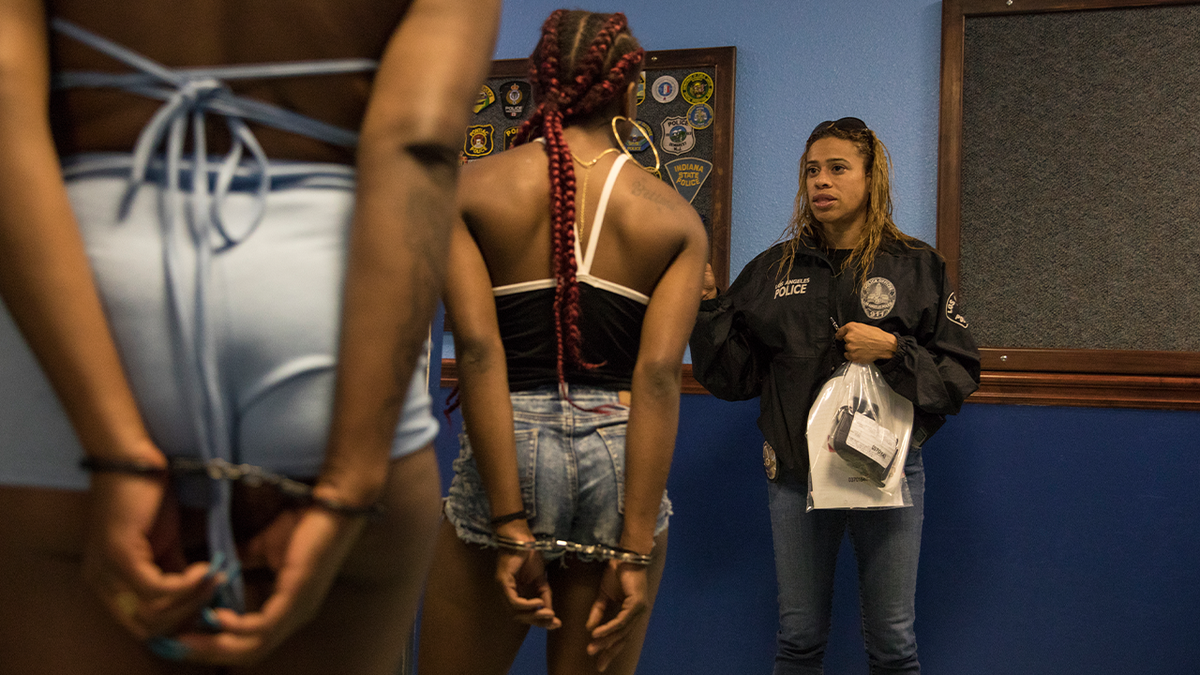
Security forces had already encircled the venue. The moment the crowd raised its voice, the circle collapsed inward. Police moved in to disperse the gathering by force. Prison vans backed up, their rusted doors swinging open. Officers began detaining protesters, dragging several away. In the chaos, phones were snatched directly from trembling hands—an intentional severing of the crowd's umbilical cord to the outside world.
Zarina saw a friend pulled toward a waiting vehicle, her cries swallowed by the roar of police engines. Dozens were beaten. Women were forcefully removed. It was swift, clinical, and aggressive.
But crackdowns possess a strange, inverse physics. When you slam a heavy fist down on a liquid mass, it does not disappear. It splatters, spreading outward to find every open crack in the pavement.
Instead of scattering into the night, the remaining protesters walked directly into the intersections. They blocked Bashir Chowk. They staged a sit-in, transforming their bodies into human barricades. Within hours, the anger rippled outward to Qambrani Road. Traffic ground to a halt. The city became a grid of simmering standoffs.
This is not a simple story about a local protest. It is an exploration of a dangerous, escalating precedent. For decades, Pakistan’s southwestern province of Balochistan—a vast, resource-rich expanse bordering Iran and Afghanistan—has been torn by a low-intensity separatist insurgency. The state has fought armed militants with a iron fist. But the emergence of the BYC represented a shift. Led largely by young, educated women like the 33-year-old Mahrang Baloch, the movement bypassed weapons entirely. They used marches, sit-ins, and constitutional rhetoric to demand an end to enforced disappearances and extrajudicial killings.
By treating these non-violent activists with the exact same anti-terrorism laws used against armed insurgents, the state is performing a delicate and highly volatile experiment.
Consider what happens next when you eliminate the middle ground. Intellectuals and human rights advocates across Pakistan are already warning that by criminalizing the people who advocate for constitutional, peaceful avenues of grief, the state is inadvertently making radicalization look like the only door left open. When a population loses faith in the courtroom, the street becomes the final arbiter.
The sit-in at Bashir Chowk continued into the early hours of the morning. The protesters vowed not to leave until every single detainee taken from the Burma Hotel was released unconditionally.
As dawn neared, Nadia Baloch, Mahrang’s sister, warned online of another impending police operation to clear the roads. The air grew cold, but nobody left the asphalt. Zarina sat with her daughter, watching the flashing red and blue lights of the police cruisers reflect off the dust. The state believes that a life sentence can silence a movement. But out on the dark roads of Quetta, the quiet, stubborn rustle of hundreds of people refusing to move suggested that the heavy hand of authority may have only succeeded in amplifying the noise.