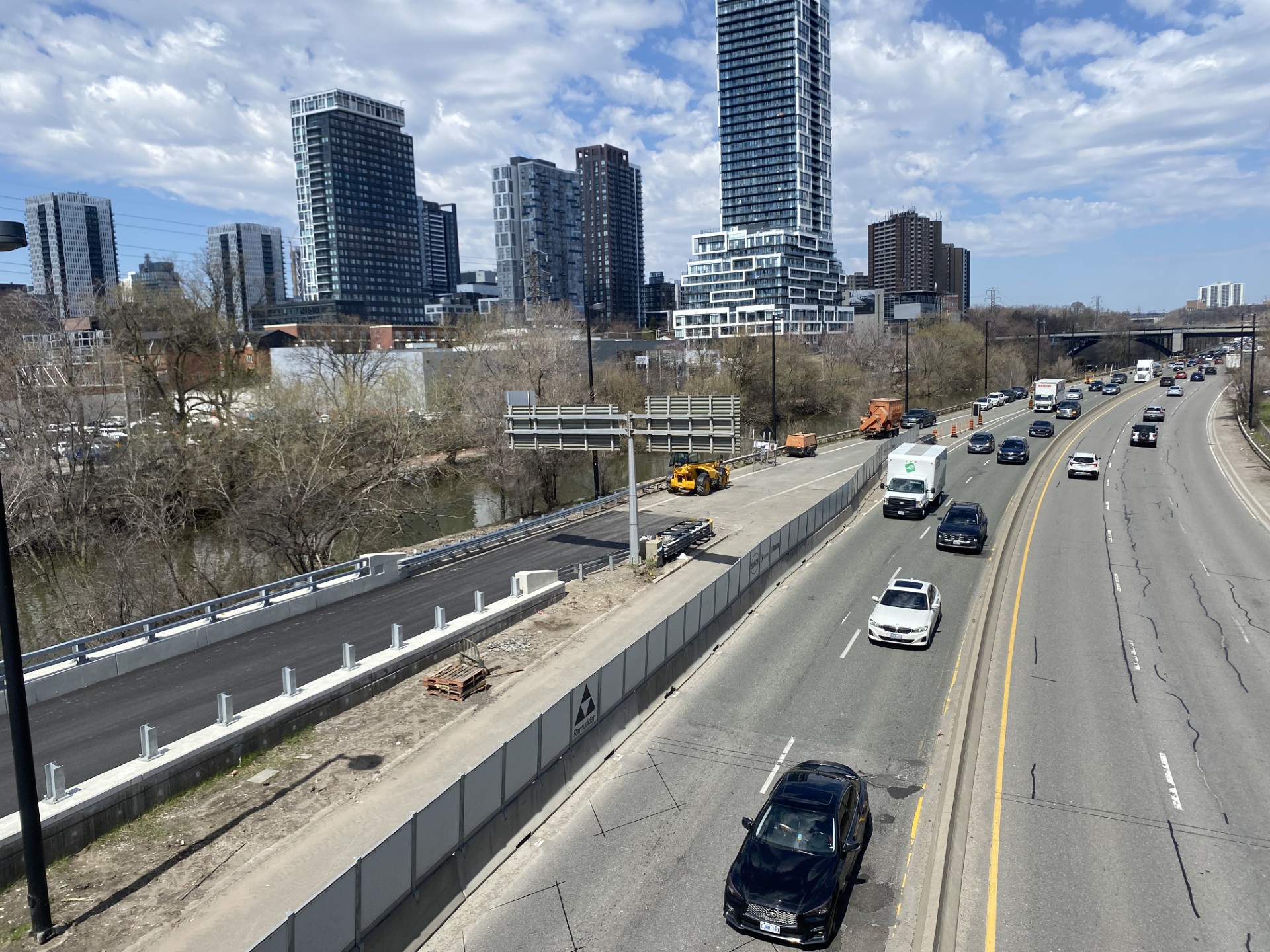
Toronto drivers have spent the better part of the last year staring at the brake lights of the car in front of them, trapped in a bottleneck that feels less like a construction zone and more like a permanent geographic feature of the city. The primary culprit is the long-running rehabilitation of the Don Valley Parkway (DVP) and the Bloor-Danforth bridge structures. While municipal officials suggest that the end is finally near, the timeline for these repairs has stretched far beyond initial public expectations, turning a routine infrastructure upgrade into a case study of urban mismanagement and the hidden costs of deferred maintenance.
The DVP is the city's central nervous system. When one lane closes, the entire body politic of Toronto feels the pressure. This isn't just about an extra ten minutes on a commute; it is a massive drain on economic productivity and a testament to a "fix-it-when-it-breaks" culture that has come to define Ontario’s approach to transit. For months, the lane reductions near the Castle Frank area have choked the flow of traffic, forcing thousands of vehicles into residential side streets that were never designed to handle the overflow.
The Anatomy of a Bottleneck
The current crisis stems from a series of repairs to aging bridges and overpasses that span the Don Valley. These structures, many of which date back to the mid-20th century, have reached a point of critical degradation. Steel supports are rusting, and concrete is spalling due to decades of exposure to road salt and heavy vibrations. The city’s decision to perform these repairs simultaneously, or in rapid succession, created a cumulative drag on traffic flow that the DVP simply cannot absorb.
Engineers are dealing with more than just surface paving. They are working on structural rehabilitation, which involves stripping back layers of the road to reach the skeleton of the bridge. This process is inherently slow. It requires specialized equipment and specific weather conditions to ensure that new pours of concrete cure correctly. However, the frustration for the public lies in the visibility of the work—or the lack thereof. On many days, commuters crawl past orange pylons and "Construction Ahead" signs only to see empty lanes and inactive machinery.
This perception of inactivity often comes down to the way municipal contracts are structured. Most city contracts are awarded based on the lowest bid, which doesn't always account for the cost of time. A contractor might save the city money upfront by using a smaller crew or working only during standard daytime hours, but the ripple effect on the city's economy is devastating. If 100,000 drivers lose 20 minutes a day, the loss in billable hours and fuel consumption far outweighs the savings of a cheaper construction bid.
Why the Deadline Kept Moving
The official narrative often points to "unforeseen site conditions." In the world of infrastructure, this is a catch-all phrase that covers everything from finding buried utility lines that weren't on the maps to discovering that the structural decay was deeper than initial scans suggested. For the DVP closures, the delay was compounded by a global supply chain that still hasn't fully recovered its rhythm for specialized materials like high-grade steel and custom-fitted expansion joints.
There is also the issue of inter-agency friction. The DVP is a city-owned asset, but many of the projects connecting to it involve provincial oversight or coordination with Metrolinx. When two different levels of government are trying to coordinate work on overlapping timelines, the bureaucratic friction acts as its own kind of speed bump. Requests for lane closures must be vetted months in advance, and if a contractor misses a window due to rain, they can't simply show up the next day. They often have to wait for the next available slot in the master schedule.
The Financial Toll of a Stalled Highway
Traffic is an invisible tax. According to regional economic data, congestion in the Greater Toronto Area costs the local economy billions of dollars annually in lost productivity. The DVP is a critical artery for the logistics industry. Delivery vans, long-haul trucks, and service vehicles are all caught in the same crawl. When a plumber spends two hours in traffic instead of on a job site, that cost is eventually passed down to the consumer.
Beyond the commercial impact, there is the environmental reality. Thousands of cars idling for hours produce a massive carbon footprint that contradicts the city’s various green initiatives. Stop-and-go traffic is the least fuel-efficient way to operate an internal combustion engine, and the concentrated emissions in the valley create a localized pocket of poor air quality. We are effectively paying for our infrastructure delays with both our wallets and our lungs.
The Failure of Modern Traffic Management
Toronto has historically been slow to adopt "smart" construction management techniques used in cities like Tokyo or London. In those jurisdictions, major highway work is often performed almost exclusively at night with massive crews, or the road is shut down entirely for a single weekend to finish the job in one "burst."
The DVP approach has been the opposite: a slow, agonizing drip of lane restrictions that lasts for seasons. This "trickle" method is intended to minimize the immediate shock to the system, but it ends up prolonging the pain. It’s the difference between a quick surgical incision and a thousand paper cuts. By spreading the work out over months, the city ensures that the congestion never truly clears, preventing the traffic patterns from ever normalizing.
Overlooked Factors in the DVP Equation
While the focus has been on the bridges, we also need to look at the deteriorating state of the asphalt itself. The DVP was originally built to handle a fraction of the volume it carries today. The sheer weight of modern SUVs and electric vehicles—which are significantly heavier than their gasoline counterparts due to battery weight—is pulverizing the road surface faster than maintenance crews can keep up.
Even when the current bridge work is finished, the DVP will remain a high-maintenance asset. The geography of the valley makes it a difficult place to build. It is prone to flooding, and the steep slopes on either side limit the ability to expand or create effective bypasses. We are essentially fighting a losing battle against geography and physics, using a mid-century design to solve 21st-century problems.
The Social Consequences of the Commute
The mental health toll on the workforce is significant. The DVP is the primary route for people living in the northern and eastern suburbs to reach the downtown core. For these workers, the highway is a source of daily anxiety. Research into urban psychology consistently shows that a long, unpredictable commute is one of the highest predictors of life dissatisfaction. When the DVP is backed up, it doesn't just delay a meeting; it means a parent misses a child’s soccer game or a caregiver arrives late to relieve a sitter. These are the human costs that don't appear on a city auditor's spreadsheet.
Furthermore, the congestion on the DVP has a "halo effect" on the rest of the city's transit network. As drivers flee the highway, they clog the arterial roads like Bayview Avenue, Don Mills Road, and Leslie Street. This, in turn, slows down the surface bus routes, meaning that even people who don't own cars are penalized by the construction on the Parkway. The entire eastern half of the city becomes a gridlocked mess because one lane is closed near the Bloor exit.
Breaking the Cycle of Reactive Maintenance
The only way to avoid a repeat of this year's DVP disaster is to move toward proactive, data-driven maintenance. This involves installing sensors within the bridge structures that can alert engineers to microscopic shifts or corrosion before they become structural failures. If we can predict when a bridge will need work five years in advance, we can plan the construction windows with much higher precision.
We also need to change how we reward contractors. Instead of just looking for the lowest price, the city should implement "A+B bidding," where contractors are evaluated on both their price (A) and the time (B) they will take to complete the work. Incentives for finishing early—and heavy penalties for finishing late—would align the contractor’s goals with the public’s need for an open road.
The Looming Reality of Infrastructure Aging
The DVP is just the beginning. Toronto is home to hundreds of bridges, overpasses, and tunnels that are all reaching the end of their design life at the same time. The Gardiner Expressway is already undergoing its own multi-year "megaproject" of reconstruction, and many of the overpasses crossing the 401 are in similar need of attention.
If the city does not learn from the DVP delays, the next decade will be characterized by a permanent state of gridlock. We cannot afford to treat these repairs as isolated incidents. They are part of a systemic requirement to rebuild a city that was largely constructed in a twenty-year post-war boom.
The light at the end of the tunnel for the DVP might be visible, but it is a flickering one. Crews are currently finishing the final stages of waterproofing and paving on the affected sections. Once the barriers are removed, there will be a brief period of relief. However, without a fundamental shift in how we manage our roads, it is only a matter of time before the next set of orange cones appears, and the cycle of frustration begins again.
The city must decide if it wants to be a place where people and goods move efficiently, or if it is content to be a parking lot with a view of the CN Tower. The DVP closure was a warning shot. It exposed the fragility of our transit infrastructure and the inadequacy of our current repair strategies. As the lanes finally reopen, the conversation should not be about how glad we are that it's over, but about how we ensure it never happens this way again.
Stop thinking about these closures as temporary inconveniences. They are symptoms of a deep-seated refusal to invest in the future until the present starts falling apart.