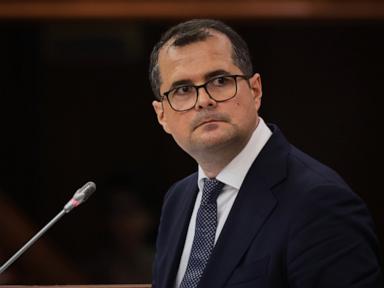
Moldova’s parliament took a calculated risk by appointing private equity investor Vasile Tofan as prime minister. Facing relentless geopolitical pressure from Moscow and economic stagnation at home, the Eastern European nation has sidelined traditional career politicians in favor of a venture capital background. The strategy is clear: accelerate the country's bid for European Union membership by applying corporate speed and private equity discipline to a sluggish state bureaucracy. Yet, swapping political veterans for an investment manager exposes Chisinau to an entirely new set of risks.
A Balance Sheet Approach to Governance
Vasile Tofan made his career deploying capital across Eastern Europe, managing high-stakes portfolios in consumer goods, retail, and technology. He understands balance sheets, operational efficiency, and risk mitigation. Applying those principles to a state apparatus, however, is an untested playbook in a region long dominated by patronage networks.
State institutions do not run like venture-backed startups. In corporate turnarounds, underperforming divisions are shuttered, redundant staff are fired, and capital is redeployed toward high-margin business lines within months. In a sovereign democracy, public institutions are constrained by legal frameworks, union contracts, and deep-seated political interests. Tofan’s core challenge lies in translating private equity metrics into public policy outcomes without alienating the civil service required to execute them.
EU accession is not merely an investment pitch. It requires thousands of pages of legal harmonization, structural judicial reforms, and complex regulatory overhauls. While investor credibility can reassure foreign lenders and draw international capital, it does not automatically build legislative consensus.
The Geopolitical Stakes Beyond the Spreadsheet
Moldova operates in a precarious neighborhood. Sandwiched between Ukraine and Romania, the nation faces active hybrid warfare, energy blackmail, and persistent pro-Russian influence campaigns designed to derail its Western trajectory.
Moscow has historically exploited Moldova's economic vulnerabilities, particularly its reliance on external energy supplies and agricultural exports. By bringing in a prime minister known for financial acumen, the pro-Western leadership hopes to build economic resilience capable of withstanding Russian pressure.
Yet, financial restructuring cannot completely neutralize security threats. Moscow relies on deep disinformation channels and local political proxies to fuel domestic unrest. An investor-led cabinet risks appearing technocratic and out of touch with low-income rural voters, creating fertile ground for opposition populists to attack government policies as harsh austerity measures dictated by foreign capital.
Structural Roadblocks Facing Western Integration
The primary barrier to Moldova’s EU ambitions is not a lack of pitch decks or foreign investment strategies; it is systemic corruption in the judiciary and administrative branches.
- Judicial Reform: Vestiges of corrupt networks remain embedded in the courts, stalling high-profile graft prosecutions.
- Administrative Capacity: State salaries struggle to compete with the private sector, leading to a chronic brain drain within government ministries.
- Energy Insecurity: Despite progress toward diversification, infrastructure links to Western European grids remain incomplete.
If the new administration focuses heavily on attracting private capital while underestimating the grinding, unglamorous political fight needed to reform the courts, institutional progress will stall. Brussels inspects concrete legal metrics, judicial independence, and rule of law implementation before approving accession chapters.
Can Private Equity Tactics Work in the Public Sphere
To measure success, analysts must watch key performance indicators that extend far beyond headline GDP growth or foreign direct investment figures.
Consider a hypothetical municipal infrastructure initiative. An investment fund evaluates the project solely on financial yield, capital payback periods, and long-term asset value. A government, by contrast, must evaluate social equity, environmental impact, regional stability, and political feasibility. If an unlucrative rural transport route is cut to optimize public spending, the immediate fiscal balance sheet improves, but the political fallout can destabilize the governing coalition.
Tofan must navigate this contradiction continuously. The political capital generated by his election will dissipate quickly if civil servants view his reform agenda as an external corporate audit rather than a shared national project.
The Clock is Ticking for Chisinau
Brussels has signaled openness to Eastern European enlargement, but the window of political opportunity remains narrow. Shifts in Western European elections could alter the appetite for expanding the bloc's borders.
Appointing an investor as prime minister buys Chisinau immediate attention in financial capitals and Western foreign ministries. It signals seriousness to international markets and multilateral lenders who want fiscal discipline in exchange for financial support. But market credibility alone cannot rewrite laws, clean up courts, or insulate a vulnerable population from targeted hybrid warfare.
The success of Moldova’s technocratic experiment depends on whether its leadership can turn financial discipline into political consensus before regional pressures overwhelm the state apparatus.