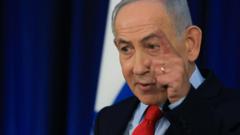
Israel’s unilateral strike on the South Pars gas field complex represents a fundamental shift in Middle Eastern gray-zone warfare, transitioning from shadow sabotage to the overt disruption of a sovereign state’s primary economic engine. While Benjamin Netanyahu’s declaration that Israel "acted alone" serves as a diplomatic shield for Western allies, the operational reality reveals a calculated stress test of Iran’s domestic stability and its regional energy hegemony. This action does not merely target a physical asset; it targets the Iranian state’s ability to finance its "Axis of Resistance" and maintain its social contract through subsidized energy.
The Mechanics of Energy Asymmetry
The South Pars/North Dome field is the world’s largest natural gas condensate field. For Iran, South Pars is more than a resource; it is a single point of failure for the national power grid and the primary source of export revenue outside of sanctioned crude oil. By targeting this specific infrastructure, Israel exploited the Concentration of Criticality. You might also find this connected article interesting: The $2 Billion Pause and the High Stakes of Silence.
When an energy network is centralized, the cost of defense grows exponentially while the cost of a precision strike remains relatively static. Israel’s kinetic choice demonstrates a sophisticated understanding of the Iranian Energy-Security Feedback Loop:
- Extraction Disruption: Damage to offshore platforms or onshore processing facilities creates an immediate pressure drop in the pipeline network.
- Industrial Stagnation: Natural gas provides the feedstock for Iran’s petrochemical and steel industries. A supply shock leads to immediate production halts.
- Civilian Friction: Domestic heating and electricity generation in Iran are 70% reliant on natural gas. Disruptions during peak demand cycles trigger localized unrest, forcing the Islamic Revolutionary Guard Corps (IRGC) to pivot resources from external operations to internal policing.
Decoupling from the US Security Umbrella
The "acted alone" narrative is a strategic pivot in the Israel-US intelligence sharing framework. Historically, significant kinetic actions against Iranian interests involved a degree of "deconfliction"—a process where the US is notified to prevent unintended escalation or to protect American assets in the Persian Gulf. Netanyahu’s insistence on unilateralism signals a Strategic Decoupling. As discussed in detailed coverage by Associated Press, the effects are worth noting.
This shift is driven by three primary variables:
- Policy Divergence on Thresholds: The US definition of a "red line" typically involves the direct killing of American personnel or a nuclear breakout. Israel’s red line includes the conventional buildup of precision-guided munitions (PGMs) in Lebanon and Syria.
- Intelligence Sovereignty: By operating without prior notification, Israel avoids the "veto by delay" often exercised by Washington. This maintains the element of surprise, which is the only way to bypass sophisticated S-300 or domestic Bavar-373 air defense umbrellas.
- Accountability Insulation: Unilateralism provides the US with "plausible deniability," preventing a broader regional conflagration that would force American intervention during a sensitive domestic political or economic cycle.
The Engineering of the Strike: Precision over Mass
The success of a strike on a gas field depends on the Damage Profile. High-explosive yields are often counterproductive in energy infrastructure because they can trigger uncontrollable fires that destroy the resource entirely, leading to environmental catastrophes that invite international sanctions against the attacker.
Instead, the Israeli Air Force (IAF) likely utilized Functional Neutralization. This involves targeting:
- Cryogenic Heat Exchangers: These components are critical for Liquefied Natural Gas (LNG) processing. They are bespoke, expensive, and have long lead times for replacement due to global supply chain constraints and sanctions.
- Compression Stations: Without these, gas cannot move through the thousands of kilometers of the Iranian gas trunkline (IGAT).
- Power Distribution Hubs: Modern gas fields are automated. By destroying the localized electrical substations that power the automated valves and monitoring systems, the entire field is rendered inert even if the wells remain intact.
Quantifying the Economic Attrition
Iran’s economy operates on a thin margin of "resistance economics." The South Pars field accounts for approximately 75% of Iran's gas production. Even a 10% reduction in output creates a cascading deficit. Unlike oil, which can be stored in tankers and sold later, gas production is "just-in-time." If the infrastructure to process and transport it is damaged, the wells must be capped. Capping a high-pressure gas well is a complex engineering feat; reopening it can take months and often results in permanent loss of reservoir pressure.
The Cost-to-Repair Ratio is heavily weighted against Tehran. Israel utilized standoff munitions—likely the "Rampage" or "Rocks" supersonic missiles—which cost roughly $500,000 to $1 million per unit. The resulting damage to specialized energy infrastructure can easily exceed $500 million in direct hardware costs, plus billions in lost opportunity costs and industrial output. This is a classic example of Economic Asymmetric Warfare, where the attacker’s expenditure is several orders of magnitude lower than the defender’s loss.
The Geopolitical Ripple: Turkey and Iraq
The attack on Iranian gas has immediate implications for the regional energy balance. Iraq is heavily dependent on Iranian gas imports to keep its lights on. A deficit in South Pars production forces Iran to prioritize domestic consumption, leading to a "force majeure" on exports to Baghdad.
This creates a Power Vacuum of Provision. If Iran cannot fulfill its energy obligations, Iraq is forced to look toward Saudi Arabia or the GCC Interconnection Authority (GCCIA) for power. Israel’s strike, therefore, serves a dual purpose: it weakens Iran internally and diminishes its leverage over its "land bridge" neighbors.
Furthermore, Turkey, which relies on Iranian gas for its eastern provinces, faces similar supply volatility. This forces Ankara to accelerate its energy diversification toward Azerbaijan and the Eastern Mediterranean, further isolating Iran from the European energy market.
Limitations of the Kinetic Strategy
While the strike is a tactical masterclass, it faces the Law of Diminishing Strategic Returns. Kinetic actions against infrastructure provide a temporary setback, but they do not eliminate the underlying capability or intent of the IRGC.
- Hardening of Assets: Iran will likely respond by further burying critical control centers and investing in mobile repair units.
- The Escalation Ladder: By moving from "cyber" to "kinetic," Israel has signaled that energy infrastructure is now a legitimate target. This invites a reciprocal response against Israel’s Leviathan or Karish gas fields. Israel’s advantage lies in its superior air defense (Iron Dome, David’s Sling, Arrow), but a saturation attack from Hezbollah could still find a gap.
- The Rally-Around-the-Flag Effect: State-level attacks can sometimes unify a fractured populace against a foreign "aggressor," potentially stalling the very internal dissent Israel seeks to cultivate.
Strategic Requirement for the Medium Term
Israel must now transition from Tactical Disruption to Structural Deterrence. This requires a shift in focus toward the financial and logistical nodes that allow Iran to bypass sanctions and procure the specialized parts needed for South Pars repairs.
The strategic play is to synchronize kinetic strikes with a "Sanctions Surge." If a heat exchanger is destroyed by a missile, and the international banking system is simultaneously tightened to prevent the purchase of a replacement, the "recovery time" for the Iranian state moves from months to years.
Future operations should prioritize the destruction of "dual-use" infrastructure—facilities that serve both the civilian energy sector and the military-industrial complex—thereby maximizing the political cost to the Iranian leadership while maintaining a facade of targeting only the state’s "war chest." The objective is not to destroy Iran’s energy sector, but to make the cost of maintaining it higher than the benefits derived from its regional aggression.