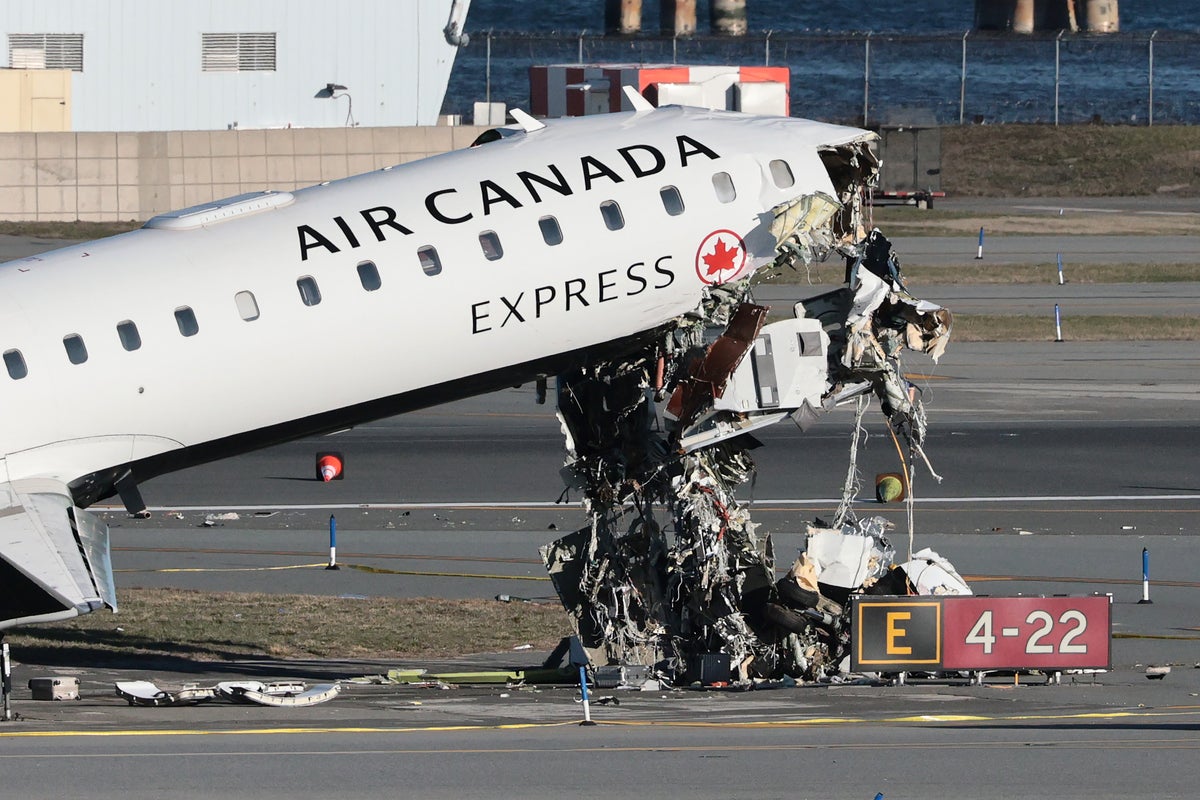
The media is currently obsessed with the idea that the American aviation system is on the verge of collapse. Week after week, headlines scream about near misses on runways, exhausted air traffic controllers, and a "glaring safety gap" that threatens every traveler bucking themselves into a coach seat. The narrative is comforting in its simplicity: a broken system, negligent oversight, and impending doom.
It is also completely wrong.
What the public is witnessing is not a system in decay, but the messy, hyper-vigilant reality of a system operating at peak maturity. The sudden spike in reported close calls is not proof that flying has become dangerous. It is the direct result of a hyper-sensitive tracking apparatus doing exactly what it was designed to do: catch micro-flaws before they become macro-tragedies.
By treating every minor runway deviation like a precursor to disaster, critics are misdiagnosing the problem. They want to fix the wrong things, completely ignoring the psychological and systemic costs of maintaining an impossible standard of perfection.
The Flawed Logic of the Near Miss Panic
The core argument of the mainstream panic rests on a basic misunderstanding of risk statistics. Pundits look at a report of two planes coming within a few hundred feet of each other on a taxiway and declare it a failure.
It is actually a success.
In a complex, high-consequence industry, safety is not measured by the total absence of friction. It is measured by the resilience of the system when friction occurs. For decades, aviation safety has relied on a philosophy known as the Swiss Cheese Model, pioneered by organizational psychologist James Reason. Risk passes through holes in various layers of defense—automation, pilot awareness, air traffic control instruction—but for a crash to occur, all those holes must align perfectly.
When two aircraft have a near miss, it means multiple layers of defense failed, but the final, crucial layer held. The pilots reacted to a warning system. The controller spotted the conflict on ground radar and ordered an immediate abort. The system broke, but it did not fail.
- The Baseline Reality: The commercial aviation fatal accident rate in the United States has plummeted by over 95% since the late 1990s. We have gone over fifteen years without a major, multi-fatality crash involving a mainline US carrier.
- The Data Paradox: Because actual crashes are now incredibly rare, safety analysts have to hunt for smaller and smaller anomalies to find data to analyze. We are shining a massive spotlight on incidents that, thirty years ago, would have been written off as a standard day at the office.
Imagine a scenario where a hospital installs ultra-sensitive sensors that sound an alarm every time a patient's blood pressure dips by a single fraction of a point. The number of recorded "cardiovascular events" would skyrocket overnight. A hysterical observer would conclude the hospital is killing people. A rational observer would realize the hospital just started measuring variables that were previously invisible.
Dismantling the Glaring Safety Gap Myth
The current consensus blames a lack of standardized ground surveillance technology at smaller airports as the missing link in aviation safety. The argument goes that if every regional airstrip had millions of dollars worth of Airport Surface Detection Equipment (ASDE-X), the risk of runway incursions would drop to zero.
This is a technocratic fantasy. It assumes that more data automatically yields better human performance. In reality, drowning controllers and pilots in more alerts often achieves the exact opposite result.
The Tyranny of Alert Fatigue
When you build an environment where everything is a high-priority warning, nothing is. Air traffic controllers already juggle a relentless stream of auditory and visual cues. Adding more automation to flag every minor centerline deviation introduces a severe risk of alert fatigue.
I have spent years looking at how operators handle complex automated systems. When an alarm goes off fifty times a shift and forty-nine of those times it requires no intervention, the human brain naturally begins to tune it out. It is basic psychology. By forcing technology to monitor every square inch of tarmac with zero tolerance, we risk training controllers to ignore the one warning that actually matters.
The True Cost of Tech Obsession
The push for a blanket technological fix ignores the financial reality of aviation infrastructure. Forcing a mid-sized regional airport to install and maintain top-tier surface detection systems drains resources that could be spent on basic, high-impact improvements:
| Alleged "Fix" | The Unintended Consequence | The High-Impact Alternative |
|---|---|---|
| Universal ASDE-X Installation | Massive capital expenditure, high maintenance overhead, increased controller alert fatigue. | Simplified Runway Geometry |
| Automated Braking Mandates | High retrofit costs for airlines, increased maintenance complexity, potential for uncommanded stops. | Standardized Cockpit Discipline |
The Real Air Traffic Control Problem Nobody Wants to Discuss
If you want to find the true vulnerability in the sky, stop looking at the technology and look at the human staffing model. But do not fall for the lazy union talking point that the FAA just needs to hire more bodies.
The problem is not just a lack of personnel; it is a broken, archaic training pipeline that treats human beings like interchangeable gears in a machine.
The Federal Aviation Administration has struggled for years to hit its staffing targets for certified professional controllers. The standard response from Congress is to throw money at the problem and demand higher recruitment numbers. But forcing more bodies into a meat-grinder training system does not produce qualified controllers faster. It just increases the washout rate.
[Mass Recruitment] ➔ [Outdated Training Academy] ➔ [High Washout Rates] ➔ [Chronic Facility Understaffing]
The current certification process for high-density facilities is notoriously rigid, relying on legacy training methodologies that fail to adapt to how modern adults actually learn. Trainees spend months memorizing local geography and phraseology in static environments before ever controlling live traffic. When they finally hit the floor of a major facility like New York TRACON or Chicago O'Hare, the psychological shock causes a massive percentage of candidates to fail out, wasting millions of dollars and years of preparation.
To make matters worse, mandatory overtime has become a permanent feature of the job rather than an emergency stopgap. Forcing a controller to work six-day weeks, month after month, creates a level of chronic cognitive fatigue that no surface detection technology can fix. A tired brain makes bad decisions. It mishears a tail number. It clears a plane to land on an occupied runway.
The industry does not need a new technological savior. It needs to radically overhaul how it trains, schedules, and retains the human beings holding the microphone.
Challenging the Premise: Are We Asking the Wrong Questions?
When public anxiety spikes after a high-profile near miss, the questions asked by journalists and politicians are almost always flawed. Let us dismantle the most common inquiries with some brutal honesty.
"Why can't the FAA just eliminate all runway incursions?"
Because eliminating all risk requires eliminating all movement. A zero-incident aviation system is a system where every plane stays parked at the gate. The goal of aviation safety has never been absolute elimination of risk; it is risk management. Traffic flows because we accept a calculated, microscopic level of variance. If a pilot turns a few feet early onto a taxiway, it is technically an incursion, but it is not a threat to human life. Confusing the two kills operational efficiency without adding a shred of safety.
"Are commercial pilots getting worse due to rapid hiring?"
The data does not support this. While airlines have accelerated hiring to cope with retirements, the pilot pipeline remains heavily regulated. The issue is not a lack of basic stick-and-rudder skill; it is a shift in operational context. Pilots today are managers of highly automated flight decks. When they transition back to complex taxi operations at unfamiliar airports, the cognitive workload shifts drastically. The danger isn't that pilots don't know how to fly; it's that cockpit procedures during ground taxiing are often treated as secondary to in-flight procedures, despite the ground being where most friction occurs.
The Downside of the Balanced Approach
Admitting that the system is functioning well is a tough sell. It feels counter-intuitive, almost irresponsible, to argue against adding more safety nets. And to be clear, maintaining this perspective carries a real risk.
If an industry insider stands up and says, "The system is fine, calm down," and a catastrophic crash happens the next day, that insider is ruined. The public will scream that complacency killed passengers.
But public policy driven by panic is always inferior to policy driven by cold data. If we allow public hysteria over near misses to dictate regulatory priorities, we will spend billions of dollars fixing problems that only exist on paper, while leaving the systemic human fatigue issues completely untouched.
The Path to Actual Resiliency
Stop demanding new technology to cover up human operational errors. If the aviation industry wants to maintain its historic safety record over the next fifty years, it must abandon the quest for total automation and focus on operational clarity.
First, strip down the complexity of airport environments. A significant portion of runway incursions happen at a handful of airports with notoriously convoluted layouts. Boston Logan, San Francisco International, and Chicago Midway feature intersecting runways and taxiways that resemble a bowl of spaghetti. You do not need an AI-driven radar system to fix a bad layout. You need concrete, paint, and simplified taxi routing.
Second, the FAA must privatize or at least completely insulate its air traffic control funding from the whims of congressional budget cycles. The current model prevents long-term planning. It makes it impossible to upgrade foundational software systems without years of bureaucratic delays, leaving controllers working with tech that feels like a relic from the late twentieth century.
The sky is not falling. The system is working hard, keeping you alive through an intricate web of redundancies that successfully catches human errors every single day. Stop letting sensationalist headlines convince you otherwise.
Fix the training pipeline. Simplify the pavement. Trust the data, not the drama.