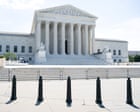
The concept of automatic citizenship by birth has anchored American law for over a century, but an impending stack of decisions from the Supreme Court is poised to break that foundation wide open. On the final day of the 2025-2026 term, the high court will issue rulings on two of the most socially explosive topics in modern politics: a presidential challenge to birthright citizenship and state-level restrictions on transgender athletes. This is not just a standard judicial wrap-up. It is a fundamental rewrite of who gets to be an American and how civil rights laws protect individual identity.
At the center of the storm is Trump v. Barbara, a direct challenge to Executive Order 14160. Issued in January 2025, the order instructed federal agencies to halt the automatic recognition of citizenship for children born in the United States if their parents lack legal permanent status. The administration is attempting to bypass Congress and undo a legal consensus that has held steady since 1898. If the conservative supermajority aligns with the White House, the immediate fallout will reshape immigration enforcement, medical birth registration, and the literal definition of legal identity in America.
The Century-Old Precedent Facing Erasure
For generations, the legal reality of American birth was absolute. If a child was born on U.S. soil, that child was a citizen, full stop. This reality was cemented by the Fourteenth Amendment and clarified by the landmark 1898 case United States v. Wong Kim Ark, which confirmed that children of foreign nationals born in the United States are citizens.
The current administration argues that Wong Kim Ark has been systematically misinterpreted. Government lawyers contend that the phrase "subject to the jurisdiction thereof" requires a permanent, lawful domicile and a direct allegiance to the country. Under this theory, temporary workers, tourists, and undocumented immigrants do not possess that allegiance. Therefore, their children are not constitutionally entitled to automatic citizenship.
Opponents of the executive order argue this is a dangerous distortion of plain language. During oral arguments in April, challengers pointed out that the authors of the Fourteenth Amendment meant "subject to the jurisdiction" in a simple, literal sense: if you are within U.S. borders, you are subject to U.S. laws and can be prosecuted for breaking them.
The practical logistics of enforcing this executive order would turn local maternity wards into de facto immigration checkpoints. Hospitals would be forced to verify the complex visa status or legal residency of parents before a birth certificate could be processed. For an overstretched healthcare system, adding immigration screening to delivery rooms is an administrative nightmare that risks leaving thousands of infants in a legal limbo, lacking passports, Social Security numbers, or recognized nationality.
High Stakes on the Athletic Fields
While the court decides who counts as a citizen, it is simultaneously deciding who can play on the field. In Little v. Hecox and West Virginia v. B.P.J., the justices are reviewing state laws that restrict transgender girls from participating on female sports teams in public schools and universities.
More than two dozen states have passed similar restrictions, creating a fragmented map for student athletes. The legal clash tests the boundaries of Title IX, the 1972 law created to ensure sex equity in educational programs.
The states argue that Title IX was explicitly designed to protect opportunities for biological females, acknowledging physiological differences that offer competitive advantages. They argue that allowing athletes who went through male puberty to compete against biological females undermines the very intent of the law.
Challengers see it differently. They argue that excluding transgender students from sports causes severe psychological harm and constitutes clear sex discrimination under the Equal Protection Clause. They point to the court's own 2020 precedent in Bostock v. Clayton County, which ruled that discrimination based on transgender status is inherently discrimination based on sex.
During oral arguments in January, the conservative majority appeared heavily inclined to permit state-level sports bans. The real question is how far the ruling will go. The court could issue a narrow ruling that allows states to experiment with their own athletic policies, or it could issue a sweeping redefinition of Title IX that strips gender identity protections entirely.
The Financial Engine of the 2026 Midterms
While identity and civil rights dominate the headlines, a third case on the docket could quietly rewrite the rules of political power just months before the 2026 midterm elections. The court is evaluating federal limits on coordinated spending between political parties and individual campaigns.
Currently, federal law caps the amount of money a national party can spend in direct coordination with a candidate's campaign committee. This rule prevents parties from acting as unlimited funding funnels for specific races. If the court strikes these limits down, national party organizations will be free to dump unprecedented sums of cash directly into battleground districts.
This would dramatically decentralize campaign fundraising, shifting power away from local grassroots operations and concentrating it in national party headquarters. Candidates would become deeply dependent on national party bosses for survival, further nationalizing local elections and drowning out regional issues.
A Transformation of Federal Power
The unifying thread through all these cases is a radical re-evaluation of federalism and executive authority. By reviewing birthright citizenship, the court is deciding whether a president can alter constitutional interpretations through executive action alone. By reviewing the transgender sports bans, the court is deciding whether states have the ultimate authority to define the boundaries of civil rights within their own borders.
If the administration wins on birthright citizenship, it establishes a precedent where core constitutional rights can be reinterpreted by executive fiat. A future administration could just as easily use executive orders to redefine other long-standing legal interpretations. The legal stability that businesses, families, and local governments rely on would be replaced by a system that swings wildly with every presidential election cycle.
The decisions dropped by the justices will not settle these cultural battles. They will simply supercharge them. A ruling upholding the birthright citizenship order will trigger an immediate wave of litigation over individual deportations and denied services. A ruling upholding the athletic bans will shift the legal frontline to private workplaces, healthcare facilities, and local school boards. The high court is about to hand down its verdicts, but the real societal disruption is just beginning.