The air in the holds of a cargo ship doesn’t circulate; it stagnates, thickening with the scent of salt, diesel, and fear. Deep within these iron bowels, inside crates marked as mundane dry goods, something ancient and apex stirs. It is a creature that hasn't changed since the Pleistocene, a lizard that looks like it was forged from volcanic rock and prehistoric grit.
But here, bound with duct tape and stuffed into a cramped PVC pipe, the Komodo dragon is no longer a god. It is a product.
In East Java, the police recently unraveled a thread that led to the heart of a global shadow economy. Six men were arrested for the attempted smuggling of 41 Komodo dragons. These aren't just animals; they are the crown jewels of Indonesia’s natural heritage, found nowhere else on Earth. The black market price for a single juvenile? Roughly 500 million rupiah, or about $35,000.
To a poacher in a remote village, that is more than a windfall. It is a life-changing fortune. To the dragon, it is a death sentence.
The Myth and the Meat
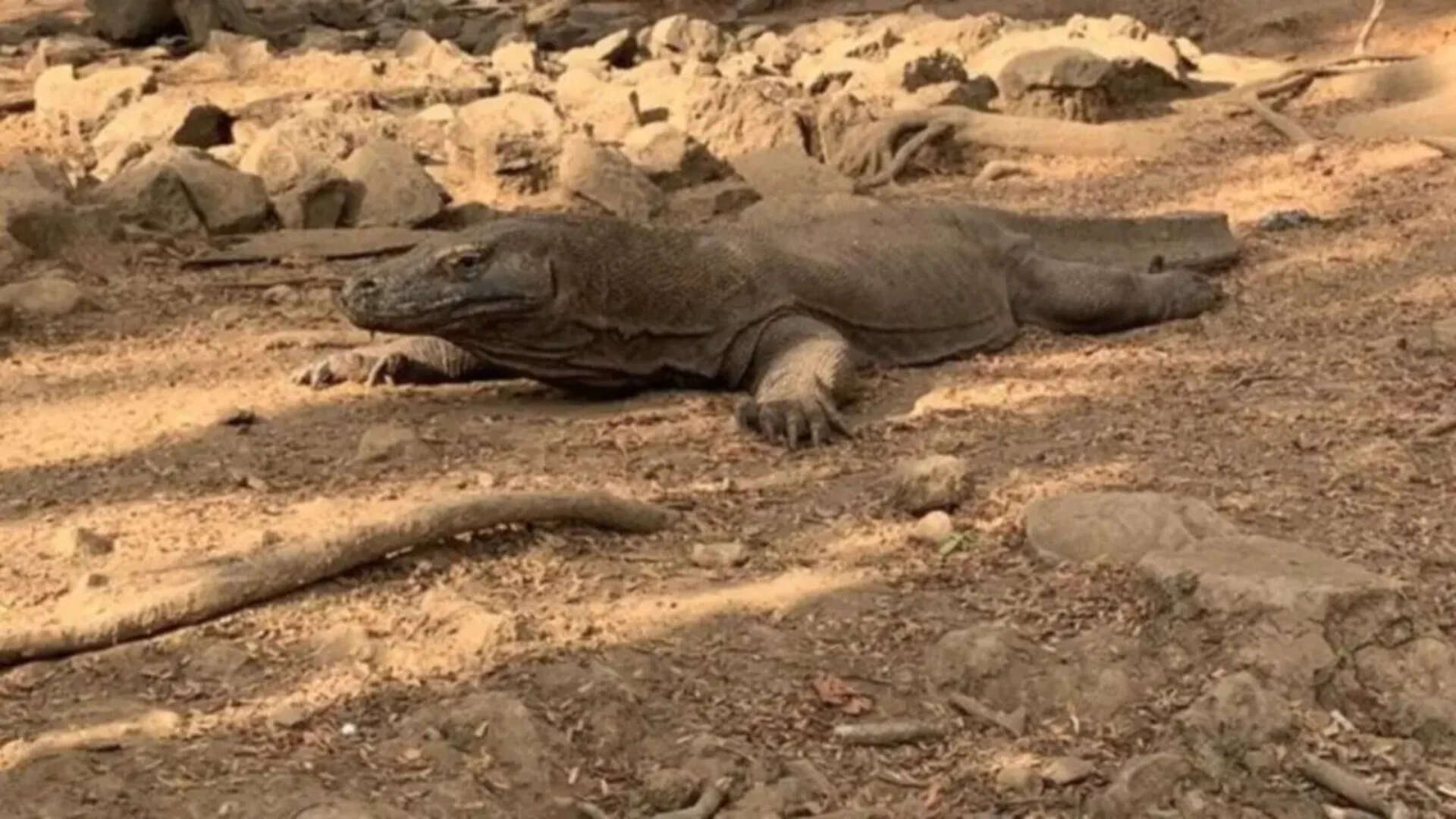
To understand why someone would risk a decade in an Indonesian prison to steal a lizard, you have to understand the creature itself. The Komodo dragon is the world’s largest lizard, reaching lengths of ten feet and weighing more than an average human. They possess a serrated bite and a venomous cocktail that prevents blood from clotting, turning a single nip into a slow, inevitable demise for water buffalo and deer alike.
They are the last of the titans.
When you stand on the scorched earth of Komodo National Park, the heat shimmers off the grass in waves. The dragons move with a deceptive, heavy grace. They are the sovereigns of this archipelago. Yet, the very rarity that makes them a biological marvel also makes them a target for the ultra-wealthy.
The buyers aren't usually looking for a pet to display in a living room. These animals are often destined for private collections in Asia and Europe, where they serve as the ultimate status symbol—a living, breathing piece of the prehistoric world tucked away in a high-security enclosure.
The tragedy lies in the logistics. For every dragon that reaches a glass-walled sanctuary in a foreign mansion, others perish. They die of dehydration. They die of stress. They die because their lungs cannot handle the ammonia buildup in a shipping container.
The Mechanics of the Theft
The six men arrested in East Java weren't just opportunistic thieves. This was an organized syndicate. They didn't just stumble upon forty dragons; they cultivated a pipeline.
The process begins in the tall, yellowed grasses of Komodo and Rinca. Poachers use snares or wait for the dragons to feed, snatching the smaller, more manageable juveniles. A full-grown adult is a logistical nightmare and a physical hazard, but a three-foot-long juvenile is portable.
From the islands, the dragons are moved through a series of intermediaries. They pass from fishing boats to regional hubs like Surabaya. It is a game of shells. The authorities noted that these specific lizards were being prepared for shipment to Singapore and then onward to buyers in Thailand and Vietnam.
Consider the "mule" in this scenario. He is likely someone who knows the tides and the hidden coves of the East Nusa Tenggara province better than he knows his own children’s birthdays. He isn't thinking about the ecological collapse of the Komodo habitat. He is thinking about the debt he owes to a local lender or the roof that leaks every time the monsoon hits.
The syndicate leaders, however, are different. They understand the "invisible stakes." They know that as the population of dragons in the wild shrinks, the value of their "inventory" rises. There are only about 3,000 of these creatures left in the wild. When you steal 41 of them, you aren't just taking animals; you are taking over one percent of the entire global population in a single shipment.
The Vanishing Apex
If the dragons disappear, the islands of the Lesser Sundas don't just lose a tourist attraction. They lose their balance.
Apex predators are the anchors of an ecosystem. They manage the populations of herbivores, ensuring that the vegetation isn't overgrazed and the soil remains stable. Remove the dragon, and the entire island begins to fray at the edges.
The Indonesian government has reacted with a mixture of fury and desperation. There have even been high-level discussions about closing Komodo Island entirely to the public to allow the population to recover and to bolster security. It’s a drastic measure that pits the local economy—which relies heavily on tourism—against the survival of the species.
The problem is that fences don't stop desperate men, and borders are porous when the sea is your backyard.
The Human Cost of Conservation
During the interrogations, a chilling detail emerged. This wasn't the syndicate’s first successful run. They had allegedly smuggled scores of other protected animals—wildcats, rare birds, and pangolins. The Komodo dragon was simply their "high-ticket" item.
The police in East Java seized more than just lizards. They seized a network of digital records and bank accounts that suggest a much larger web of corruption. To move forty-one massive reptiles through major ports requires more than just luck. It requires silence. And silence, in the right places, is expensive.
When we look at the mugshots of the men arrested, we see the faces of the foot soldiers. The true architects of the trade rarely handle the animals. They stay in air-conditioned offices, moving digital currency while the dragons twitch in the dark.
The fight to save the Komodo dragon isn't just about biology; it is about the battle against human greed and the fundamental inequality of our world. As long as there is a billionaire in a distant city willing to pay a king's ransom for a "pet" that belongs to the earth, there will be a man willing to crawl through the brush with a burlap sack.
The Weight of the Scales
There is a specific sound a Komodo dragon makes when it breathes—a low, guttural hiss that feels like it’s coming from the earth itself. It is a sound that has echoed through the islands for millions of years.
When the police opened those crates in Surabaya, they found the dragons weakened, their vibrant, pebbled skin dulled by the filth of their confinement. They were hydrated, treated, and eventually slated for return to the wild. But the victory is bittersweet.
The return journey is long. The dragons must be quarantined to ensure they haven't picked up domestic diseases that could wipe out the remaining wild population. They have to be reintroduced to a landscape that was almost stolen from them.
We often talk about "wildlife crimes" as if they are abstract offenses against a ledger of biodiversity. We forget the physical reality. We forget the heat of the lizard’s skin, the intelligence in its yellow-ringed eyes, and the sheer, terrifying majesty of a creature that has survived mass extinctions only to be defeated by a plastic tube and a shipping manifest.
The six men in East Java face years behind bars. Their families will likely fall into the same poverty that drove the men to poach in the first place. The cycle remains unbroken. The dragons are back in the grass, for now, flicking their forked tongues at the air, sensing the world around them.
They do not know they have a price tag. They do not know they are the last of their kind. They only know the sun, the hunt, and the ancient rhythm of the islands that the world is trying, piece by piece, to take away.