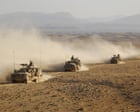
They carried spare weapons in their packs for one reason only. Not for backup. Not for emergency self-defense.
When an unarmed Afghan farmer or detainee was shot dead during a night raid, someone needed a story that would pass a routine post-mission check. So a "throwdown"—an unregistered AK-47, a pistol, or a cheap Soviet-era radio—got dropped next to the body before the cameras came out.
For years, the official line suggested these incidents were rare, or that senior leadership had no idea what was happening in the dark compounds of Uruzgan province. That narrative collapsed completely. Official inquiries, culminating in the landmark Brereton Report by Major General Paul Brereton, confirmed that Australian Special Air Service (SAS) officers didn't just stumble across these fabricated crime scenes. Many knew about the practice of unlawful throwdowns on dead Afghans, tolerated the cover-ups, and let a toxic subculture fester inside Australia's most elite military unit.
If you've followed the headlines out of Canberra over the last few years, you probably think this is just a story about a few rogue operators losing their minds after too many combat deployments. That's what the defense establishment wanted you to believe at first. Look closer at the evidence, and you'll see something far more disturbing: a systemic failure of command where planting evidence became standard operating procedure.
How the Throwdown System Actually Worked in Afghanistan
Let's strip away the military jargon and look at what happened on the ground between 2005 and 2016.
During the height of the war in Afghanistan, Australian special forces operated under strict rules of engagement. You could only shoot someone if they were directly participating in hostilities. If an operator killed an unarmed local—whether through reckless panic, a botched compound clearance, or cold-blooded execution—that killing triggered an immediate operational headache.
An unexplained civilian death meant paperwork. It meant formal investigations, potential removal from theater, and intense scrutiny from coalition partners.
Enter the throwdown.
Before rolling out on a mission, patrol members would stash foreign weapons, grenades, or handheld Icom radios in their vehicles or packs. These items weren't part of their issued gear; they were captured battlefield loot kept off the official books. If a patrol killed an unarmed man, an operator would place one of these untraceable weapons beside the corpse. Then came the tactical photography.
By snapping a photo of the dead body next to an AK-47 or a radio, the patrol created instant visual "proof" that the deceased was an insurgent spotter or fighter. Back at base, the after-action report would state that the individual was armed and posed an imminent threat. Case closed.
Honestly, it was terrifyingly simple. And because it worked so well at keeping higher headquarters off their backs, the practice spread across multiple rotations.
Why Australian SAS Officers Knew About the Cover-Ups
You don't run a multi-year contraband weapon operation inside a tightly controlled military base without commanders noticing. That's just basic military reality. Anyone who has spent time around infantry or special operations knows that troop commanders and squadron officers track ammunition, intelligence reports, and tactical photos obsessively.
When investigators dug into the operational records, the inconsistencies jumped off the page.
First, there was the bizarre mismatch between kills and recovered gear. Patrols were reporting high numbers of "enemy killed in action," yet the intelligence haul didn't match. Often, the weapons photographed next to dead Afghans had dead batteries in the radios, missing firing pins, or zero ammunition pouches on the body. How does an insurgent fight a fierce gun battle without spare magazines? They don't.
Second, the same serial numbers or identical-looking weapons started showing up in different post-strike photos across separate missions. Operators were literally recycling the same throwdown items, retrieving them after taking the photos so they could use them again on the next raid.
Troop and squadron officers saw these photographs. They read the implausible engagement reports where unarmed men supposedly "reached for a weapon" in the exact same way week after week. Some junior officers raised quiet concerns, only to be told by senior non-commissioned officers—the powerful patrol commanders who ran the day-to-day war—to stay in their lane.
Instead of demanding real investigations, many officers signed off on the paperwork. They chose unit cohesion and operational tempo over the law of armed conflict.
The Brereton Report and the Myth of the Rogue Soldier
When Major General Paul Brereton released the findings of the Inspector-General of the Australian Defence Force (IGADF) Afghanistan Inquiry in November 2020, the numbers shocked the world.
The inquiry found credible information that 25 current or former Australian Defence Force personnel were involved in the unlawful killing of 39 Afghan civilians and prisoners across 23 separate incidents. None of these deaths happened in the heat of battle. Every single one involved non-combatants or people who were already captured and restrained.
What made the Brereton Report so devastating wasn't just the body count. It was the breakdown of how the culture operated:
- Blooding: Junior soldiers were reportedly pressured by patrol commanders to shoot a prisoner to get their "first kill," a twisted initiation ritual designed to bind the team together through shared guilt.
- Rehearsed narratives: Patrols coordinated their stories before writing their reports, using standardized phrases to justify lethal force.
- Command blindness: Officers at the troop, squadron, and task group levels failed to question glaring anomalies, effectively granting impunity to patrol commanders.
People often assume special forces units have the strictest discipline in the military. In reality, elite units often suffer from an inverted power dynamic. A young captain taking command of an SAS troop might have two or three years of experience, while his patrol commanders are grizzled sergeants with a decade of combat deployments. When those sergeants decide that rules don't apply anymore, weak officers look the other way.
What Most Commentators Miss About Moral Injury and Silence
If you read standard news coverage of this scandal, you get a very black-and-white picture: evil war criminals on one side, helpless victims on the other. While the brutality inflicted on innocent Afghan families is undeniable, focusing solely on individual villains misses the structural trap that kept decent soldiers quiet.
Think about what happens to a young trooper who witnesses a throwdown on his first deployment.
If he speaks up, he isn't just reporting a crime; he is committing career suicide and risking physical isolation in a combat zone where his life depends on the guy next to him. Whistleblowers inside the SAS were routinely labeled as weak, untrustworthy, or "not up to the standard." Some were quietly pushed out of the unit or denied promotions.
Because officers failed to create a safe, independent reporting chain, the burden of enforcing the law fell onto the lowest-ranking soldiers in the room. That's a massive leadership failure. When an officer knows—or strongly suspects—that throwdowns are happening and chooses not to investigate because it might tarnish the regiment's reputation, that officer becomes complicit in the cover-up.
Dr. Samantha Crompvoets, the sociologist whose initial research for the Australian Army blew the lid off these rumors in 2016, noted that insiders themselves were desperate for someone outside the regiment to intervene. They knew the internal culture had rotted, and they knew their own officers wouldn't fix it.
The Fallout in Canberra and the Ongoing Legal Reckoning
Knowing that crimes happened and proving them in a civilian criminal court are two entirely different animals.
In the years following the Brereton Report, the Australian government established the Office of the Special Investigator (OSI) to build criminal briefs for prosecution. Progress has been painfully slow, and for good reason. Gathering forensic evidence in rural Afghanistan—especially after the Taliban retook the country in 2021—is nearly impossible. Prosecutors have to rely heavily on insider testimony, fragmented digital records, and those infamous post-mission photographs.
Meanwhile, the institutional consequences have been sweeping:
- Disbandment: The 2nd Squadron of the SAS Regiment was permanently struck off the order of battle, a rare and humiliating erasure of a storied military sub-unit.
- Medal Revocations: Defense leadership moved to strip meritorious unit citations and individual honors from officers who held command responsibility during the years when unlawful killings and throwdowns occurred.
- Compensation: The Australian government committed to a formal compensation scheme for the families of the Afghan victims, acknowledging state responsibility for the actions of its troops.
Critics on both sides remain furious. Veterans' advocates argue that stripping medals from officers who weren't personally on the ground pulling triggers amounts to collective punishment. Human rights lawyers counter that holding commanders accountable for turning a blind eye is the exact point of command responsibility under international law.
How to Read Future Military Accountability Reports Without Getting Fooled
The SAS throwdowns scandal isn't an isolated quirk of Australian military history. Similar patterns of planted weapons, "drop guns," and sanitized after-action reports have surfaced in conflicts involving American, British, and Canadian forces over the past two decades.
Whenever a new military investigation drops in the news, you can spot the warning signs of a cover-up immediately if you know what to look for. Pay attention to the language used in official press releases. Phrases like "isolated incidents," "fog of war," and "unprecedented operational tempo" are almost always PR shields designed to protect senior officers from scrutiny.
Look at the ratio of enemy killed to friendly injuries, and check whether recovered weapons actually match the intelligence profile of the area. Most importantly, watch who gets punished. If only junior enlisted soldiers face charges while the officers who signed off on the false reports walk away with their pensions and medals intact, the system hasn't actually been fixed.
Read the primary findings of the Brereton Report directly on the Australian Defence website rather than relying on summarized press clippings. Compare the official rules of engagement from the Afghanistan era with the standard phrasing used in troop after-action reports, and track the ongoing prosecutions through the Office of the Special Investigator to see whether command accountability finally holds up in court.