The Rapid Demolition of a 16-Year Empire
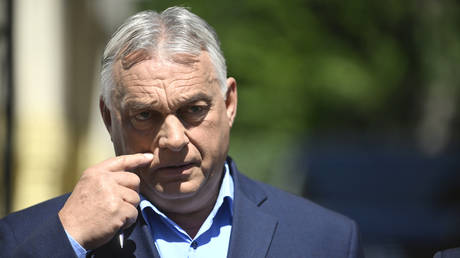
When Hungarian Prime Minister Péter Magyar took the oath of office following his victory in April 2026, he inherited a country wired to sabotage him.
For sixteen years, Viktor Orbán did not merely govern Hungary. He reengineered its legal, financial, and institutional foundations so that no successor could rule without his permission. Through private asset foundations, packed judicial benches, and a loyal presidency, the outgoing regime had constructed a parallel state designed to outlast any election result.
That architecture is now being dismantled with unprecedented speed.
Through a series of sweeping constitutional amendments and emergency anti-corruption measures, Magyar’s Tisza party has launched what it terms "Operation Purgatory"—a legislative offensive aimed at tearing out the roots of Orbán’s illiberal state. The initial moves have targeted the highest echelons of power. Parliament voted to lower the retirement age for Constitutional Court judges to 70, effectively forcing four key Orbán loyalists off the bench. Simultaneously, lawmakers passed provisions to remove President Tamás Sulyok, a former constitutional judge appointed under the previous regime who refused calls to step down.
To understand why these aggressive maneuvers are unfolding, one must look past the partisan theater in Budapest and examine the financial trap set by the outgoing administration.
The Machine Built to Outlast Elections
Orbán’s political longevity rested on a simple structural innovation: transferring public power and wealth into private hands that remained loyal to his Fidesz party.
Starting in 2021, the former government transferred billions of euros in public assets—including state universities, cultural centers, historical monuments, and real estate—into public interest asset management foundations known by their Hungarian acronym, KEKVA. These entities were controlled by life-tenured boards packed with Fidesz cabinet ministers and party insiders.
"Orbán wanted to tie the hands of the next ten governments," noted Hungarian independent media outlet 444.hu shortly after the election. "The new administration is now ripping up that plan."
Consider how a public university operated under this setup. If a state institution was transferred to a KEKVA foundation, its leadership was no longer accountable to the Ministry of Education or to parliamentary oversight. Instead, a board of directors made up of Fidesz politicians controlled the budget, appointed the rector, and set academic policy. Even if Fidesz lost national elections—as they ultimately did—the party maintained absolute control over higher education, culture, and billions in state property.
This was not an isolated experiment. It was a comprehensive political insurance policy.
To unpick this system, Magyar's administration introduced legislation abolishing the KEKVA structure and returning those assets to state supervision. The move neutralizes an estimated 5 billion to 9 billion euros in public wealth that had been ring-fenced beyond the reach of democratic oversight.
The EU Money Trap and the Pressure to Clean House
Beyond domestic politics, the driving force behind this institutional overhaul is cold, hard cash.
During Orbán’s final years in power, the European Union froze approximately €17 billion in regional development and recovery funds earmarked for Hungary. Brussels cited severe risks of corruption, a compromised judiciary, and the systematically biased allocation of public contracts.
For Hungary's inflation-battered economy, retrieving those frozen funds is not an academic debate. It is an immediate economic necessity.
+-------------------------------------------------------------------+
|               HUNGARY'S FINANCIAL & LEGAL OVERHAUL               |
+------------------------------------+------------------------------+
| Action Taken                       | Direct Objective             |
+------------------------------------+------------------------------+
| Abolition of KEKVA Foundations     | Reclaim €5B-€9B in assets    |
| Lowering Judicial Retirement Age   | Open seats on top court      |
| Creation of the NVVH Office        | Recover stolen state funds   |
| Public Media Reorganization        | End state propaganda control |
+------------------------------------+------------------------------+
To satisfy the stringent conditions set by the European Commission before critical deadlines expire, Parliament established the Office for the Recovery and Protection of National Assets (NVVH). This new supervisory body possesses broad investigatory powers, allowing auditors to inspect past government procurement contracts, freeze illicitly acquired wealth, and prosecute officials who submitted false asset declarations.
Asset declaration rules for politicians and senior civil servants have been tightened considerably. Family members living in the same household must now disclose their holdings, and submitting fraudulent information carries potential prison sentences.
These measures represent the price of admission for returning Hungary to the European financial fold. European officials are watching closely to ensure these legal mechanics translate into genuinely independent institutions, rather than simply swapping one set of political appointees for another.
The Constitutional Counter-Attack
Skeptics point out that using a parliamentary two-thirds supermajority to purge judges and oust a sitting president carries its own systemic risks.
When a government uses constitutional amendments to remove political opponents from constitutional courts, it sets a precedent that can be turned against future administrations. Civil society groups in Budapest have expressed cautious concern over the speed with which these changes are being pushed through.
Legal experts argue, however, that normal constitutional norms assume an intact rule of law—an assumption that did not apply to Hungary after sixteen years of single-party state capture.
[Image of Hungarian parliament building]
When an authoritarian regime spends over a decade altering the fundamental law sixteen different times to entrench its party loyalists across every oversight body, restoring democratic balance requires extraordinary legal measures. Removing judges whose appointments were handled through irregular or hyper-partisan procedures is a recognized necessity when reconstructing a hijacked judiciary.
The strategy relies on a multi-stage approach:
- First, neutralize the veto points built into the judiciary and the presidency that could paralyze governance.
- Second, secure the release of frozen European Union funds by implementing anti-corruption safeguards.
- Third, initiate a comprehensive constituent process in the autumn to draft a new, permanent constitution and reform the electoral system.
Media Reform and the Dismantling of Propaganda
Alongside the financial and judicial fronts, the new government has targeted the state media apparatus.
Under the previous regime, public service broadcasting was transformed into a concentrated messaging tool. State television, regional newspapers, and national radio channels echoed single-party narratives while denying opposition figures meaningful airtime.
The government has dissolved the state-controlled holding companies that previously managed public broadcasters. In their place, new governing bodies are being formed that combine political representatives with independent journalistic organizations and civil society delegates.
Parliament has also placed strict limits on government-funded poster campaigns and political advertising outside official election periods. In a nation where public billboards were routinely used to run state-sanctioned smear campaigns against political rivals, this legal change effectively shuts down a major channel of political intimidation.
A High-Wire Act with Zero Room for Error
Dismantling sixteen years of deep-seated patronage is an exercise fraught with danger.
If Magyar moves too slowly, the entrenched Fidesz bureaucracy will stall economic recovery, block legislation, and wait out his mandate. If he moves too aggressively or bypasses legal standards, he risks alienating European allies who demand strict adherence to the rule of law, potentially jeopardizing the very EU funds he seeks to unlock.
The early months of this transition demonstrate that the new leadership in Budapest has chosen speed over caution. By leveraging its two-thirds parliamentary majority to tear down the parallel state, the government has fired a direct shot across the bow of Hungary's old political order.
Whether this systematic cleanout ultimately establishes a stable, neutral democratic framework or creates a new cycle of political retribution depends on what replaces the institutions being dismantled today. The old apparatus is falling fast. The harder work of building something enduring in its place has only just begun.