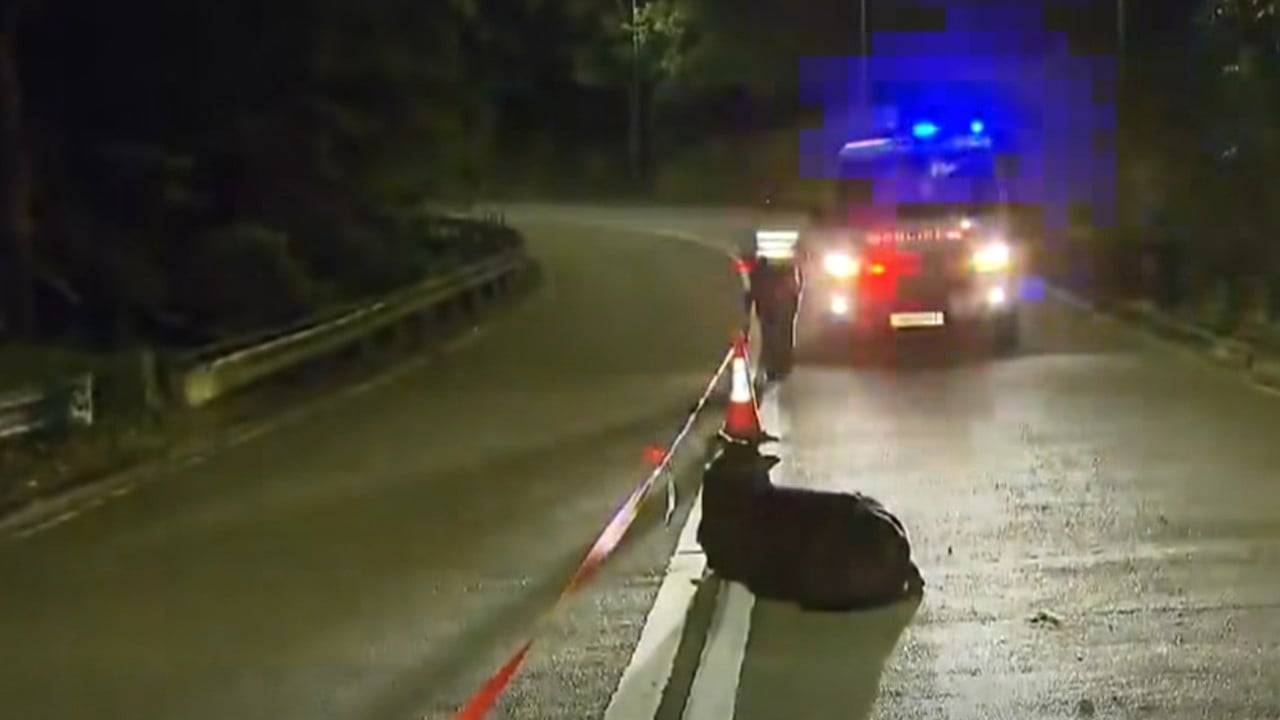
A man gets caught between two fighting cows on a Hong Kong trail and the media treats it like a freak accident. It wasn't. It was a failure of basic biological literacy. We have become so insulated by concrete and air conditioning that we view a 1,200-pound herbivore as a background prop in our weekend selfies.
When a hiker gets trampled because they walked into the middle of a bovine territorial dispute, the headlines focus on the "injury" and the "unpredictability" of nature. Both are lies. The injury is a consequence; the nature was perfectly predictable. If you walk into a bar and stand between two guys throwing punches, nobody calls the resulting broken nose a "freak accident." They call it a lack of situational awareness.
The Domesticated Animal Fallacy
The "lazy consensus" suggests that because these cows are feral descendants of farm animals, they are somehow "tame." This is a lethal misunderstanding of animal behavior. Domestication is a genetic process, not a personality trait. A cow is not your friend. It is a biological machine governed by hierarchy, hormones, and herd dynamics.
In Hong Kong’s country parks, particularly around Lantau and Sai Kung, these animals have high exposure to humans. This creates a "habituation trap." They no longer fear us, which hikers mistake for friendliness. In reality, a cow that doesn't move when you approach isn't being "chill"—it's asserting that you aren't a threat worth moving for. Until you are.
The moment two bulls or even protective matriarchs decide to settle a dispute, that trail is no longer a public thoroughfare. It’s a combat zone. If you don't know how to read the flick of a tail or the lowering of a skull, you have no business being on that trail.
The Geometry of a Trampling
Most hikers understand physical space in two dimensions: forward and backward. Nature operates in vectors of pressure. When two cows fight, they create a "shatter zone." They aren't looking at you. They aren't thinking about you. You are a blade of grass with a pulse.
If you see cows engaging—head-butting, locking horns, or even just circling each other with intense focus—the "safe" distance is not five feet. It’s not ten. It’s "out of the line of sight."
The logic is simple physics:
- Mass vs. Momentum: A cow can accelerate its bulk faster than you can pivot on a muddy trail.
- Peripheral Blind Spots: Cows have panoramic vision, but they have a blind spot directly behind them and a struggle with depth perception directly in front of their noses. If you are in that "gray zone" during a fight, you are invisible until you are under a hoof.
- The Pinch Point: The man in the recent incident was "caught between" them. This is the cardinal sin of wildlife interaction. You never, under any circumstances, allow your physical body to become the meat in a 2,000-pound sandwich.
Why "Leave No Trace" is Killing Your Instincts
We’ve been indoctrinated with "Leave No Trace" ethics. While noble for trash, it has made hikers timid and passive. People see a cow on a narrow path and try to "squeeze past" to avoid stepping off the trail and "damaging the flora."
Stop it.
If a cow is blocking the path, the path is closed. You go up the slope, you go down the ravine, or you turn around. Your desire to keep your boots clean or follow a GPS track is not more important than the "flight distance" of a bovine.
I’ve spent years navigating back-country trails where the wildlife doesn't see a human for months. There, the rules are clear: you are the intruder. In Hong Kong, the urban-nature interface has blurred those lines, leading to a dangerous sense of entitlement. Hikers feel they have a "right" to the trail. The cow disagrees. The cow usually wins.
The Problem With "Rescue Culture"
The immediate reaction to these events is to call for "management." Relocate the cows. Fence the trails. Cull the herd. This is the ultimate "Karen-ification" of the wilderness.
We are obsessed with sanitizing the outdoors until it’s just a treadmill with better views. The danger is the point. If you remove the risk of interacting with a massive, powerful animal, you aren't in nature anymore; you're in a museum. The "problem" isn't the cows fighting; it's the arrogance of the hiker who thought his presence was a shield.
How to Actually Survive a Bovine Encounter
Forget the "stay calm" platitudes. If you find yourself near fighting cows:
- Identify the Alpha: Usually the one not moving. The challenger is the one circling. Do not get in the arc of that circle.
- Use Verticality: Cows are terrible at navigating steep, rocky inclines quickly. If you're on a Hong Kong trail, move UP the embankment.
- Acoustic Deterrence: A sharp, loud, authoritative shout is better than a timid whistle. But don't do it if they are already locked in combat; at that point, you're just noise in the background of their adrenaline dump.
- The Umbrella Shield: A common trick among local cattle-country vets. Opening an umbrella toward an aggressive cow creates a sudden "visual wall" that is larger than the cow's brain can immediately process. It buys you three seconds. Use them to run.
Stop Asking if the Cow is "Dangerous"
People always ask, "Are the cows in [Location X] dangerous?"
It’s the wrong question. A hammer isn't dangerous until you put your thumb under it. A cow is a biological fact. It has weight, it has horns, and it has an ancient social code that doesn't include your Instagram feed.
The real question is: "Are you competent enough to be in their living room?"
Most people aren't. They walk onto trails with noise-canceling headphones, looking at a screen, completely oblivious to the heavy breathing and the scent of musk and dirt that signals a fight is brewing. They treat the trail like a hallway in an office building.
I’ve seen people try to pet these animals. I’ve seen them try to feed them oranges for a photo. Every time someone does that, they are priming that animal to lose its fear of humans, which directly leads to the next "unprovoked" attack. You are not "connecting with nature"; you are breaking the software of a wild animal.
The Hard Truth About Coexistence
True coexistence isn't about harmony; it's about mutual avoidance. It’s about respecting the fact that the cow doesn't want you there and you don't need to be there.
If you get trampled because you walked between two fighting animals, you didn't have bad luck. You had a bad education. The wilderness doesn't owe you safety. It doesn't owe you a clear path. It only offers you the consequences of your own decisions.
Next time you see a cow on the trail, stop looking at it as a photo op. Look at it as a heavy-duty vehicle with a mind of its own and no brakes. If it’s moving, you get out of the way. If it’s fighting, you leave the area. Anything less isn't "unpredictable nature"—it's predictable stupidity.
Get off the trail. Give them the space. Or stay in the city where the only thing you have to worry about is a taxi, and even then, at least the taxi has a horn you recognize.
Would you like me to break down the specific body language cues of feral cattle so you can identify a "pre-fight" state before the first charge?