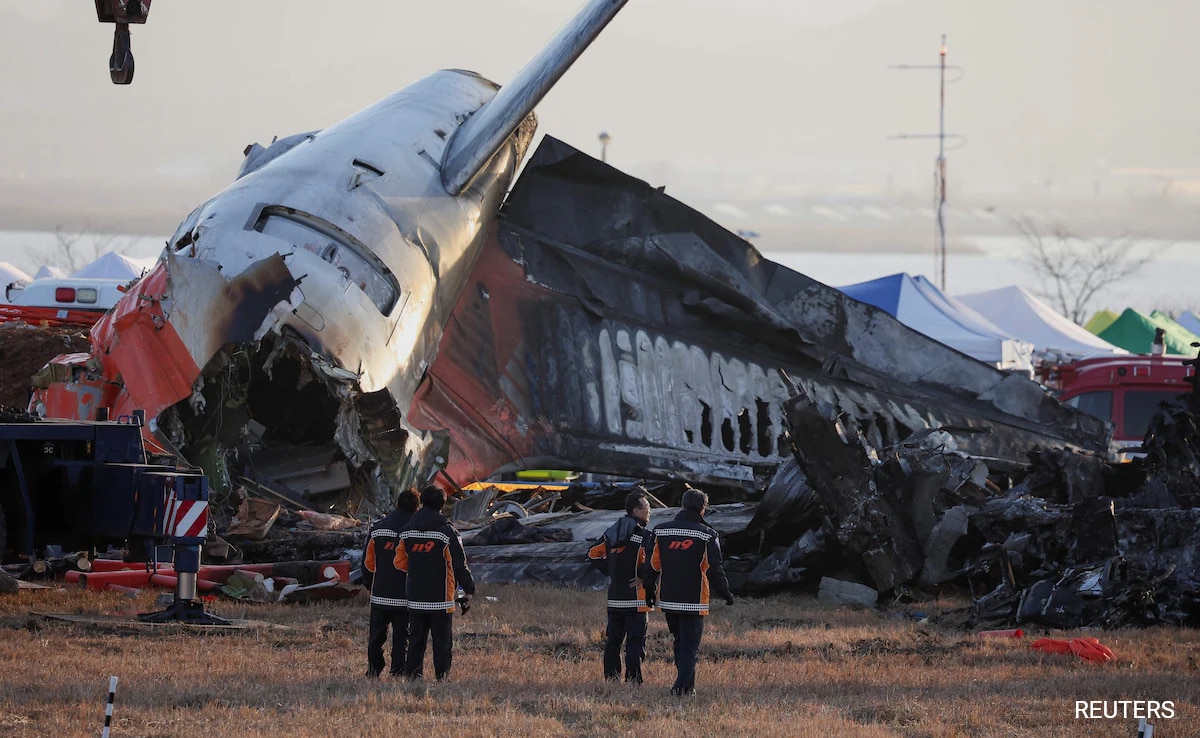
The media has a sick obsession with the "World's Worst" lists. Every time a fuselage touches the ground in a way it wasn't designed to, the ghouls come out to rank the tragedy. They tally the bodies. They highlight the flames. They tell you that 2014 was a "black year" because of MH370 and MH17, or they point to the Boeing 737 MAX groundings as proof that the sky is falling.
They are looking at the wrong numbers.
If you are reading a list of the deadliest aviation accidents to decide whether or not to book a flight to Singapore, you are participating in a massive exercise in statistical illiteracy. Modern aviation has become so safe that the "worst" crashes are no longer representative of systemic risk. They are outliers. They are "Black Swans" in the truest sense of Nassim Taleb’s definition: events that are impossible to predict, carry an extreme impact, and are explained away with hindsight bias.
The "worst" crashes tell you nothing about your next flight. They tell you everything about our inability to understand probability.
The Survivability Myth and the 95 Percent Rule
Most people view a plane crash as a binary event: you either land safely or you vanish in a fireball. This is a lie fueled by Hollywood and lazy journalism.
According to data from the National Transportation Safety Board (NTSB) covering accidents over a twenty-year period, the survival rate for passengers involved in aviation accidents was approximately 95%. Even in "serious" accidents—those involving significant structural damage or fire—over half of the occupants survived.
When a competitor article lists the "deadliest" crashes, they intentionally omit the thousands of "incidents" where the systems worked exactly as intended. They focus on the tail risk because blood sells subscriptions. But focusing on the 5% of fatal outcomes prevents us from understanding the 95% of engineering triumphs. We are training the public to fear the wrong things.
The 737 MAX Obsession is a Distraction
The global fixation on the Boeing 737 MAX 8 crashes—Lion Air Flight 610 and Ethiopian Airlines Flight 302—is the perfect example of how narrative replaces data. Yes, the MCAS (Maneuvering Characteristics Augmentation System) was a botched integration of software and hardware. Yes, the corporate culture at Boeing prioritized speed over safety.
But if you look at the raw data of global departures versus fatalities, the MAX is still statistically safer than the cars we drive to the airport without a second thought. The outrage wasn't actually about the number of deaths; it was about the betrayal of the "Automation Promise." We expect machines to be perfect, so when they fail due to a line of code, we react with a primal fear that we don't apply to a human pilot making a manual error.
The reality is that human error remains the primary driver of aviation risk, contributing to roughly 70% to 80% of all accidents. Yet, we don't see viral articles titled "The World's Worst Pilot Mental Health Crises" or "The Top 10 Fatigue-Related Maintenance Errors." We want a villain with a logo, not a systemic issue involving sleep cycles and training budgets.
Why "Deadliest" is a Useless Metric
Ranking crashes by death toll is like ranking diseases by how many people they killed in the 14th century. It’s historical trivia, not actionable intelligence.
Consider the Tenerife airport disaster of 1977. Two Boeing 747s collided on a foggy runway, killing 583 people. It remains the "deadliest" accident in history. Does it tell us anything about flying today? No. It led to the creation of Crew Resource Management (CRM)—a fundamental shift in how pilots communicate. It fundamentally changed runway lighting and ground radar.
The industry "fixed" Tenerife decades ago.
When you read a list of "recent" crashes that includes the 2014 Malaysia Airlines disappearances or the 2015 Germanwings deliberate crash, you aren't learning about aviation safety. You are reading about anomalies.
- MH370: A mystery that defies standard satellite tracking.
- Germanwings 9525: A psychiatric outlier.
- MH17: A geopolitical act of war.
None of these represent a failure of aviation technology or safety protocols. They represent the limits of human nature and global politics. If you want to know what actually poses a risk to your life, look at the mundane. Look at runway incursions—two planes nearly hitting each other on the ground. These are skyrocketing in frequency, yet they rarely make the "Worst Crashes" lists because nobody died.
We are ignoring the near-misses that actually reflect the current state of the system because we are too busy counting bodies from a decade ago.
The Economics of Fear
Why does the "Worst Crashes" trope persist? Because it’s easy.
It requires zero technical knowledge to list the five biggest numbers from a Wikipedia page. It requires significant expertise to explain why the pitot tubes on Air France 447 iced over and how the pilots' subsequent "dual input" on the side-sticks caused a high-altitude stall.
The industry insiders I talk to aren't worried about a "big" crash. They are worried about the erosion of the "Margin of Safety" caused by:
- Pilot Shortages: Junior pilots are being fast-tracked into cockpits with fewer flight hours than their predecessors.
- Maintenance Outsourcing: Heavy maintenance is increasingly performed in third-party facilities where oversight is thinner than at the airline’s home base.
- The "Pink Tax" of Safety: Low-cost carriers often operate on such thin margins that they push the limits of "Minimum Equipment Lists" (MEL), flying planes with non-essential systems broken for weeks.
These are the real threats. But you can't put a haunting photo of a broken wing on a listicle about "Regulatory Oversight in Secondary Maintenance Markets."
Stop Asking if the Plane is Safe
The premise of the question "What are the world's worst air crashes?" is flawed because it assumes that past crashes predict future ones. They don't. In a complex, adaptive system like global aviation, the system learns from its mistakes. The moment a crash happens, that specific type of crash becomes the least likely thing to happen again.
The FAA, EASA, and other bodies issue Airworthiness Directives (ADs) that force every airline to fix the specific flaw that caused the tragedy. Aviation safety is built on a mountain of charred remains, but that mountain is what makes the ground today so solid.
If you want to be a smart traveler, stop looking at lists of crashes. Start looking at the safety culture of the specific airline and the regulatory rigor of the country where it is based. A "deadly" crash from 2018 in a developing nation with poor oversight tells you nothing about a flight on a major carrier in a highly regulated environment.
The Hard Truth About Regional Risk
If we are going to be honest—brutally honest—there is a massive disparity in safety that "Worst Crashes" lists gloss over to avoid appearing biased.
Flying a major US, European, or Australian carrier is essentially risk-free. You are more likely to be killed by a falling vending machine. However, flying on a regional turboprop in a country with a corruption-heavy civil aviation authority is a completely different statistical reality.
The "World's Worst" lists often mix these two realities together. They put a Boeing failure caused by a design flaw in the same category as a regional crash caused by a pilot trying to land in a monsoon without functional ILS (Instrument Landing System).
This is intellectual dishonesty. It's like comparing a car accident caused by a brake failure in a brand-new Volvo to a crash caused by someone driving a 40-year-old truck with no headlights through a mountain pass at night. They aren't the same thing, and they shouldn't be on the same list.
Forget the Listicle
The next time you see a headline about the "Deadliest Crashes of the Last Decade," ignore it. It is trauma porn designed to trigger your amygdala. It offers no value, no insight, and no protection.
The safety of the sky isn't found in the headlines; it’s found in the boring, unsexy manuals of the technicians who work the night shift. It’s found in the redundant sensors that didn't fail today. It’s found in the thousands of flights that landed three minutes early while you were asleep in 14B.
Focusing on the wreckage is how you stay afraid. Understanding the system is how you stay informed.
The most dangerous part of your next trip is the Uber ride to the terminal. If you can't accept that, you aren't paying attention to the data—you're just falling for the narrative.
Don't be a statistician of the past. Be a realist of the present.
The sky is fine. Get on the plane.