Silence has a weight. On the high plateau of the world, where the thin air burns the lungs and the sky presses down with an indigo intensity, silence is not merely the absence of sound. It is a physical barrier. It is a curtain drawn tight by design, stitched together from checkpoints, permits, confiscated lenses, and the quiet erasure of what happened yesterday.
Imagine holding a photograph of a valley you love. Now, take a pair of heavy shears and cut away the horizon. Then the river. Then the village clinging to the slate-gray hillside. Until all that remains of a living, breathing place is a blank white square.
That is what has happened to Tibet.
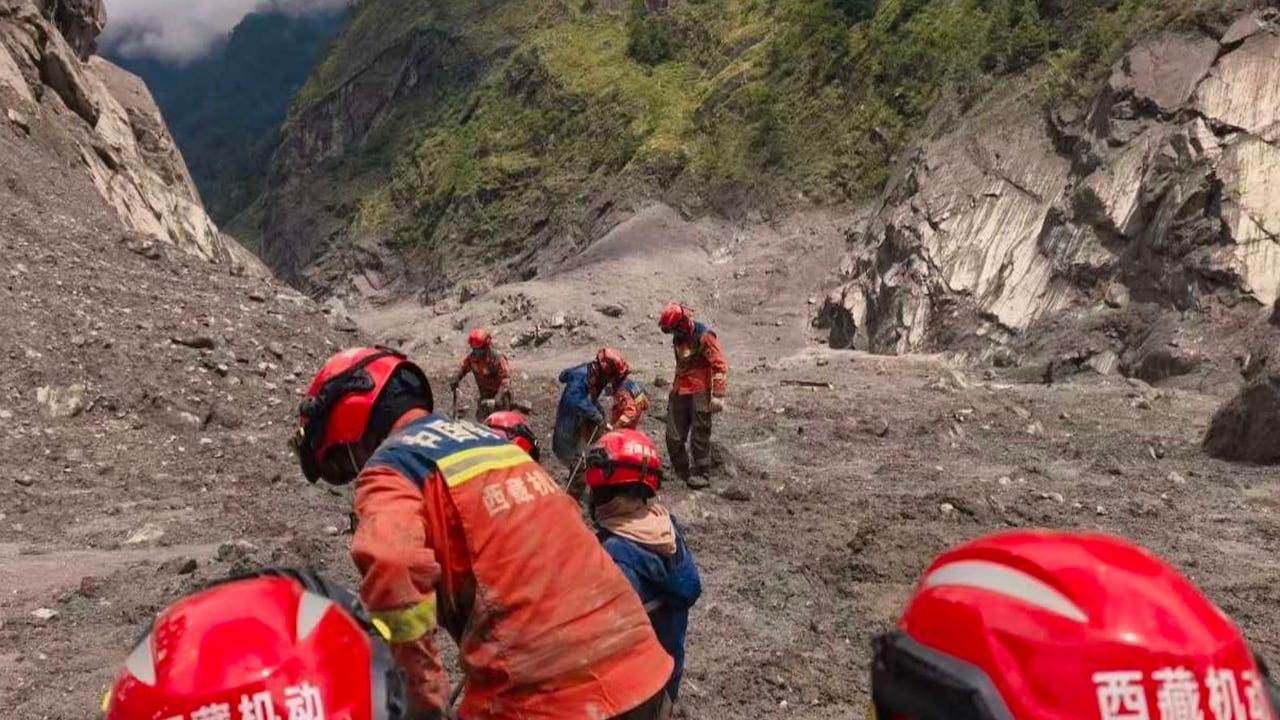
For the outside world, the Roof of the World has receded behind an impenetrable information blockade. When rivers swell beyond their banks, swallowing ancestral pastureland, or when tectonic shifts and glacial lake outbursts threaten communities perched at fourteen thousand feet, the distress signals do not travel outward. They vanish.
To understand why this matters, you have to step away from geopolitical abstracts and look at the mechanics of isolation.
Consider a hypothetical cartographer sitting in a dimly lit office in Lhasa or Beijing, tasked with a very modern kind of editing. This is not the ancient art of drawing dragons on unexplored edges of parchment. This is subtraction in real time. A mudslide wipes out a cluster of stone homes near the Yarlung Tsangpo river. In an open society, local stringers post shaky phone footage within minutes. Satellite telemetry confirms the displacement. Aid organizations mobilize. Independent journalists board flights to document the human toll, interviewing elders whose families have grazed yaks in those high valleys for centuries.
None of that happens here.
Instead, the digital airspace is swept clean. Algorithms flag keywords. Permits for foreign journalists are quietly denied, delayed, or conditioned upon minders who dictate every step of the journey. Local citizens who dare to upload footage of ruined bridges or submerged prayer wheels find their accounts blocked, followed by a visit from security personnel who remind them that social stability requires a quiet tongue.
The official channels tell a different story. They speak of proactive relocations, harmonious disaster response, and robust recovery frameworks. But numbers without independent verification are just smoke. When you cannot cross-reference a statistic with an unmoored witness, statistics cease to inform. They become theater.
This curtain is not made of cloth. It is made of bureaucracy and fiber-optic choke points. It relies on the sheer logistical nightmare of reaching a terrain where altitude sickness alone defeats most casual travelers, making it exceptionally easy to seal the borders to prying eyes.
The consequences stretch far beyond the borders of the autonomous region. Tibet is the water tower of Asia. The glaciers cradled in these mountains feed the Mekong, the Yangtze, the Yellow River, the Indus, and the Brahmaputra. Over a billion people downstream depend on the hydrological health of this high-altitude sanctuary. When ecological crises strike these slopes—whether through accelerated permafrost thaw, erratic monsoon patterns, or sudden glacial floods—the early warning system for half the planet goes dark.
We are flying blind. And we are flying blind by order.
To comprehend the human cost, we must look at how isolation weaponizes grief. When disaster strikes a community cut off from the global narrative, the survivors endure a double tragedy. First, they lose their homes, their livestock, or their kin. Second, they lose their voice. Their suffering is rendered weightless, unacknowledged by history, unwept by strangers across the ocean who might otherwise have demanded action or sent aid.
Grief requires witness. Without witness, pain becomes a private ghost haunting an empty room.
The blockade also distorts our understanding of environmental change. Scientists relying solely on remote sensing data—satellite radar and thermal imaging—miss the ground truth. They can measure the retreat of a tongue of ice from space, but they cannot capture the crumbling soil beneath a herder's tent, the shifting water tables, or the cultural devastation of relocating nomadic communities into concrete housing blocks on the outskirts of unfamiliar cities. The human narrative is stripped away, leaving only cold metrics that fail to rouse public conscience.
We have built a global village connected by instant communication, yet entire geographies remain as opaque as the dark side of the moon. This is not an accident of geography. It is a masterclass in information control. By treating local ecological and humanitarian events as state secrets, authorities ensure that the narrative remains tightly managed, impervious to outside critique or empathetic intervention.
The danger of this curated silence is that we begin to accept it as normal. We look at the blank spaces on the map and assume nothing is happening there. We mistake the absence of news for the absence of turmoil.
Yet beneath the high-altitude sun, rivers still carve through ancient stone. Glaciers still fracture under the pressure of a warming atmosphere. Families still wake up to cold winds and uncertain futures, wondering if anyone out there remembers they exist.
The curtain remains drawn. But every now and then, a whisper slips through the seams—a smuggled photograph, a traveler's guarded account, a subtle discrepancy in official rainfall data. These fragments remind us that a story cannot be permanently erased, only suppressed.
The map has not vanished. It has simply been hidden from view. And until that curtain is pulled back, the rest of the world remains complicit in a quiet, sprawling unknown.