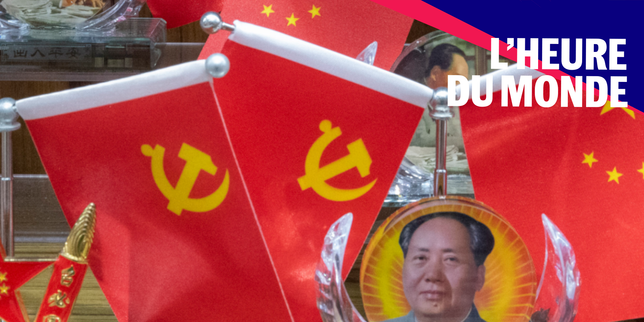
Walk through Beijing's Tiananmen Square today, and you'll still see Mao Zedong staring down from his massive portrait, his embalmed body resting quietly in a mausoleum just a short walk away. Half a century after his death, China's founding father remains an untouchable icon and an active political ghost.
The ruling Communist Party faces a permanent, ticking paradox. You cannot throw away the man who built the regime without unraveling the legal and moral justification for single-party rule itself. Yet, you cannot fully embrace his brutal economic experiments and bloody political purges without acknowledging the catastrophe they brought.
The Dual Identity of China's Founding Father
Historians often describe Mao through a split lens, viewing him simultaneously as the Lenin and the Stalin of the Chinese Communist Party. He successfully united a fractured country, threw off the weight of foreign imperialism, and proclaimed the People's Republic in October 1949. That founding myth gives the party its foundational legitimacy.
Strip away the heroic narrative, however, and you find a trail of engineered human misery. The Great Leap Forward mutated from an ambitious industrialization drive into a catastrophic famine that cost tens of millions of lives. Shortly after, the Cultural Revolution tore families, schools, and institutions apart in a decade-long crusade against imaginary bourgeois enemies.
Official party doctrine handles this tightrope walk through a famous historical compromise established in the early 1980s. The official verdict declares that Mao was seventy percent right and thirty percent wrong. It is a neat mathematical formula designed to protect the mythology of the state while quietly sweeping mass graves under the rug.
Why the Party Can't Let Go
Modern China looks nothing like the impoverished, agrarian nation Mao left behind. Deng Xiaoping's subsequent economic reforms introduced rampant capitalism, soaring skyscrapers, and a massive middle class that cares far more about wealth accumulation than permanent revolution.
Yet, the current leadership under Xi Jinping continues to lean heavily back into Maoist authoritarian playbooks. Ideological discipline, tight media controls, and the absolute supremacy of the party over society all trace directly back to Mao's core philosophy. Criticizing the founder opens a dangerous door. If Mao's absolute infallibility cracks, the entire narrative of party infallibility shatters right along with it.
The awkward reality extends deeper into the political establishment. Many senior party elites, including families of current leadership figures, survived or directly participated in the turbulence of the mid-twentieth century. A transparent, unvarnished reckoning with history threatens too many powerful lineages. Silence serves everyone at the top.
Public Nostalgia Versus Historical Reality
On the ground, public sentiment toward the founder splits along generational and economic lines. Step away from the glittering tech hubs of Shenzhen and talk to older workers, and you'll find a strange kind of romanticized nostalgia.
Some citizens remember the Mao era not for its mass political campaigns, but for a perceived egalitarianism. In their eyes, an era of widespread poverty also meant zero tolerance for modern corruption, guaranteed basic healthcare, and secure employment. Rapid modernization brought wealth, but it also introduced cutthroat competition, stark economic inequality, and intense social anxiety. For those left behind by the modern economic miracle, Mao occasionally transforms into a symbol of lost moral purity.
Conversely, younger generations often view the era through a haze of sanitized textbooks or digital censorship. They navigate a hyper-connected global economy while living under a political system frozen in mid-century iconography.
Mao's ghost is not fading away anytime soon. He remains the bedrock foundation of Chinese state power, an indispensable myth that the party cannot live with, and certainly cannot live without.