Art does not usually scream when it is taken. It leaves quietly. A faint ghost of dust on a gallery wall where a heavy frame used to hang, a momentary confusion in the guard's eyes, and then silence.
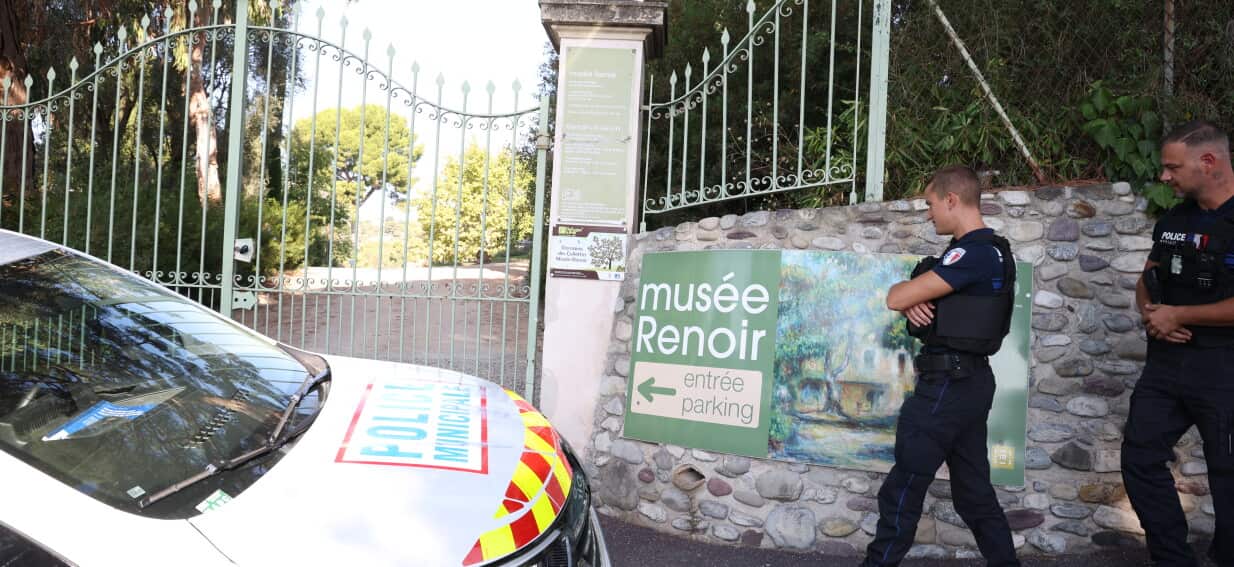
The security gate at the small museum in France did not sound a klaxon that shattered the afternoon air. The alarms, when they finally registered, were polite digital pulses sent to a screen miles away, where a dispatcher blinked twice, thinking it was a glitch in the wiring. It was not a glitch. It was a precise, surgical extraction. Two Renoir masterpieces, canvases that had trapped the golden warmth of nineteenth-century sunlight, were simply gone.
Consider what happens when a physical manifestation of human genius vanishes into the black market.
To the casual observer, a stolen painting is a line item on an insurance ledger or a flashy plot point in a late-night thriller. We imagine cat burglars in black turtlenecks dangling from skylights, cutting glass with diamond rings. We picture private island vaults owned by eccentric billionaires sipping scotch in the dark, staring at stolen brushstrokes that no one else will ever see.
Reality is far more mundane, and infinitely more tragic.
Most stolen masterpieces do not end up in private collections. They become currency. They are collateral for drug cartels, bargaining chips in weapons trades, or desperate leverage held by minor criminals who suddenly realize they have caught a tiger by the tail. A Renoir cannot be walked into a Sotheby’s auction house. It cannot be hung above a suburban fireplace to impress dinner guests. It is radioactive. Every millimeter of oil paint, every crack in the varnish, every signature in the corner is a fingerprint that cries out to the world.
Yet they keep stealing them. Why? Because art possesses a strange, impossible gravity. It is weightless wealth. You can fold centuries of human emotion, millions of dollars of market value, and the irreplaceable soul of a culture into a cardboard tube, tuck it under your arm, and walk out into the rain.
Let us step inside the frame for a moment. Imagine you are Pierre-Auguste Renoir, sitting by a riverbank in Chatou in the summer of 1880. The air smells of damp earth, cheap wine, and wet linen. The light is fracturing through the leaves of the poplar trees, dapples of amber and jade dancing across the shoulders of young women laughing over cider. You are not painting a record of a place; you are trying to capture the heartbeat of a single, fleeting second before it dissolves forever. You mix flake white, cobalt blue, and vermilion. You work fast because the light is dying. You scrape away a mistake with a palette knife. You swear under your breath. You finish. You step back, wipe your paint-stained fingers on your trousers, and think, There. I caught it.
One hundred and forty years later, a man in a nylon jacket and a surgical mask walks past your canvas, lifts it off two security brackets, and slips it into a backpack.
The violence of that transition is staggering. It moves from the realm of the sacred into the gutter of commodity.
When cultural heritage is sliced from a wall, a specific kind of violence is done to the public trust. We live in an era where public spaces are shrinking. Museums are among the last secular temples we have left. You do not need to buy a ticket to feel ownership of a public collection; the wealth of human expression housed within those stone walls belongs to everyone who pauses long enough to look. When a thief cuts a canvas from its stretcher bars, they are stealing a piece of every person who ever stood before it and felt less alone in the universe.
The French museum was quiet that afternoon. That is the detail that lingers. No sirens screaming down the boulevard at high noon. Just the heavy, stunned hush of curators standing in front of two empty rectangles, whispering to each other in low, trembling tones as if speaking near a grave.
Security experts often talk about vulnerabilities, blind spots, and motion sensors as if security were an exact science. It is not. It is a human negotiation. Every lock was designed by a human mind, which means another human mind can pick it. Every protocol relies on a guard being alert during the third hour of a monotonous shift, staring at monochrome monitors while the rain taps against the glass. We build fortresses around our history, but we staff them with mortals.
And perhaps that is the secret terror at the heart of art theft. It reminds us that nothing is truly safe. The fragile beauty we create, the monuments we build to our own transient existence, can be rolled up, packed away, and hidden in a damp basement by someone who does not know the difference between a Renoir and a roadside poster.
The investigation is ongoing, as they always say. Police are reviewing grainy closed-circuit television footage. Interpol has been notified. Informants in the underworld are being squeezed, their phones tapped, their whispers analyzed for any mention of French impressionism traded for bitcoin or cocaine. Somewhere out there, the canvases are rolled tightly inside a PVC pipe, tucked behind old paint cans in a garage or shoved under a dusty mattress in a provincial apartment. The sunlit faces of Renoir’s women are staring blindly into the dark, waiting for a light they will not see again for years, if ever.
We tell ourselves that art is immortal. We carve names in marble and spread oil across linen because we are terrified of oblivion. We want to believe that what we make outlasts what we are. But standing in front of an empty wall in Paris, the illusion shatters. Art is not immortal at all. It is astonishingly fragile. It breathes only as long as we protect it, as long as we care enough to keep the lights on, the doors locked, and the darkness at bay.
The frames are still hanging. They are waiting.