The death of Ricardo Ortiz, a veteran matador gored during a routine preparation in Spain, exposes a fundamental failure in risk mitigation within the high-stakes environment of tauromachy. While media coverage often frames such incidents through the lens of tragedy or tradition, an objective analysis reveals a breakdown in the Safety-Performance Paradox. In elite technical disciplines, veteran status frequently introduces a "competency trap" where mastery of the craft leads to a subconscious reduction in the margin of safety, despite the physical variables remaining constant and lethal.
The incident involving Ortiz illustrates that the inherent risks of the bullring are not merely atmospheric; they are governed by specific mechanical and biological vectors that, when aligned, bypass even decades of professional conditioning.
The Kinematics of the Horn Strike
To understand why a practitioner of Ortiz's caliber—who spent years navigating the tercios of the ring—succumbed to a single engagement, one must quantify the physics of a bull’s charge. A fighting bull (Brave Bull) typically weighs between 450kg and 600kg, capable of reaching speeds of 25 kilometers per hour.
The biological architecture of the bull focuses this kinetic energy into two primary points: the horns. Unlike a blunt force impact, the horn strike functions as a high-pressure penetrative force. The surface area of a sharpened horn tip is negligible, meaning the pressure exerted upon impact ($P = F/A$) exceeds the tensile strength of human muscle tissue and vascular walls instantly.
In the case of Ricardo Ortiz, the strike occurred during the preliminaries—a phase where the animal is often at its most unpredictable. The bovine's field of vision is nearly 330 degrees, yet it possesses a central blind spot directly in front of its nose. Professional matadors exploit this blind spot to "lead" the animal. Any micro-deviation in the bull's path—caused by a shift in footing or a peripheral distraction—places the human target directly in the line of the horn’s arc. When the animal "hooks" (the lateral flick of the head), it adds a rotational torque to the linear momentum, creating a shearing effect that causes catastrophic internal hemorrhaging.
The Hierarchy of Tauromachy Risks
Risk in the bullring can be categorized into three distinct layers. Most analysis focuses on the third layer (the spectacle), while the fatality occurred due to a failure in the first two.
- The Biological Variable: The unpredictable neurological state of the bull. Unlike a mechanical opponent, the bull reacts to sensory inputs (light, sound, scent) that the matador cannot always perceive.
- The Technical Margin: The precise distance (measured in centimeters) between the bull's flank and the matador’s hip. Ortiz’s death occurred when this margin collapsed, likely due to a miscalculation of the animal’s "querencia"—its tendency to return to a specific area of the ring for safety.
- The Professional Paradox: The psychological phenomenon where increased experience leads to a diminished perception of acute danger. This is known as "habituation." For a matador with decades of experience, the sights and sounds that trigger a "fight or flight" response in a novice become routine, potentially slowing the millisecond-fast reaction times required to dodge a hook.
The Medical Bottleneck in Provincial Venues
A critical factor in the mortality rate of modern bullfighting is the "Golden Hour" of trauma surgery. In major plazas like Las Ventas in Madrid, world-class infirmaries are stationed mere meters from the sand, staffed by surgeons who specialize in cornadas (horn wounds). These specialists understand that a horn wound is never a simple puncture; it is a multi-directional cavity that often carries dirt, bacteria, and fragments of the bull's horn deep into the tissue.
The death of Ortiz highlights a systemic vulnerability in smaller, provincial, or informal settings.
- Vascular Integrity: A femoral artery strike allows a person to bleed out in under two minutes. Without immediate vascular clamping, survival is mathematically impossible.
- Logistical Latency: If the incident occurs in a venue without an on-site surgical suite, the time required for stabilization and transport often exceeds the physiological limit of the victim.
- Wound Complexity: Horns do not travel in a straight line once they enter the body. The "trajectory of the wound" often follows the path of least resistance around bones, meaning an entry wound in the thigh can result in damage to the abdominal cavity.
The absence of elite-level trauma infrastructure at the moment of Ortiz’s goring likely converted a treatable—though severe—injury into a terminal event.
The Structural Decline of Professional Safety Standards
The death of a veteran also raises questions about the current state of training and the "vetting" of animals used in various levels of Spanish bullfighting. There is a measurable correlation between the economic pressure of the industry and the risks taken by aging performers.
As the popularity of bullfighting fluctuates, seasoned matadors may accept engagements in less regulated environments to maintain their professional standing or financial solvency. These "secondary" circuits often feature bulls with less predictable breeding or venues with substandard safety barriers (tablas).
This creates a Risk Gradient:
- Elite Circuit: High-quality bulls, maximum medical support, high visibility.
- Provincial Circuit: Variable bull quality, moderate medical support, lower margin for error.
- Informal/Preparation: Minimum regulation, potentially zero immediate medical intervention, highest volatility.
Ortiz was engaged in the preparation phase—a period where the formal protocols of the corrida are not yet fully in effect, yet the physical danger is at its peak.
The Evolutionary Pressure on the Sport
The fatality of Ricardo Ortiz is not an isolated accident but a symptom of the inherent instability of the man-versus-beast model. As public scrutiny of the sport increases, the pressure on matadors to perform "closer" to the bull to maintain the spectacle’s intensity has grown. This reduces the Physical Buffer Zone.
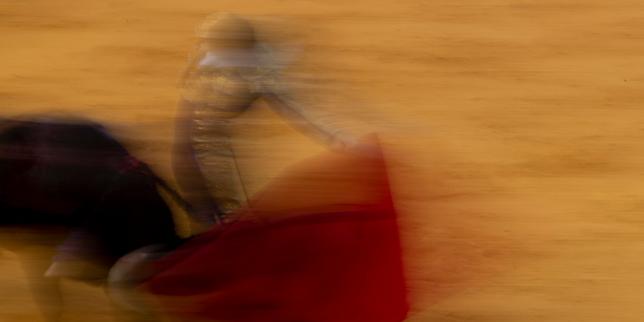
When the Buffer Zone is reduced to near-zero, the matador relies entirely on the bull’s compliance with the cape’s movement. If the bull "wins" the psychological battle for even a fraction of a second, the result is the physical contact that claimed Ortiz’s life.
The industry must now confront the reality that "experience" is not a shield against the laws of physics. The reliance on individual skill as the primary safety mechanism is a flawed strategy. A shift toward mandatory, standardized mobile surgical units for every event involving "Brave Bulls"—regardless of the venue's size—is the only technical intervention that can decouple a goring from a fatality.
The strategic imperative for the bullfighting unions is clear: acknowledge that the veteran matador is at higher risk due to habituation and implement secondary safety fail-safes that do not depend on the matador’s reflexes. Without this, the attrition of the sport’s most experienced practitioners will continue to accelerate, driven by the cold mathematics of kinetic energy and vascular trauma.