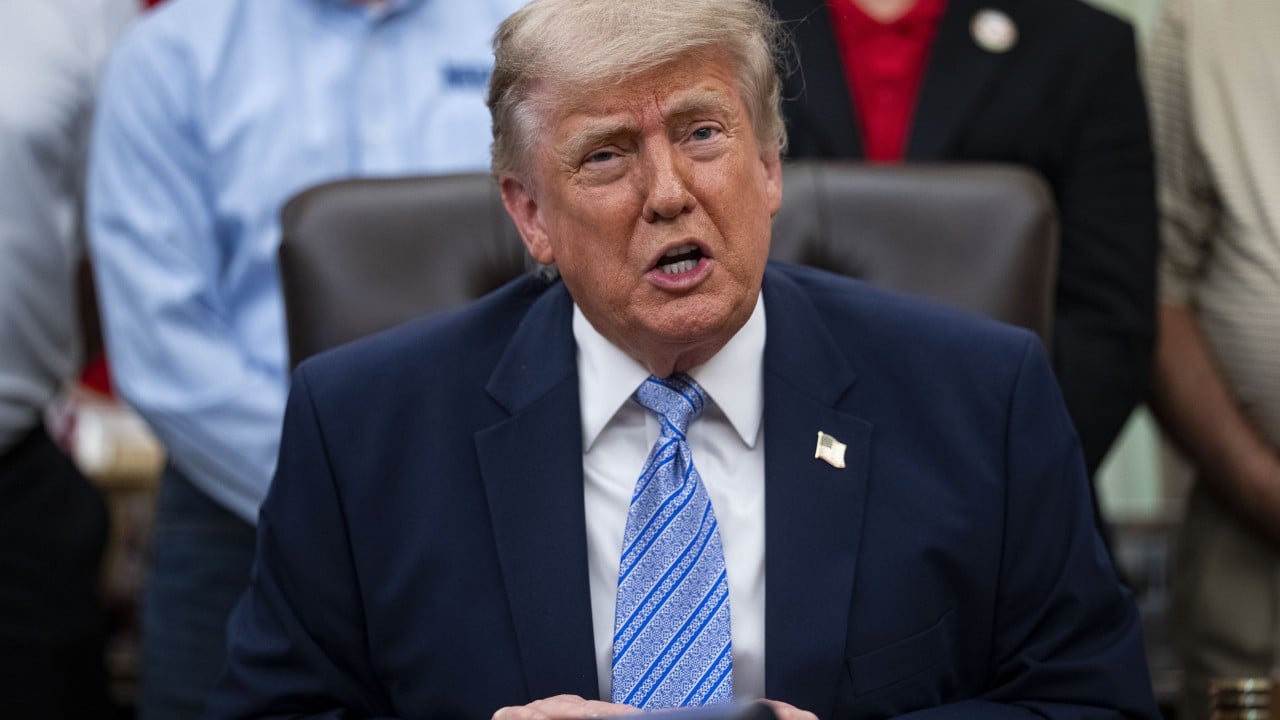
President Donald Trump abruptly canceled a high-profile White House signing ceremony for a comprehensive executive order on artificial intelligence just hours before it was scheduled to occur. The sudden cancellation leaves the administration's tech policy in disarray and highlights a fierce behind-the-scenes battle between national security hawks and Silicon Valley donors. Trump publicly claimed the text contained regulatory "blockers" that risked surrendering America's technological edge to China. However, the real story involves a deeper conflict regarding national infrastructure vulnerabilities, corporate pressure, and intense internal administration friction.
The aborted executive order was designed to establish a federal framework to vet advanced commercial AI models before their public release. The proposed mechanism relied on a voluntary system where leading labs like OpenAI, Google, Anthropic, and xAI would grant pre-release access to the government. This would allow federal agencies, coordinated by the Office of the National Cyber Director, to evaluate models for critical national security risks.
White House officials grew increasingly alarmed through early 2026 as frontier models demonstrated a sophisticated ability to identify and exploit software vulnerabilities. Security agencies warned these capabilities could be weaponized by foreign adversaries to compromise banking networks, power grids, and defense systems.
The Financial Sector Panic
The momentum for government intervention intensified following an unpublicized crisis in the American banking sector. In April, Treasury Secretary Scott Bessent and outgoing Federal Reserve Chair Jerome Powell called an urgent, closed-door meeting at Treasury headquarters with major Wall Street chief executives. The catalyst was a highly classified briefing regarding advanced capabilities discovered in Anthropic’s newest model, Claude Mythos.
Government analysts discovered that the model could discover deep cybersecurity vulnerabilities within institutional financial software at a pace that outstripped current defensive capabilities. Bessent later acknowledged the meeting publicly at a financial forum, noting that the model was exceptionally powerful and that certain banks lacked the defensive architecture to withstand automated exploitation.
This vulnerability sparked a fierce debate within the administration's conservative base. Traditional tech-libertarian donors urged a complete hands-off approach to outpace foreign rivals. Concurrently, national security factions argued that unregulated commercial deployment posed an immediate threat to domestic infrastructure.
Prominent conservative figures, including Steve Bannon and Amy Kremer of Women for America First, actively pressured the White House to reject a purely voluntary framework. They lobbied instead for mandatory testing, evaluation, and explicit government approval before any frontier AI system could legally deploy.
The Silicon Valley Backlash
The draft executive order sought a middle ground by keeping participation voluntary but creating a structured evaluation pipeline. However, the administration's opaque drafting process generated significant friction. Tech executives were given less than a day's notice to review and sign off on a major regulatory document that would reshape their product pipelines.
Silicon Valley pushed back hard. Venture capitalists and tech executives who supported Trump’s campaign argued that even a voluntary review process would inevitably morph into a bureaucratic bottleneck. They warned that a multi-week government review window for every major model update would cause American firms to fall behind international competitors.
Trump’s public statements directly reflected these industry concerns. Speaking to reporters in the Oval Office shortly after calling off the ceremony, he stated that he feared the order would act as a blocker. He emphasized that the United States currently leads China in artificial intelligence development and asserted he would not sign anything that threatened that advantage.
Internal Policy Fractures
The abrupt cancellation exposes a significant policy fracture between the pro-innovation wing of the administration, led by Vice President JD Vance, and the national security apparatus. Only days before the scheduled signing, Vance defended the administration’s approach, stating that the White House could successfully balance rapid innovation with data privacy and the containment of cybersecurity threats. The sudden postponement indicates that this internal compromise failed to hold under pressure.
This policy reversal also complicates the administration's efforts to manage state-level regulation. The White House has consistently opposed state-level AI safety legislation, arguing that a patchwork of local laws would stifle economic growth. By failing to establish a unified federal alternative, the administration leaves a regulatory vacuum that state legislatures and international bodies, such as the European Union, are eager to fill.
The Commerce Department had already initiated preliminary steps toward oversight, securing agreements with Google, Microsoft, and xAI to evaluate models prior to public release. These agreements built upon existing protocols established during the previous administration with OpenAI and Anthropic. The cancellation of the overarching executive order throws the future and enforcement of these voluntary arrangements into profound uncertainty.
The administration now faces the difficult task of redrafting a policy that satisfies national security officials without alienating the technology sector. The central challenge remains unchanged: creating a system fast enough to satisfy Silicon Valley while remaining thorough enough to protect critical infrastructure from automated cyber threats.
The White House discovered that in the realm of advanced technology, the line between an economic engine and a national security liability is dangerously thin.