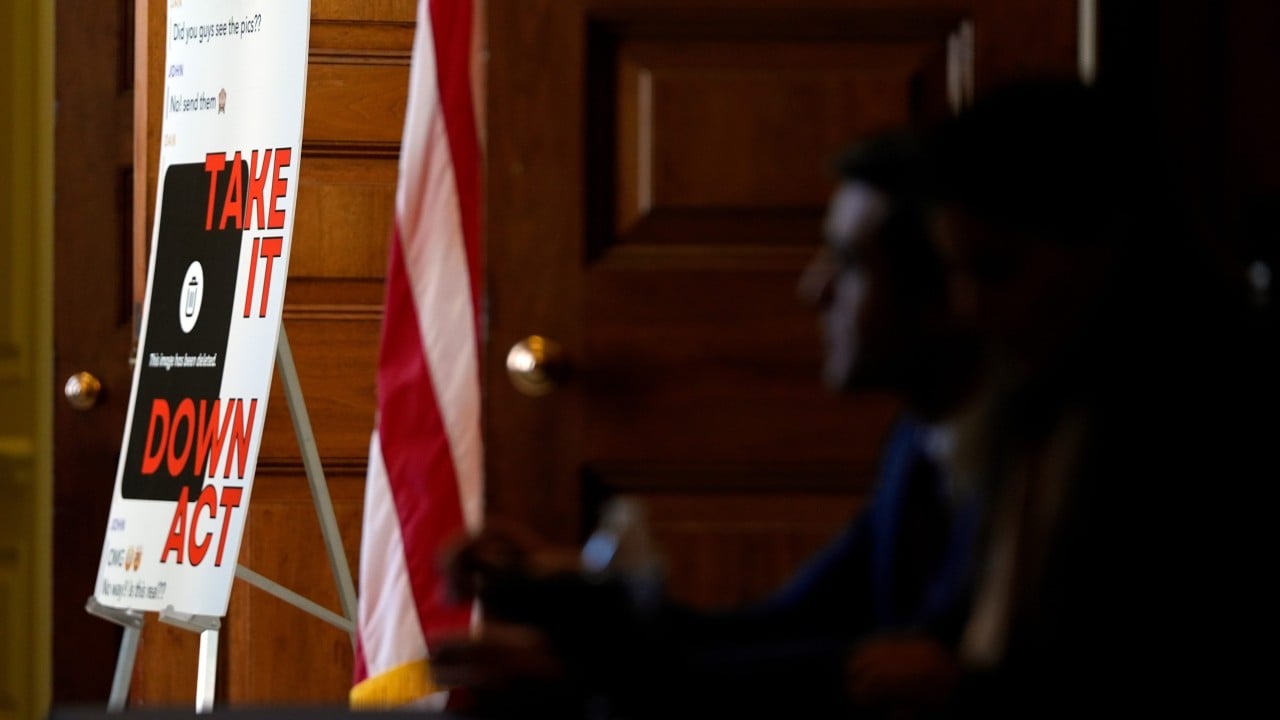
The media is celebrating a hollow victory. Following the arrests of Cornelius Shannon and Arturo Hernandez under the newly minted TAKE IT DOWN Act, commentators are lining up to declare the end of the non-consensual AI pornography era. They look at a couple of guys facing two years in a federal cell for uploading thousands of synthetic images and see a system finally working.
They are completely blind to reality.
I have spent fifteen years building digital infrastructure and watching regulators play a permanent, losing game of whack-a-mole with technology. This latest federal push isn't a solution; it is a legal placebo. The narrative pushed by mainstream outlets—that strict statutory penalties will deter the weaponization of generative imagery—rests on a fundamentally flawed premise. They treat software like a physical contraband network. They think if you bust the distributors, the supply chain collapses.
It won't. The logic underpinning the TAKE IT DOWN Act ignores the basic economics of open-source computing, decentralized distribution, and the mathematical impossibility of absolute digital enforcement.
The Mirage of Centralized Deterrence
The mainstream consensus argues that high-profile arrests will send a chilling effect through the deepfake ecosystem. This reveals a total lack of understanding of how this software is built and distributed.
Shannon and Hernandez were low-hanging fruit. They used traceable infrastructure and uploaded massive, public albums directly to standard adult platforms to farm views. They were acting like traditional media distributors, which made them easy targets for the U.S. Attorney’s Office in Brooklyn.
But the real engine of synthetic media doesn't live on centralized commercial platforms. It lives on decentralized, peer-to-peer networks and anonymous image boards.
- The Local Execution Problem: Unlike traditional cloud applications, generative AI models like Stable Diffusion can run locally on consumer-grade hardware. A mid-range graphics card bought at a local electronics store can generate high-fidelity synthetic images in seconds, completely offline.
- The Ghost Supply Chain: The software used to manipulate these images is open-source. The code is hosted across hundreds of mirroring repositories globally. You cannot subpoena a decentralized network, and you cannot place a regulatory kill-switch on code that has already been cloned millions of times.
When the state penalizes the distribution of a physical illicit substance, the threat of prison works because the supply chain relies on tangible borders, transport hubs, and physical risk. With synthetic media, the factory is a file on a hard drive, and the distribution network is an encrypted chat protocol. Arresting two creators out of hundreds of thousands is like trying to empty the ocean with a thimble.
The 48-Hour Removal Fallacy
A core pillar of the TAKE IT DOWN Act is the mandate requiring websites and social platforms to purge reported synthetic imagery within 48 hours. On paper, this sounds like a victory for victim advocacy. In practice, it demonstrates a complete ignorance of digital persistence.
Imagine a scenario where a piece of non-consensual media is uploaded to a major social platform. Within three minutes, automated scraping bots copy that data and mirror it across fifty unindexed, foreign-hosted sites outside U.S. jurisdiction. By the time the primary host complies with the 48-hour deletion order, the media has already been permanently archived in the digital underbelly of the web.
[Original Upload] ──> Triggers Scraping Bots ──> Instant Mirroring (Offshore Hosts)
       │                                                    │
       ▼ (48 Hours Later)                                   ▼
[Platform Take-down]                                  [Permanent Availability]
The concept of "removal" belongs to an older version of the internet that no longer exists. Once digital data with high psychological or financial value enters the wild, it cannot be recalled. Forcing domestic platforms to scrub their servers within two days does nothing to stop the infinite tail of global replication. It merely hides the problem from public view while leaving the underlying harm untouched.
The Evaporation of Digital Provenance
The most dangerous flaw in the current legal approach is the assumption that we can accurately distinguish between real, edited, and entirely synthetic media over the long term.
The legal system relies on evidence and clear boundaries. But as generative models advance, the artifacts that identify an image as synthetic are disappearing. We are rapidly approaching a state of total simulation parity, where a completely artificial image possesses the exact pixel variance, noise profile, and metadata architecture of an authentic photograph.
How does a prosecutor prove beyond a reasonable doubt that an image was generated without consent when the tools to create that image leave no signature?
The Failure of Watermarking Standards
Proponents of the tech regulation framework point to emerging provenance initiatives, such as cryptographic watermarking and metadata tagging supported by groups like the ITU. They believe that by embedding an invisible digital signature into every AI-generated file, we can track and police harmful content automatically.
This is a technical fantasy.
Cryptographic watermarks only exist if the software generating the image enforces them. Open-source forks explicitly strip out these compliance features within hours of release. Furthermore, any watermark embedded in a file can be destroyed by basic post-processing techniques: re-saving the file in a lossy format, applying a minor grain filter, or taking a screenshot of the image on a high-resolution display. The watermark vanishes, but the image remains.
The Weaponization of Plausible Deniability
This technical reality cuts both ways and creates a paradox that will paralyze our courtrooms:
- The Fraudulent Defense: A bad actor catches a distribution charge for sharing an authentic, non-consensual private photograph. Under current conditions, they can claim the image is merely a highly sophisticated AI deepfake, attempting to exploit loopholes regarding the origin of the material.
- The Forensic Nightmare: State crime labs are already buried under massive backlogs. Forcing them to conduct deep forensic pixel analysis on thousands of routine harassment cases to prove an image's machine-origin will shatter an already fragile judicial pipeline.
The Real Battlefield Is Individual Defense
Stop waiting for Congress or tech conglomerates to save the digital landscape. They lack the agility, the technical literacy, and the jurisdictional reach to do it. The legal framework of the TAKE IT DOWN Act treats the symptom while ignoring the systemic reality: the absolute democratization of visual fabrication.
If you want actual protection against the weaponization of identity, the strategy must shift from retroactive prosecution to proactive asset management.
Defensive Poisoning and Poisoning Models
Instead of relying on the state to hunt down creators after the damage is done, individuals and enterprises must use defensive data strategies. Tools developed by academic institutions, such as Nightshade or Glaze, alter images by introducing subtle, pixel-level changes that are invisible to the human eye but highly disruptive to machine-learning algorithms.
When an AI scraper attempts to train on or manipulate a "poisoned" image, the internal data structure causes the model to misinterpret the visual concepts. A request to generate a nude depiction yields a warped, abstract mess instead. This shifts the burden of defense directly onto the data source, breaking the utility of the tool before the content can even be created.
Aggressive Identity Shrinkage
The hardest truth that nobody wants to admit is that our public relationship with personal imagery must change permanently.
For the past two decades, the cultural norm has been the uncritical broadcasting of high-definition personal data across unencrypted public networks. Every high-resolution portrait, vacation photo, and video clip uploaded to a public index is free raw material for synthetic manipulation.
Protecting your identity now requires a deliberate reduction of your public digital footprint. This means moving personal communication behind authenticated, end-to-end encrypted networks, locking down public directories, and treating your biometric likeness with the same strict operational security you apply to financial passwords.
The era of trusting public platforms to keep your likeness secure is dead. The law cannot patch a world where anyone can synthesize anything with a single keystroke. The sooner we stop celebrating toothless federal enforcement actions and start locking down our own data, the safer we will be.