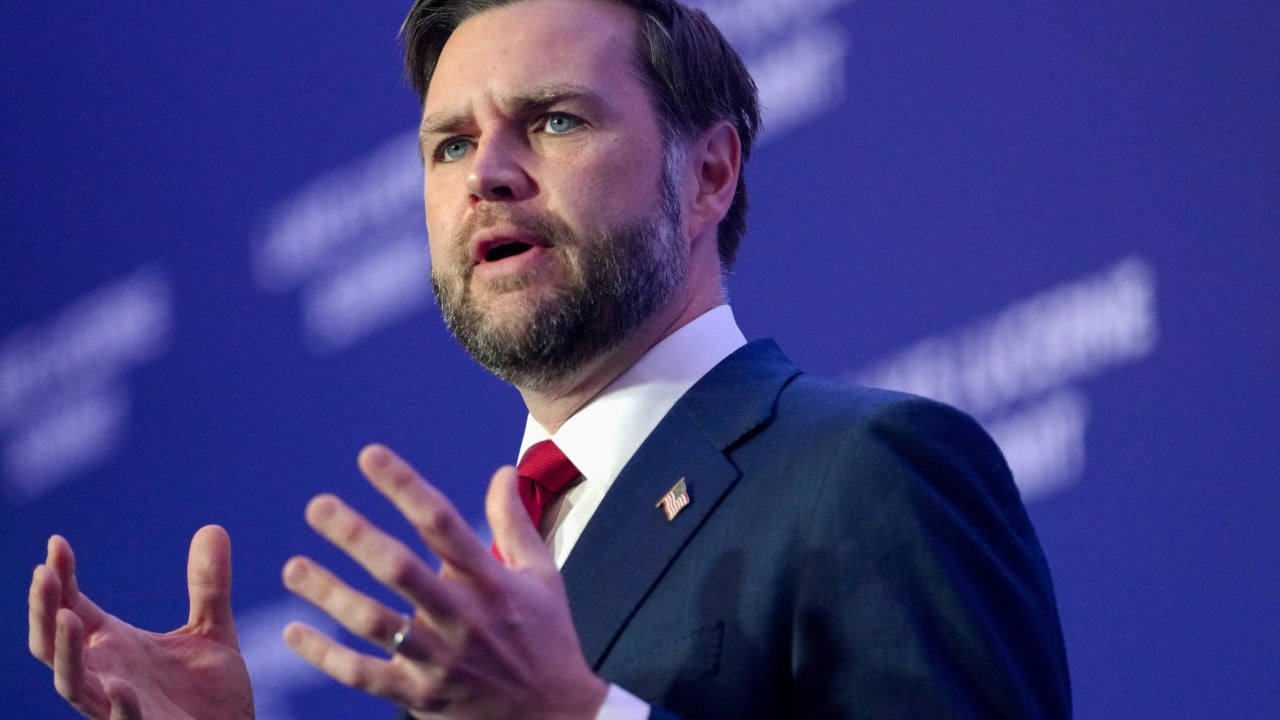
The White House wants to settle a decades-long Middle Eastern cold war by forcing Tehran to bankroll the American Rust Belt. Vice President JD Vance confirmed that current negotiations in Bürgenstock, Switzerland, center on a mechanism where billions of dollars in frozen Iranian banking assets would be released exclusively to purchase American agricultural commodities, specifically soybeans, corn, and wheat. The plan, drawn up by Jared Kushner alongside Qatari mediators, treats complex multilateral diplomacy like a distressed real estate restructuring. By transforming restricted cash into domestic farm revenue, Washington intends to secure a permanent regional reset while insulating American farmers from the volatility of global commodity markets.
But the mechanism relies on a delicate economic fiction. The logic dictates that because the funds never technically enter the Iranian treasury, Washington can claim it has not handed a financial windfall to an adversary.
Iran has billions of dollars locked away in global accounts, including $6 billion held in Qatari institutions that became the focal point of intense secondary sanctions. The proposed agreement dictates that neither Washington nor Doha can unilaterally release these funds. Every transaction requires dual sign-off. When approved, the capital moves directly from Qatari accounts to American agricultural exporters. The grains and oilseeds are then shipped to Iranian ports to feed a domestic population currently buckling under hyperinflation.
The strategy addresses a structural vulnerability in the American heartland. For years, domestic soybean growers have remained dangerously exposed to China, which routinely weaponizes its massive purchasing power during trade disputes. Forcing Iran into a multi-billion-dollar long-term procurement contract creates an artificial, highly stable alternative market for American growers.
Historical precedent shows this type of agricultural diplomacy has been tried before, usually during moments of deep economic stress. During the 2018 trade dispute with China, when Beijing slapped retaliatory tariffs on American agricultural goods, domestic soy prices plummeted. In a quiet, brief window that same year, Iran emerged to purchase $318 million worth of American soybeans. That purchase was born of raw necessity. Tehran needed feed, and American suppliers were desperate for buyers. The current proposal seeks to codify that transactional desperation into a permanent diplomatic pillar.
The execution faces significant financial hurdles. The Iranian Revolutionary Guard recently claimed that the deal would unlock up to $24 billion in total frozen funds, demanding half be released upfront before final negotiations conclude. Vance flatly denied that figure, stating that such numbers do not exist in the working text. This public discrepancy highlights a core risk. Hardliners in Tehran must frame the agreement as a capitulation by Washington to appease their domestic audience, while the White House must present the arrangement as a total economic enforcement mechanism.
The broader framework of the Switzerland negotiations includes major geopolitical trade-offs. The Treasury Department issued a temporary, 60-day license allowing Iran to market petroleum products, a move that immediately dragged crude oil prices down to $75 a barrel. In exchange, Tehran agreed to allow International Atomic Energy Agency inspectors back into its nuclear facilities and committed to maintaining the fragile ceasefire between Israel and Hezbollah in Lebanon.
The entire architecture depends on whether a nation can be fundamentally incentivized through forced commodity consumption. If the technical teams remaining in Switzerland fail to align the legal mechanics of the Qatari accounts, the deal risks collapsing back into the standard pattern of mutual threats. For now, Washington is betting that the path to a quieter Middle East runs directly through the grain elevators of the American Midwest.