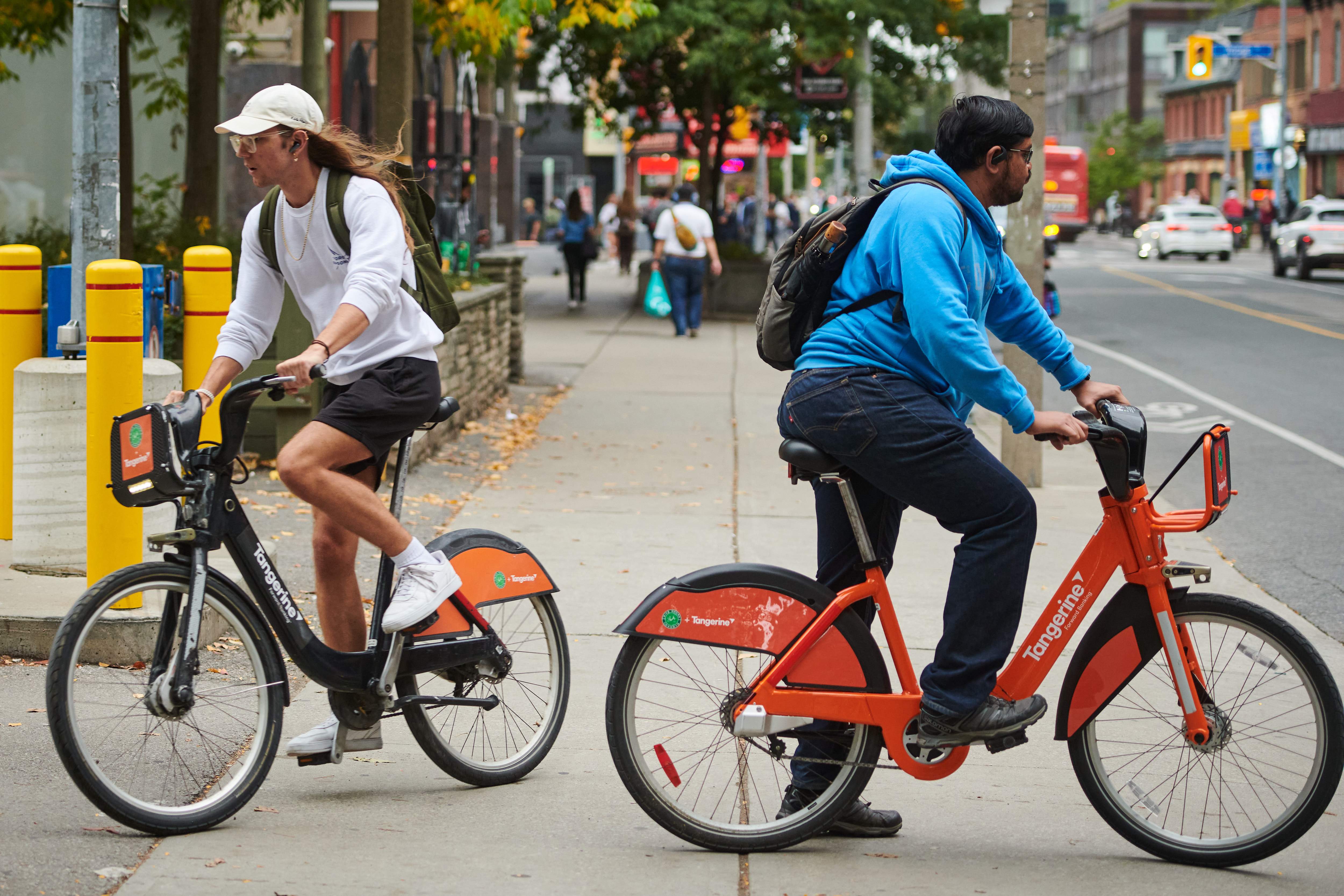
The legal battle over Toronto's downtown bike infrastructure is officially over, and drivers are about to get their lanes back. Following a unanimous ruling from the Ontario Court of Appeal that handed Premier Doug Ford a decisive victory, the provincial government has wasted zero time. Crews are moving forward to rip out protected bike lanes on major arterial routes like Bloor Street, Yonge Street, and University Avenue. If you commute through the city, you are about to witness a massive shift in urban road design.
Most media coverage frames this as a simple clash between angry cyclists and a car-obsessed premier. Honestly, that misses the deeper political and structural reality. This fight is about municipal authority, provincial overreach, and a broader philosophical debate on whether courts should have any say in routine traffic management. Let's look at what is actually happening on the ground and why this decision changes municipal politics across Canada.
The Court Ruling That Changed Everything
For months, cycling advocacy groups like Cycle Toronto managed to stall the province's plans. A lower court judge previously ruled that tearing out protected lanes on 19 kilometres of key downtown corridors violated the Canadian Charter of Rights and Freedoms. The argument relied heavily on the idea that removing safe cycling infrastructure put people at an unconstitutional risk of harm.
The Court of Appeal didn't just reject that argument; they dismantled it completely. Writing for the three-judge panel, Justice Grant Huscroft noted that applying Charter principles to routine road usage led to a surprising and unjustified outcome. The court ruled that there is no constitutional right to a bike lane. Municipalities build them through local bylaws, and provincial legislatures have the absolute authority to alter or remove them.
Transportation Minister Prabmeet Sarkaria called the decision a common-sense victory. The Ford administration has repeatedly argued that gridlock costs the provincial economy upwards of $56 billion annually. By removing lanes that squeeze car traffic on major arteries, the province is betting that drivers will regain precious hours of their day.
Where the Diggers Are Going First
The province has issued a formal request for proposals to study and redesign several high-profile corridors, including Queen's Park, Queen's Park Crescent, and Avenue Road. However, physical work is already kicking off immediately on Bloor Street West.
The initial restoration targets a western stretch of Bloor starting near Clissold Road, where a vehicle lane was temporarily squeezed out. City staff previously estimated that ripping out these lanes across Toronto could cost tens of millions of dollars and cause months of intense construction delays. Despite those warnings, the province is pushing ahead to fulfill a mandate that resonates deeply with suburban and commuter voters who felt alienated by downtown-centric municipal policies.
Critics argue this is an authoritarian stomp on local democracy. Mayor Olivia Chow and various city councillors point out that these lanes were approved democratically by Toronto City Council to protect vulnerable road users. With cycling advocacy groups vowing to keep fighting and municipal elections looming, transportation policy has turned into a proxy war for the soul of the city.
If you live or work in Toronto, expect major traffic disruptions over the coming months as heavy machinery reconfigures the pavement. Check local transit alerts before heading downtown, and keep an eye on how municipal candidates position themselves on road safety as the political fallout continues to unfold.