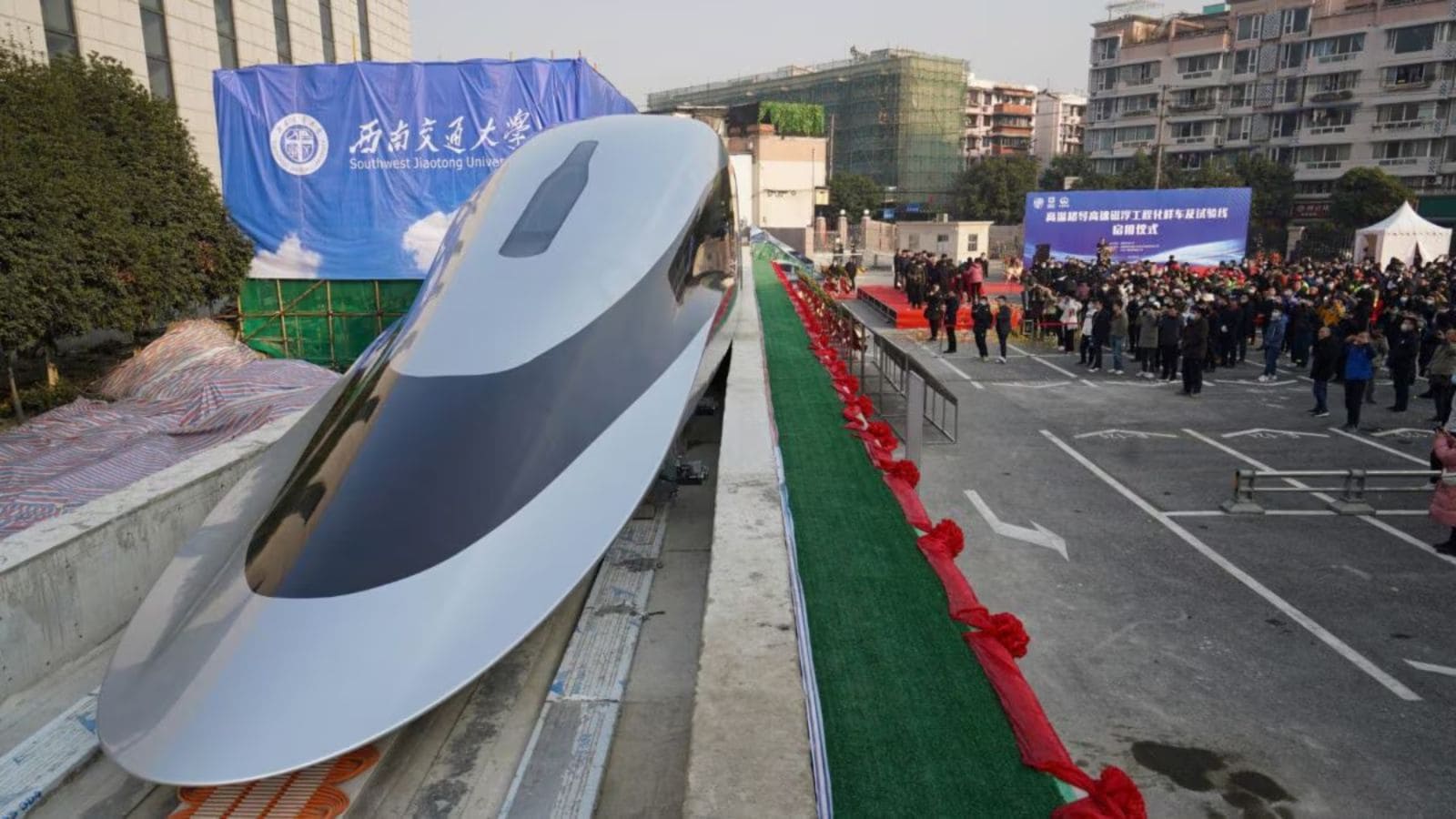
Physics used to have strict rules about how fast humans could travel on rails. China just threw those rules out the window. Hitting 800 kilometers per hour in a mere 5.3 seconds sounds like something ripped straight out of a sci-fi blockbuster, but it is happening right now in real engineering facilities. This latest milestone marks the third time in just six months that Chinese railway developers have smashed their own previous records.
If you think this is just another flashy PR stunt for state media, you are missing the bigger picture. Transportation networks across the globe are shifting away from traditional steel wheel tracks. They are moving toward high-temperature superconducting maglev systems. I have watched transportation infrastructure evolve over the past decade, and the sheer velocity of these updates catches even seasoned engineers off guard.
The Mechanics Behind the Insane Acceleration
Let us talk about what 5.3 seconds actually feels like. You are looking at an acceleration curve that presses you deep into your seat, matching the takeoff thrust of a fighter jet. How do they achieve this without tearing the carriages apart?
Traditional trains rely on friction between steel wheels and rails. That friction becomes a deadly enemy once you cross the 400 kilometer per hour threshold. Wheels slip, thermal energy builds up dangerously, and mechanical wear skyrockets. Maglev technology bypasses this entirely by floating the train above the track using powerful magnetic fields.
- Zero physical contact means zero mechanical friction.
- Linear synchronous motors deliver instant torque without gears.
- Vacuum tube environments remove atmospheric drag entirely.
When you remove air resistance and friction, acceleration becomes purely a math problem of electrical power and magnetic containment. Engineers are pushing electromagnetic propulsion to limits we only dreamed of ten years ago. They are not just tweaking old blueprints. They are writing an entirely new textbook on mass transit.
Why Speed Records Matter More Than Ever
Skeptics love to ask a fair question: Who actually needs to travel at 800 kilometers per hour?
My answer is simple. Time is the ultimate luxury, and geographic distance is the biggest bottleneck to economic productivity. When you can travel from Beijing to Shanghai in the time it takes to watch a movie, regional economies merge into a single massive super-metropolis. Commuters stop living where they work because distance ceases to be a barrier.
Furthermore, these tests are proving grounds for materials science. If a metal alloy or a composite ceramic can withstand the thermal and structural stress of 800 kilometers per hour, it will easily survive the daily grind of commercial 400 kilometer per hour bullet trains. Every record broken feeds valuable data back into the design loop.
We are watching a fundamental restructuring of global transit dominance. While other nations debate funding for basic infrastructure maintenance, builders in East Asia are laying down the tracks of the next century.
The Engineering Hurdles Nobody Talks About
It is easy to get mesmerized by the big numbers, but the engineering reality is messy. Power consumption at these velocities is astronomical. You cannot just plug an 800 kilometer per hour train into a standard municipal grid. The infrastructure requires dedicated power stations capable of discharging massive bursts of energy on demand.
Passenger comfort is another massive hurdle. Humans can handle rapid linear acceleration, but lateral forces during turns are a different beast entirely. If a maglev track curves even slightly out of alignment at high velocity, the resulting g-forces would cause passenger blackouts. That means the routing must be astonishingly straight, requiring billions of dollars in tunneling and land clearing.
Thermal management also keeps engineers awake at night. Superconducting magnets require cryogenic cooling to maintain zero electrical resistance. If a cooling system fails mid-run at half a mile per minute, the consequences are catastrophic.
What This Means for Global Infrastructure
You might live thousands of miles away from these test tracks, but you cannot ignore the ripple effects. Aerospace companies are already looking at high-speed maglev systems as a low-cost alternative to short-haul commercial flights. Why deal with airport security, baggage delays, and tarmac congestion when you can board a train downtown and arrive in a neighboring country before lunch?
If you are involved in urban planning, logistics, or real estate development, you need to rethink how population corridors function. Cities that were once isolated are now becoming suburbs of mega-cities.
Keep an eye on how regulatory bodies adapt to these speeds. Safety certifications for steel-wheel networks do not apply to magnetic levitation inside low-vacuum tubes. The legal and safety frameworks built over the last hundred years are obsolete.
Pay close attention to the supply chains powering these magnets and superconductors. The nations that control rare earth elements and advanced manufacturing will dictate who builds the next generation of global transit. The race is already past the halfway mark, and stopping now is not an option.