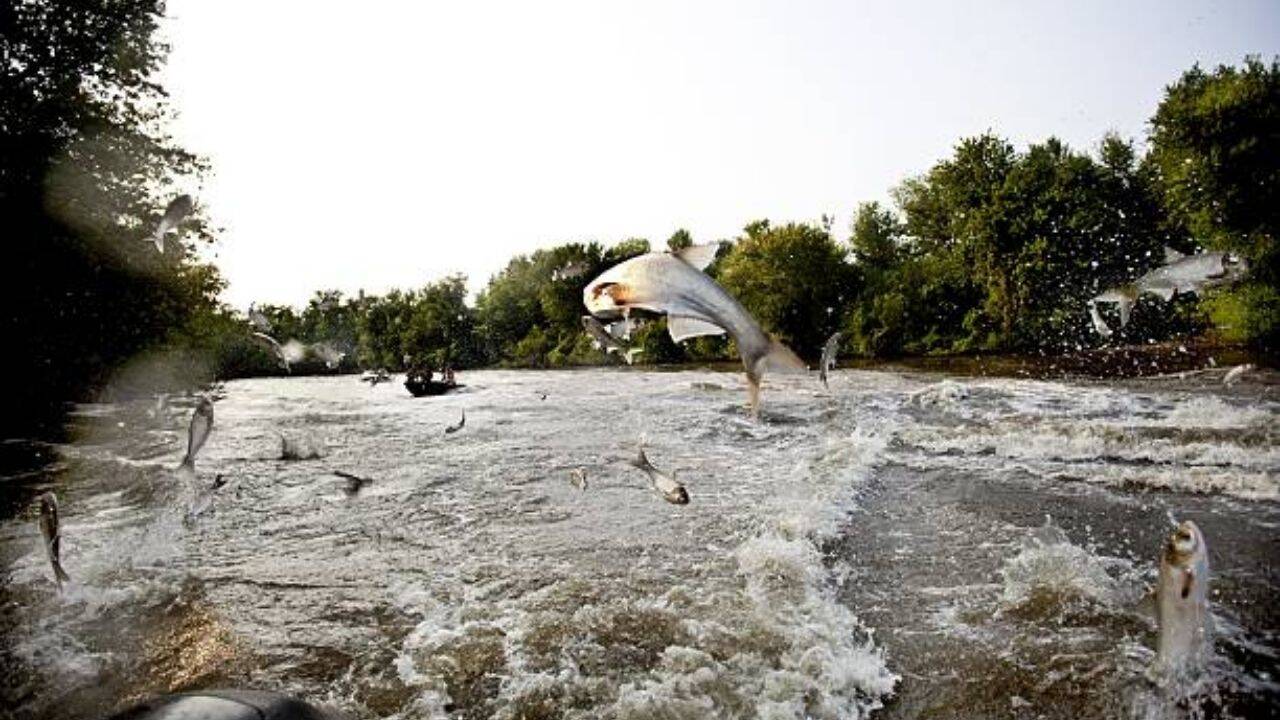
Every summer, conservation groups roll out the same tired narrative. A shallow Midwestern lake turns green with algae, visibility drops to a few inches, and local authorities immediately point the fin at common carp. The script writes itself: villains are identified, millions of dollars in eradication grants are secured, and commercial seiners are hired to pull tons of bottom-feeding invaders from the muck. When a lake clears up afterward, headlines pop up claiming a six hundred percent spike in water clarity. The victory lap is run before the dust even settles on the boat ramp.
It is a neat story. It is also an ecological fairy tale that ignores how shallow aquatic ecosystems actually function.
I have spent decades watching municipal watershed districts chase silver bullets, burning through public treasuries to eliminate a single symptom while ignoring the systemic disease. Pinning the blame entirely on carp lets agricultural runoff, failing septic systems, and municipal stormwater off the hook. Carp do not invent nutrients; they merely recycle what we dump into the watershed. Treating them as the sole architect of turbidity is a convenient way for resource managers to show visible progress without tackling the hard, unglamorous work of regulating upstream polluters.
To understand why the standard carp eradication playbook is deeply flawed, we need to dismantle the mechanics of shallow lakes.
The Shifting Baseline Syndrome
Shallow lakes do not behave like deep, stratified reservoirs. They exist in one of two alternative stable states. The first is a clear-water state dominated by rooted aquatic plants, and the second is a turbid-water state dominated by phytoplankton and suspended sediments. Traditional lake management assumes that pushing a system out of the turbid state is simply a matter of removing the biological disturber—in this case, Cyprinus carpio.
The lazy consensus states that carp root up the sediment while searching for benthic macroinvertebrates, constantly resuspending phosphorus and nitrogen into the water column while simultaneously uprooting macrophytes. Remove the carp, plants return, water clarifies, nature heals.
Except that aquatic ecology is rarely that linear.
Imagine a scenario where you completely sterilize a shallow lake of every single carp, yet the surrounding watershed continues to pump thousands of pounds of dissolved agricultural fertilizer into the basin every spring. Within three seasons, the water clarity gains vanish. The phytoplankton return with a vengeance because the nutrient load remains unchanged. The carp were never the primary source of the problem; they were just efficient bioturbators taking advantage of an already overloaded system.
When a lake clears by six hundred percent after a massive carp removal project, it usually coincides with a complex web of other variables: a drought year with minimal runoff, intensive herbicide treatments that kill off algae blooms artificially, or the simultaneous installation of upstream retention ponds. Crediting the clarity surge solely to the absence of carp is sloppy science designed to justify the next round of grant funding.
The Functional Role of the Scapegoat
Common carp were introduced to North America in the late nineteenth century as a hardy food fish, heralded by the U.S. Fish Commission as a miraculous solution to protein shortages. Within a few decades, public sentiment swung violently in the opposite direction. They went from dietary saviors to public enemy number one.
This historical pivot created an intellectual lazy streak among modern lake managers. Whenever an ecosystem degrades, carp provide an instant, visceral target. People can visualize a large, golden-brown fish rooting around in the mud. It is much harder to visualize dissolved nitrates washing off a soybean field twenty miles away during a midnight downpour.
The biological reality is that carp are opportunistic omnivores. Yes, they disturb sediments. But they also consume massive quantities of detritus, zebra mussels, and decomposing organic matter that would otherwise accumulate on the lakebed. By bioturbating the sediment, they can accelerate nutrient release, but they also cycle organic nitrogen back into the atmosphere through excretion and metabolic processes.
When you yank ninety percent of the carp biomass out of a lake overnight, you disrupt an established food web. Predatory fish like largemouth bass and northern pike suddenly lose a major forage base. Cormorants, pelicans, and ospreys that rely on juvenile carp for survival face localized starvation or relocation. The ecosystem does not magically revert to a pristine pre-settlement Eden; it enters an artificial vacuum where other opportunistic species rush in to fill the ecological niche.
If you remove the carp without fixing the nutrient loading, you often trigger a shift toward dominance by cyanobacteria—blue-green algae—which produce toxins far more dangerous than anything stirred up by a foraging fish. The water might look clear for a month, but it becomes biologically toxic. That is not restoration. That is ecological roulette.
What Actually Moves the Needle
If we want genuinely clear, resilient water bodies, we have to stop treating carp eradication as a standalone strategy and start treating watershed management as a non-negotiable prerequisite.
Targeted carp removal has a place, but only as a surgical tool within a broader, aggressive rehabilitation framework. Pulling fish out of a dirty bathtub while the faucet is still running full blast is a waste of taxpayer money.
The real work requires confronting powerful economic interests. It means forcing agricultural operations to implement mandatory buffer strips, penalizing tile-drainage practices that bypass natural filtration, and upgrading municipal wastewater treatment plants to handle advanced nutrient stripping. These measures do not make for flashy press releases, and they do not generate quick-fix photo opportunities for local politicians.
Furthermore, we need to abandon the obsession with historical baseline ecosystems that no longer exist. The climate has shifted, the surrounding land use is permanently altered, and invasive species are a permanent fixture of the modern landscape. Managing a lake today is not about turning back the clock to 1850; it is about building systemic resilience against twenty-first-century stressors.
Stop buying into the narrative that a single species is holding your local watershed hostage. The murkiness in the water is a mirror reflecting our own land-use choices. Clean it upstream, and the lake will take care of itself.