Israel’s recent precision strikes against Iranian military infrastructure were supposed to signal the beginning of the end for the Islamic Republic’s internal grip. Western analysts jumped on the narrative. They argued that by taking out S-300 air defense batteries and missile production facilities, Israel had stripped the "emperor" of his clothes. But that perspective misses the ground reality in Tehran, Isfahan, and Mashhad. If you think a few charred launch pads at a military base translate to a collapsed domestic security apparatus, you’re looking at the wrong map.
The Basij isn't a fleet of jets or a battery of missiles. You can't blow it up with a Rampage missile or a long-range drone. It’s a decentralized, ideological militia that lives in the mosques, the schools, and the workplaces of every Iranian city. Even as the regular military (Artesh) and the Revolutionary Guard (IRGC) assess the holes in their high-tech defenses, the Basij is doing exactly what it was designed to do: keeping the population in a state of managed fear.
The Invisible Infrastructure of Control
Israel’s Air Force can target a factory in Parchin, but it can't target a neighborhood "Resistance Base." That’s the formal name for the Basij cells scattered across Iran. There are tens of thousands of them. While the world watches satellite imagery of cratered runways, these local units are conducting "security patrols" and monitoring university campuses for the slightest hint of dissent.
The Basij serves as the IRGC’s eyes and ears. They don't need radar. They use informers. They use the Ghasht-e-Ershad (Morality Police) framework to maintain a constant, low-level friction with the public. This presence ensures that even if the central government feels vulnerable to external threats, the "internal front" remains locked down.
Israeli strikes might have humiliated the Iranian leadership on the international stage, but inside Iran, the Basij used the attacks to justify a heightened security state. They thrive on the "state of siege" mentality. When there’s an external enemy, the Basij gets a blank check to crack down on "infiltrators" and "rioters." They aren't weaker today. In many ways, they're more emboldened because the threat of war gives them a permanent excuse for brutality.
Why High-Tech Warfare Fails Against Low-Tech Militias
We often make the mistake of measuring a country’s strength by its most expensive hardware. It's a classic Western bias. We see an F-35 vs. an S-300 and assume the winner of that duel controls the country. Iran’s leadership doesn't see it that way. They view the Basij as their ultimate insurance policy.
The Basij provides a massive pool of manpower that doesn't rely on complex supply chains. They use motorcycles, batons, and Kalashnikovs. If Israel destroys every radar station in Iran, a Basij member can still ride his bike into a protest and start swinging.
The Economic Hook
It’s not just about religious fervor. That’s a common misconception. Many people join the Basij for the perks. It's a career move. Members get:
- Priority for university entrance exams.
- Easier paths to government jobs.
- Discounts on insurance and travel.
- Exemptions or better placements for mandatory military service.
By embedding the Basij into the social and economic fabric of the country, the regime has created a class of people whose personal success is tied to the system’s survival. These people aren't going to quit because a missile hit a warehouse in Isfahan. They’ll fight harder because if the regime falls, their lifestyle disappears.
The Failure of the External Pressure Theory
The theory goes like this: if you hit the regime hard enough from the outside, the people will see the weakness and rise up. It’s a clean, logical progression that almost never works in practice with a group like the Basij.
History shows the opposite. In 2022, during the "Woman, Life, Freedom" protests, the Basij was the primary tool used to crush the movement. They didn't use tanks. They used plainclothes agents who blended into the crowds before pulling out weapons. They used "white vans" to disappear activists. This type of decentralized repression is remarkably resilient to external military shocks.
Israel’s strikes targeted "strategic depth." But the Basij represents "ideological depth." You can’t neutralize ideological depth with a 2,000-pound bomb. In fact, every time a foreign power strikes Iran, the regime’s propaganda machine goes into overdrive. They frame the Basij as the "defenders of the homeland," effectively merging the concept of the state with the concept of the revolution. It’s a powerful psychological tool that keeps the rank-and-file motivated.
The Recruitment Machine Never Sleeps
While the IRGC Aerospace Force is busy trying to figure out how Israeli F-15s bypassed their sensors, the Basij recruitment centers are still holding summer camps for teenagers. They start young. They have the "Pupil Basij" for school-aged kids. They offer sports, religious education, and a sense of belonging.
They’re building a multi-generational force. By the time a kid is 18, they’ve been indoctrinated to view any opposition to the Supreme Leader as a betrayal of God and the nation. This constant flow of new blood replaces the older members who might grow disillusioned. It’s a self-sustaining cycle of radicalization that doesn't care about the state of the national air defense network.
The Reality of Post-Strike Iran
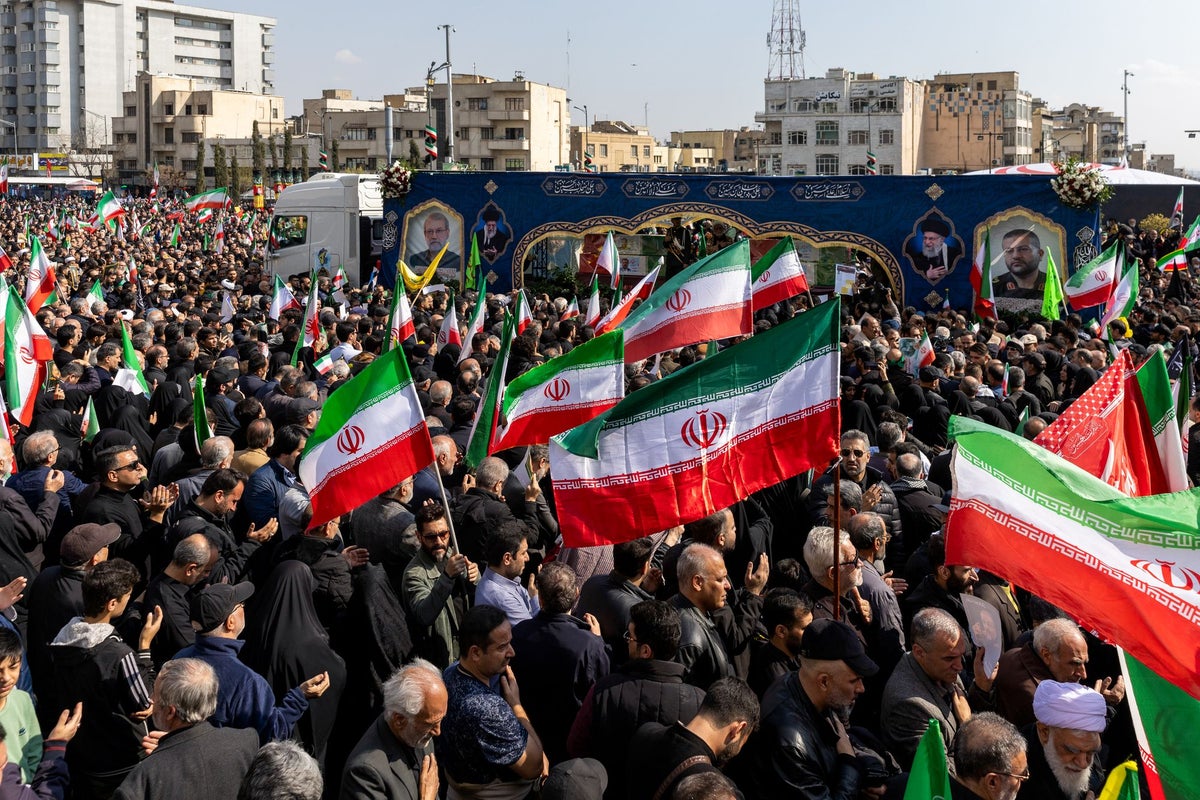
The streets of Tehran don't look like a defeated nation. They look like a city under watch. You’ll see the Basij at major intersections. You’ll see them outside metro stations. Their presence is a psychological weight.
Don't buy the narrative that Israel has "defanged" Iran. They’ve knocked out some teeth, sure. They’ve made it harder for Iran to launch a massive ballistic missile volley or defend its nuclear sites. But the "fangs" that the Iranian people feel every day are the ones held by the Basij.
If you want to understand the durability of the Islamic Republic, stop looking at the missile silos. Start looking at the local mosque. That’s where the real power is held. The Basij remains the regime's most effective tool because it is everywhere and nowhere at the same time. It’s a ghost in the machine that can’t be bombed into submission.
The international community needs to stop equating military vulnerability with domestic collapse. The two are vastly different. Until there’s a force inside Iran that can counter the tens of thousands of armed, ideologically driven Basijis in the streets, the status quo isn't going anywhere.
Keep an eye on the internal security budgets. While the military might face cuts or "reorganization" after a failure, the Basij almost always sees an increase in funding. They are the last line of defense, and in the eyes of the Supreme Leader, they are the only one that truly matters.
Watch the neighborhood dynamics. Pay attention to how the regime uses the Basij to distribute food or medicine in poor areas. They buy loyalty when they can't force it. It's a sophisticated, multi-layered approach to survival that high-altitude bombing simply cannot reach. If you’re waiting for the regime to crumble because its radars are down, you’re going to be waiting a very long time.