The marble of the Louvre at four in the morning does not feel like art. It feels like a meat locker. It is cold, cavernous, and impossibly quiet, save for the low, rhythmic hum of ventilation systems keeping centuries-old oil paint from flaking into dust. If you stand in the Salle des États during those dead hours, the Mona Lisa doesn't look like a masterpiece. She looks like a hostage behind triple-laminated ballistic glass.
We have a strange obsession with watching people take things that don't belong to them.
It is a psychological itch we love to scratch. When a museum is breached, it isn't just a property crime; it is an ideological assault. It proves that the fortress is vulnerable. It reminds us that the priceless things we attempt to lock away in stone vaults are still just objects, subject to the laws of gravity, greed, and a well-timed crowbar.
Now, the cinematic world is preparing to recreate one of the most audacious cultural heists in modern memory. Romain Gavras, the French directorial firebrand known for his hyper-stylized, adrenaline-fueled visuals, is turning his lens toward a massive, real-world art heist at the world’s most famous museum.
But this is not going to be a slick, Hollywood caper where clever men in tailored suits drink espresso and exchange witty banter while bypassing laser grids. Gavras doesn’t make those kinds of movies. He makes films that taste like asphalt and adrenaline.
To understand why this project matters, you have to look past the press releases and into the dirt of how art is actually stolen.
The Myth of the Gentleman Thief
Pop culture lied to us. It gave us Thomas Crown. It gave us Danny Ocean. It convinced us that art theft is an elegant game played by billionaires who hire cat burglars to snatch a Monet so they can hang it in a secret underground bunker beneath a Swiss chalet.
The reality is far uglier. And far more fascinating.
True art theft is usually clumsy. It is sweaty. It involves panicked men with box cutters slicing canvases out of frames because they don't know how to operate the tension screws on the back. It is carried out not by connoisseurs, but by desperate people operating at the behest of organized crime syndicates. In the real world, a stolen masterpiece is rarely bought by a wealthy collector. It is used as underworld currency. It is collateral. It is traded between drug cartels and arms dealers to secure shipments because a stolen Picasso retains its value far better than a suitcase full of volatile fiat currency.
Imagine a hypothetical thief. Let's call him Jean-Luc.
Jean-Luc does not care about the brushwork of the Impressionists. He is sitting in a stolen Renault outside the Louvre, his palms slick against the steering wheel, watching the security rotation. He knows that the weakest point of any multi-million-dollar security apparatus is never the software. It is the human being paid minimum wage to watch twelve monitors at three in the morning.
Jean-Luc is betting on boredom. He is betting on the fact that the guard is currently looking at his phone, or thinking about his divorce, or drifting off to sleep.
That is the friction point Gavras is bound to exploit. The director has built his entire career on the anatomy of chaos. His 2022 film Athena was a masterclass in escalating tension, tracking a fictionalized civil uprising in the French suburbs with long, unbroken tracking shots that made the viewer feel like they were trapped inside a riot. When Gavras handles a camera, the frame feels alive, unpredictable, and dangerous.
Applying that specific, visceral energy to a Louvre heist means we are about to see a film that strips away the romantic veneer of the museum caper.
The Architecture of Insecurity
Every museum is a paradox wrapped in limestone.
By definition, a museum must do two completely contradictory things simultaneously: it must keep the public out, and it must let the public in. It needs to be a fortress, but it also needs to be a showroom. If you make it too secure, it becomes a tomb where no one can see the cultural heritage of humanity. If you make it too open, it becomes a supermarket for thieves.
Consider what happens next when that balance fails.
The alarm sounds. It is not a loud, klaxon horn like in the comic books. It is often a quiet, digital ping in a centralized control room. By the time the response team moves, the thieves are already moving through the labyrinthine corridors. The Louvre is vast—over 780,000 square feet of space. If you get lost in there during the day, it takes twenty minutes to find an exit. Imagine navigating it in the dark, carrying oversized canvases, knowing that every second brings the Police Nationale closer to the gates.
The stakes are invisible but total. If a painting is damaged during the getaway, its value doesn't just drop; history loses a pixel.
Gavras understands the weight of these spaces. The French filmmaker has spent his life navigating the cultural friction points of Paris. He knows that the Louvre isn't just a tourist destination; it is a symbol of French statehood, imperialism, and cultural supremacy. To rob it is to strike at the ego of the Republic itself.
But why do we root for the thieves?
The Dark Psychology of the Heist
There is a uncomfortable truth we rarely admit when we buy a ticket to a heist movie: we want them to get away with it.
We don't want the museum destroyed, and we don't want the art ruined, but we want the system to be beaten. We live in a world governed by rules, algorithms, and inescapable surveillance. Every street corner has a camera. Every phone tracks a footprint. The idea that a few flawed, mortal human beings can walk into the ultimate sanctuary of establishment power, take its most prized possessions, and vanish into the Parisian night is a deeply intoxicating fantasy.
It represents the ultimate triumph of human ingenuity over systemic control.
Gavras’s upcoming project isn’t just capitalizing on a trend. It is tapping into a profound cultural anxiety. We are watching the world become increasingly digitized, automated, and locked down. A physical heist film, grounded in the sweat and panic of real French streets, feels like an antidote to the bloodless, CGI-heavy spectacles dominating modern cinema.
The production itself is shrouded in the kind of secrecy you would expect from a caper. Details on which specific historical heist inspired the script are being kept close to the chest. But the cinematic community knows what happens when Gavras tackles institutional authority. It results in something beautiful, violent, and utterly unforgettable.
The film will likely force us to confront the reality of what happens to these pieces after the glass shatters. The aftermath is never clean. The paintings are shoved into the trunks of cars. They are hidden in damp basements. They are exposed to humidity levels that cause the wood panels to warp and the gesso to crack. The tragedy of art theft is that the objects are stolen because they are beautiful, but the very act of stealing them often destroys that beauty forever.
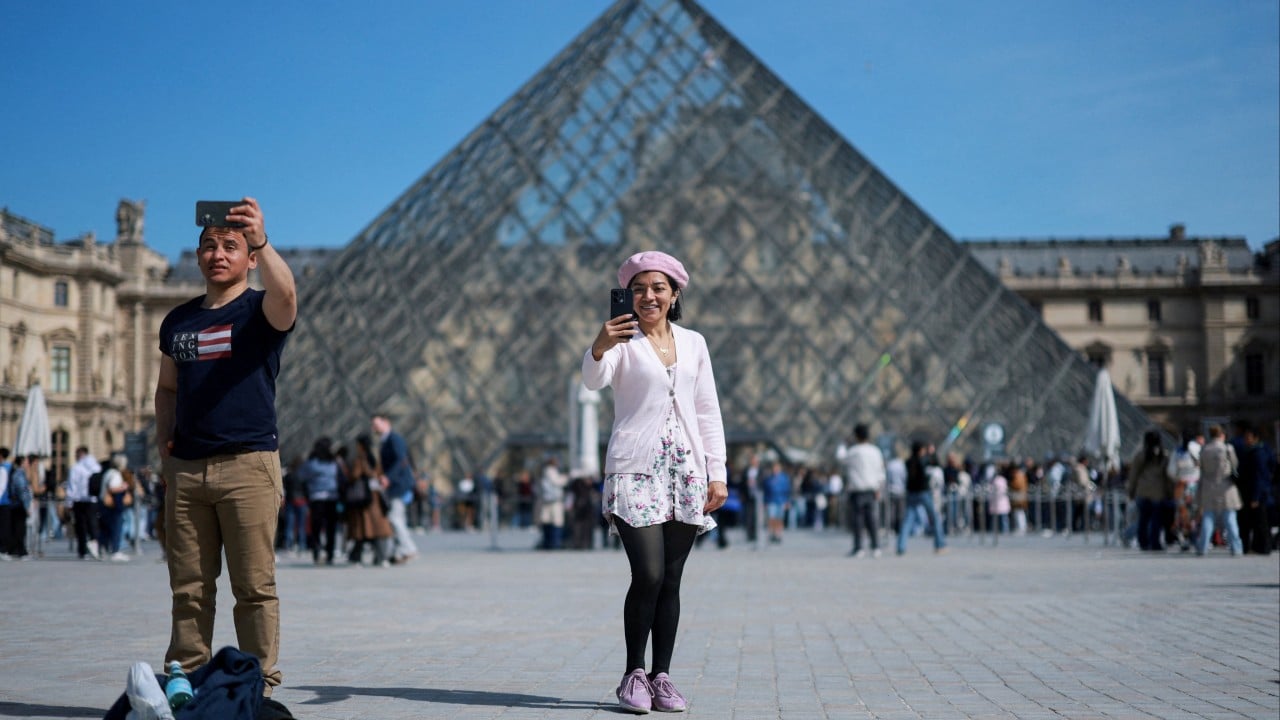
The sun eventually rises over the Seine, hitting the glass pyramid of the Louvre and turning it into a blinding shard of light. The tourists will form their lines. The guards will take their posts, rubbing the sleep from their eyes. The Mona Lisa will smile her ambiguous, impenetrable smile behind her glass cage.
Everything will look exactly as it always has.
But beneath the floorboards, in the collective imagination of the culture, the heist is already underway. Romain Gavras is preparing to show us the cracks in the fortress, reminding us that no matter how high we build the walls, the human element will always find a way to tear them down.