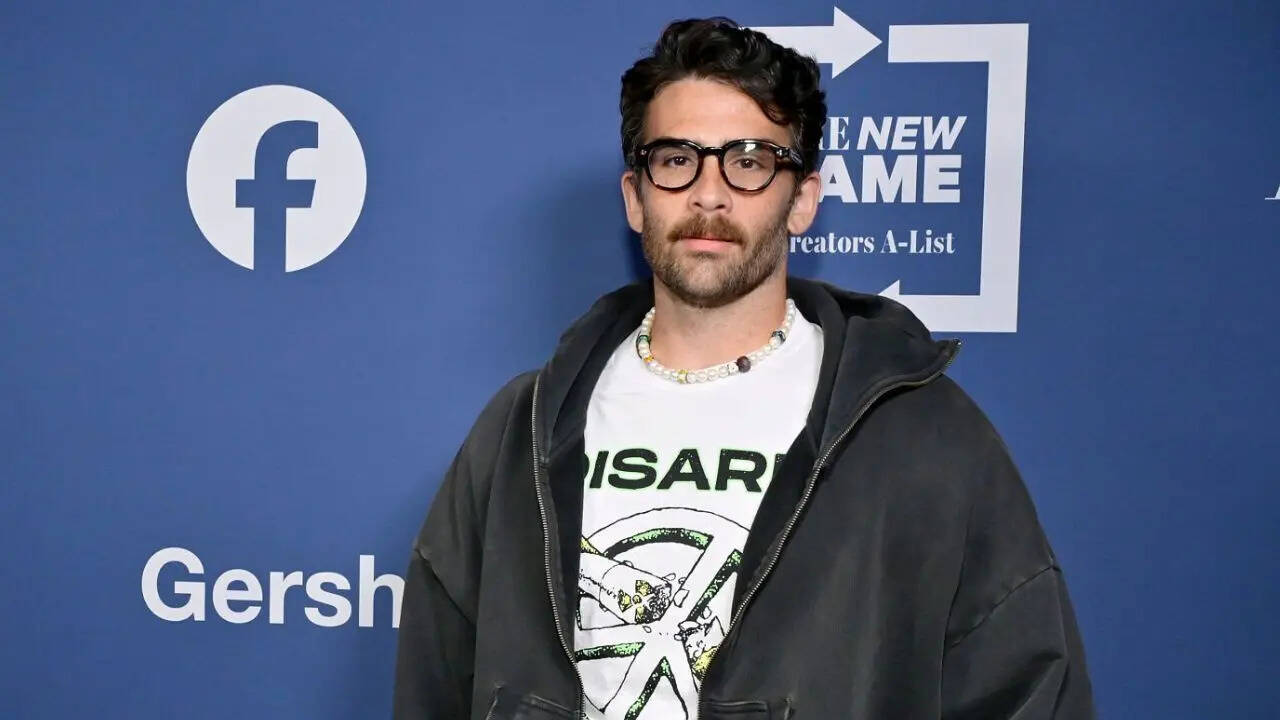
The confrontation between digital-native creators and legacy media organizations is fundamentally an asymmetric conflict over physical space, audience attention, and distinct legal risk profiles. When Fox News field reporters targeted live-streamer Hasan Piker (HasanAbi) outside his residence, the interaction was treated by commentators as a mere clash of political personalities. A structural analysis reveals a more complex phenomenon: the weaponization of asymmetrical surveillance mechanisms to generate high-margin video content, and the subsequent mobilization of a digital community as a defensive counter-measure.
Legacy media networks operate under an institutional framework that optimizes for linear television programming, where tension and physical confrontation drive viewer retention. Conversely, top-tier live-streamers operate a real-time broadcast model dependent on continuous audience engagement and immediate peer-to-peer communication. Understanding this collision requires breaking down the operational incentives of legacy ambush tactics, the threat inflation dynamics inherent to digital exposure, and the economic cost function governing potential defamation or harassment litigation.
The Asymmetrical Surveillance Framework
Ambush journalism relies on an informational asymmetry where the target is caught unprepared in a non-professional environment. In the context of digital creators who stream for dozens of hours per week from fixed, highly visible locations, this asymmetry is compounded by structural vulnerabilities.
[Legacy Media Intent] -> [Physical Deployment to Private Space] -> [Target De-escalation or Escalation] -> [High-Retention Broadcast Clip]
Legacy news operations deploy field crews using a three-part operational playbook designed to maximize the discomfort of the subject:
- Unannounced Proximity: Establishing physical presence at the perimeter of a subject’s private domicile or private workspace, neutralizing the subject's ability to vet or refuse the interaction.
- The Aggressive Interrogative Stance: Utilizing leading, highly provocative premises wrapped in rapid-fire questions to induce a defensive, emotional, or legally compromising verbal response.
- The One-Way Lens: Recording the interaction via high-grade broadcast equipment where the network retains absolute editorial control over the final cut, framing, and contextual placement of the footage.
When applied to a digital creator, this playbook hits an unexpected operational barrier: immediate counter-broadcast capability. When a subject can instantly activate a mobile stream or leverage an active community to broadcast the unedited encounter in reverse, the legacy network loses its monopoly on the narrative frame. The interaction transforms from a controlled interrogation into a competitive dual-broadcast environment.
The Scale-Driven Safety Paradox
For prominent digital creators, high visibility creates a non-linear relationship with physical security risks. The economics of digital scale mean that an audience of millions inevitably includes a statistically predictable sub-segment of unstable or malicious actors. Consequently, when a legacy media outlet exposes a creator's physical location or daily routine to a broader, potentially hostile television audience, they alter the creator's threat profile.
This process can be formalized through a basic threat inflation model. The total risk ($R$) to a public figure is a function of general exposure ($E$), specific geographic vulnerability ($V$), and the presence of highly motivated adversarial actors ($A$):
$$R = f(E \times V \times A)$$
Under normal operating conditions, a creator manages $V$ by keeping filming locations private and utilizing controlled digital environments. When an entity like Fox News physically bridges the digital-to-physical divide by conducting a "stalker operation" at a residence, $V$ scales exponentially. The primary danger shifts from the immediate journalist on the sidewalk to the downstream amplification effect. The broadcast signals to millions of viewers that the creator's physical perimeter is porous, lowering the barrier to entry for independent actors, swatting attempts, or stalkers.
The Legal Cost Function and Defamation Thresholds
The immediate rhetorical shield raised during these confrontations is the threat of legal action. In the incident involving Piker, accusations of running a "stalker operation" were paired with explicit statements regarding a fear of being sued. However, the legal realities governing public figures in the United States present a steep structural barrier to actual litigation.
The Actual Malice Standard as a Structural Shield
Under established First Amendment jurisprudence, specifically the precedent set by New York Times Co. v. Sullivan, a public figure attempting to sue a media organization for defamation or related torts must clear the hurdle of proving actual malice.
[Challenged Statement/Action]
       │
       ▼
[Is the Target a Public Figure?] ──(No)──> [Standard Negligence Threshold]
       │
     (Yes)
       ▼
[Did the Media Outlet Know it was False or Act with Reckless Disregard?]
       │
     (Yes)
       ▼
[Actionable Defamation Established]
To establish liability, a creator must demonstrate that the media outlet published false statements with knowledge of their falsity or with reckless disregard for whether they were true or false. Aggressive journalism, tracking a subject in public spaces, and asking offensive or highly biased questions do not meet the legal definition of actual malice. They are protected under the expansive umbrella of newsgathering activities, provided the reporters remain on public property or areas with implied public access.
The Mechanics of Intentional Infliction of Emotional Distress
Creators targeted by ambush tactics frequently cite psychological distress and safety concerns as grounds for legal recourse. In tort law, claiming Intentional Infliction of Emotional Distress (IIED) requires proving that the defendant's conduct was so outrageous in character, and so extreme in degree, as to go beyond all possible bounds of decency.
Media networks insulate themselves from IIED claims through specific operational protocols:
- Remaining on public sidewalks or public rights-of-way to avoid trespass torts.
- Framing their inquiries around matters of public interest or political discourse, which receive the highest tier of constitutional protection.
- Avoiding direct physical contact or explicit verbal threats that would cross the line into civil assault or harassment.
Because the threshold for these torts is exceptionally high, the threat of a lawsuit by a creator is rarely a viable tool for legal recovery. Instead, the utility of threatening legal action is primarily rhetorical and deterrent. By signaling a willingness to litigate, a creator increases the projected legal defense costs for the legacy network's internal compliance teams, forcing their corporate counsel to re-evaluate the risk-reward ratio of running the segment.
Monetization Models and Audience Alignment
The fundamental driver behind these escalations is an alignment of economic incentives between two seemingly opposed media ecosystems. Both legacy networks and independent streaming channels are locked in an attention-maximization game, though their capture mechanisms differ.
The Legacy Attention Extraction Model
For a legacy cable news network, content production is capital-intensive. Producing high-retention segments requires narrative tension, clear protagonists/antagonists, and visceral conflict. Ambush journalism acts as a high-yield content extraction tool. By confronting a polarizing online figure, the network secures raw, unscripted footage that satisfies the confirmation biases of its core demographic. The economic value of the segment is realized through linear ad spots and digital syndication across proprietary web platforms.
The Streaming Counter-Monetization Loop
For the digital creator, the incoming ambush is not merely a disruption; it is a highly monetizable content asset. The moment a legacy reporter appears, the creator can pivot their live broadcast to ingest, analyze, and deconstruct the confrontation in real time.
This creates a high-density engagement loop:
- Sub-Alert Dynamics: The perceived threat to the creator triggers a protective financial response from the audience, leading to spikes in direct subscriptions, donations, and platform specific currency.
- Algorithmic Highlighting: The raw drama of a real-time media clash increases viewer retention and chat velocity, signaling platform algorithms to push the stream to broader discovery pages.
- VOD and Clip Architecture: The encounter is fragmented into bite-sized clips, YouTube VODs, and social media posts, generating secondary and tertiary revenue streams that frequently out-earn the original linear segment produced by the legacy network.
| Variable | Legacy Media Network | Independent Live-Streamer |
|---|---|---|
| Primary Metric | Linear Households & Digital Clicks | Concurrent Viewers & Chat Velocity |
| Content Cycle | Scheduled Programming / Packages | Instantaneous, Continuous Broadcast |
| Operational Cost | High (Field Crew, Editors, Legal Compliance) | Low (Camera, Network Connection, Talent) |
| Monetization | Advertisers & Carriage Fees | Subscriptions, Donations, Programmatic Ads |
This structural reality reveals that while the confrontation is framed as a hostile ideological war, it operates as a symbiotic economic transaction. Both entities extract significant financial and cultural capital from the exact same minutes of physical friction.
Tactical Defense Strategies for Digital Operators
Given the legal protections enjoyed by newsgathering organizations and the economic incentives driving legacy media deployment, creators cannot rely on reactive legal threats to protect their operational perimeters. Managing these incidents requires a systematic, non-emotional protocol designed to neutralize the legacy outlet’s editorial leverage.
Perimeter Hardening and Spatial Management
The first line of defense is the absolute separation of private residential spaces from public or semi-public spaces. Utilizing mixed-use commercial properties with controlled access points, private security details, and strict non-disclosure agreements for building staff limits the geographic vulnerability ($V$) in the threat equation. When a creator conducts operations from a verifiable private sanctuary, legacy media outfits are structurally blocked from staging an ambush without committing actionable criminal trespass.
The Continuous Reverse-Record Protocol
If an encounter occurs in a public space, the optimal response is immediate, unedited, high-definition recording of the interaction from the creator's perspective.
[Ambush Initiated]
       │
       ▼
[Activate Independent Mobile Stream/Recording]
       │
       ▼
[Maintain Monotone, Monosyllabic Compliance]
       │
       ▼
[Publish Full Raw Unedited Footage Simultaneously]
By maintaining an independent recording, the creator neutralizes the legacy network’s ability to selectively edit or manipulate the context of the exchange. Publishing the raw footage simultaneously destroys the exclusive market value of the network’s segment, as the internet audience consumes the unedited reality long before the network's production team can package and broadcast their version.
Verbal De-escalation and Deprivation of Tension
Legacy field crews are trained to feed on defensive anger, stuttering confusion, or aggressive counters. The most effective tactical posture for a creator is monotone, monosyllabic compliance or complete verbal silence coupled with steady physical movement away from the field crew. By refusing to provide the emotional or high-decibel audio clips required for a compelling television package, the creator renders the captured footage unusable for prime-time programming, deflating the economic return on the network's field deployment.