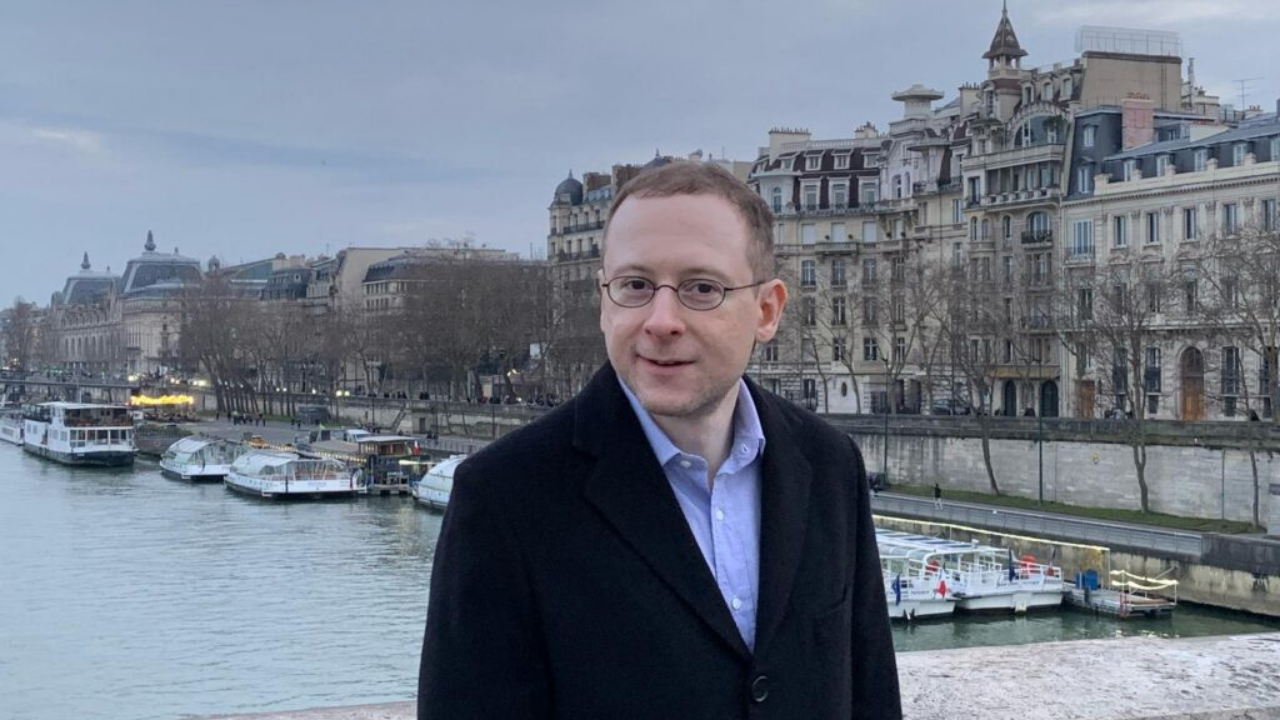
Higher education has long prided itself on being a sanctuary of rigorous peer review, where ideas are tested against evidence and institutional prestige acts as a shield for truth. That illusion shattered completely when Nathan Cofnas, an American postdoctoral researcher, published an independent exposé accusing high-profile Cambridge sociologist Jason Arday of extensive academic plagiarism and manufactured credentials.
The fallout was catastrophic. Within weeks, Arday resigned from Cambridge and was subsequently found dead in London, triggering an international media feeding frenzy. Simultaneously, Cofnas found himself isolated at his own host institution, Ghent University in Belgium, where administrators suspended him and faced fierce internal mutinies over his qualifications and controversial political views. This crisis transcends a simple personality clash or standard institutional dispute. It represents a total structural breakdown of how modern universities vet scholarship, manage ideological polarization, and handle public accountability.
The Mechanics of an Unchecked Credentials Pipeline
To understand how the Arday controversy metastasized, one must look closely at the mechanics of elite academic hiring. Jason Arday's ascension to a professorship at Cambridge University in 2023 was celebrated globally as a milestone for representation. His public narrative was striking: a scholar who overcame severe developmental hurdles, claiming to have been mute until age 11 and illiterate until age 18, before surging into the upper echelons of British academia.
Yet, institutional oversight mechanisms failed to catch fundamental red flags. When Cofnas meticulously mapped out instances of textual duplication and methodological flaws in Arday's published work, he exposed a structural vulnerability that elite universities are terrified to confront. Major institutions often prioritize institutional optics, diversity milestones, and rapid public relations wins over granular, old-fashioned audits of footnotes and raw data.
When external researchers or independent sleuths point out these gaps, universities typically respond not by investigating the substance of the claims, but by attacking the motives of the whistleblower. The system is designed to protect its own brand value. When that brand value is tied to high-profile appointments, an accusation of fraud is treated as an existential threat to the administration rather than a routine matter of quality control.
The Weaponization of Institutional Credentials at Ghent
The crisis migrated swiftly across the English Channel to Belgium, exposing deep fractures within Ghent University. Months before Arday's death, Ghent's philosophy department had already submitted a scathing nineteen-page memorandum to the university rector regarding Cofnas's own appointment as a postdoctoral researcher studying liberalism.
Faculty members and students argued that Cofnas lacked the specific expertise required for the project, pointing out that his background was rooted in controversial debates over human intelligence and race rather than standard political philosophy. Critics labeled him a proponent of scientific racism, noting his previous dismissal from Emmanuel College, Cambridge, over blog posts detailing racial disparities.
The friction at Ghent highlights a dangerous paradox in contemporary European and American academia. Universities posture as defenders of unfettered inquiry while simultaneously utilizing subjective fit and ideological alignment criteria to vet personnel. When Ghent hired Cofnas, administrators defended the decision by citing the vital importance of academic freedom. Yet the moment external pressure mounted following the Arday scandal, those same administrators reversed course, suspending Cofnas under the guise of maintaining campus harmony.
This reactive governance destroys trust. If a university hires a controversial figure knowing their background, folding under political pressure and student petitions sets a perilous precedent. It signals that institutional principles are entirely contingent on media cycles.
Geopolitical Overreach and the Erosion of Autonomy
The conflict escalated from an internal university spat into a geopolitical incident when United States diplomats intervened. U.S. Ambassador to Belgium Bill White publicly condemned Ghent University's suspension of Cofnas, announcing that Washington would review its institutional relationships with the Belgian university.
This direct state pressure on a European academic institution marks an extraordinary escalation. Governments traditionally maintain a diplomatic boundary regarding internal university personnel decisions, even when controversial figures are involved. By treating Cofnas's suspension as a free speech violation worthy of diplomatic retaliation, the U.S. government dragged academic governance directly into the arena of international culture-war politics.
This dynamic leaves European universities caught in an impossible squeeze. On one side, faculty senates and student bodies demand the immediate expulsion of researchers whose public writings are viewed as deeply offensive or pseudoscientific. On the other side, external political actors threaten economic and diplomatic penalties if ideological non-conformists are silenced. University rectors are no longer academic leaders managing scholarly communities; they are crisis managers navigating hostile political minefields.
The Permanent Shadow Over Peer Review
The broader fallout from the Arday-Cofnas affair leaves the academic enterprise permanently altered. Trust in peer review is at an all-time low. When major university presses and high-ranking journals fail to catch basic plagiarism, public faith in the self-correcting nature of science evaporates.
Independent digital sleuths and politically motivated actors have realized that traditional academic gatekeepers are sluggish, defensive, and easily manipulated. By bypassing formal institutional channels and publishing exposés directly to independent platforms, critics can bypass peer-review bottlenecks and inflict maximum reputational damage.
At the same time, institutions have shown that they will use disciplinary tools, employment terminations, and vague conduct policies to purge figures who make governance uncomfortable, regardless of whether the initial allegations of fraud were accurate. The pursuit of objective truth is routinely subordinated to damage control.
When scholarship becomes a proxy war for ideological dominance, nobody wins. The underlying questions of how academic credentials are authenticated, how dissenting ideas are evaluated, and who ultimately controls the boundaries of acceptable speech remain entirely unresolved. The system stumbles forward, nursing its wounds, waiting for the next unavoidable collision between institutional prestige and unvarnished reality.