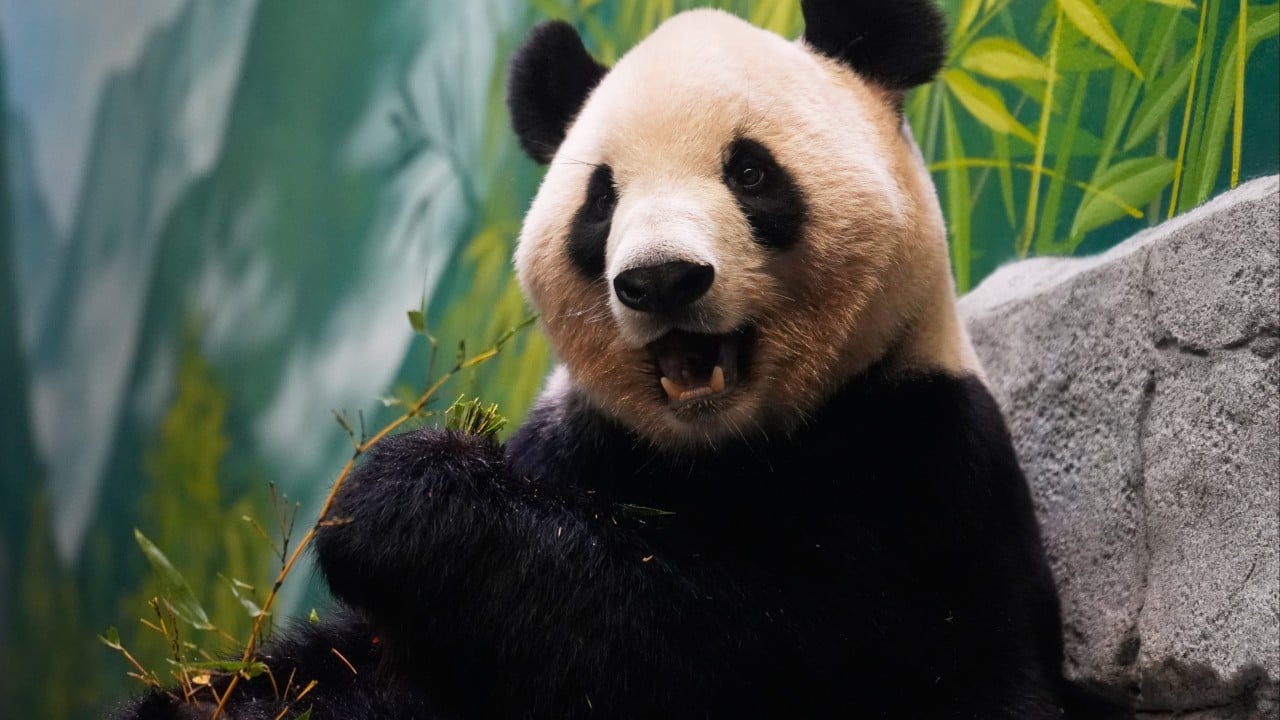
Zoo Atlanta just threw a massive party for the debut of two pandas, Ping Ping and Fu Shuang, treating the event like a monumental victory for global diplomacy and wildlife conservation. Crowds lined up for hours, local news stations beamed with pride, and the internet swallowed the sweet story whole.
Here is the raw, uncomfortable truth behind the red carpet rollout.
Most people look at a panda exhibit and see a heartwarming triumph of international cooperation. I see an expensive, high-stakes distraction masking a much harder reality about where our conservation dollars actually go. We are paying millions in lease fees to foreign governments just to watch bears chew bamboo under climate-controlled glass, while local ecosystems right in our backyard quietly collapse from total neglect.
Stop buying the fairy tale.
The Economics of the Black and White Monolith
Let us talk about the math nobody wants to publish on a neon promotional flyer. Giant pandas are not wild conservation success stories living rent-free in Georgia; they are high-maintenance diplomatic assets under strict lease agreements with Beijing. Zoos across the United States shell out millions annually just for the privilege of housing these animals, with every single cub born on American soil legally remaining the property of the Chinese government.
Call it what it is: an extraordinarily costly entertainment contract disguised as science.
When you purchase a ticket to catch a glimpse of Ping Ping and Fu Shuang, your money is not funding critical habitat protection for endangered native amphibians, migratory birds, or dwindling pollinators in the Southeast. It is funding massive enclosure maintenance, specialized bamboo logistics, and international leasing overhead.
I have watched organizations blow entire annual operating budgets on a single charismatic megafauna exhibit, betting the farm on ticket spikes while core conservation programs starve for lack of basic funding. It is an outdated business model built on emotional manipulation.
The Charismatic Megafauna Trap
Conservation biology suffers from a severe PR problem known as the charismatic megafauna bias. If an animal has big dark patches around its eyes, a round face, and an adorable habit of munching shoots on its back, humanity will throw endless capital at it. If an animal is a slimy salamander, an unglamorous mussel, or an insect that happens to hold an entire regional food web together, it gets paved over for a strip mall.
Ping Ping and Fu Shuang are masterclass distractions. They draw millions of pairs of eyes away from the unsexy, grinding labor of actual habitat restoration.
Imagine a scenario where zoos redirected every single dollar spent on panda leasing fees and specialized facility upgrades directly into purchasing and protecting fragmented local forests. We would secure millions of acres of resilient, self-sustaining ecosystems. Instead, we crowd into air-conditioned viewing areas to watch two bears nap for eighteen hours a day.
The public asks: "Aren't we saving an endangered species from total extinction?"
The honest answer is more complicated than a bumper sticker. Yes, captive breeding programs have successfully pulled giant pandas back from the absolute brink of demographic collapse, bumping their status from endangered to vulnerable. Credit where credit is due. But breeding animals in captivity is a long way from restoring a functional wild population. The bottleneck for panda survival was never a lack of captive cages; it was massive human encroachment on bamboo forests in the mountains of central China. Until those contiguous forests are fully restored and protected from fragmentation, captive populations are essentially high-end living museum exhibits rather than wild animals.
The Cost of Looking Away
When institutions lean entirely into crowd-pleasers like pandas, they train the public to view nature as a spectator sport. Nature is not a theme park attraction located behind triple-paned security glass. It is a messy, interconnected, violent, and beautiful machine that requires functional wild spaces, not air-conditioned cages.
Every time a major zoo makes a giant panda debut the central pillar of its cultural relevance, it signals to the community that conservation is something you pay to watch, not something you have to live alongside and protect in your own local watershed.
We need to stop pretending that paying foreign lease fees for imported bears is the pinnacle of environmental stewardship. It is entertainment. Expensive, highly coordinated, undeniably cute entertainment.
Admit it. You did not go to the zoo this weekend because you care about genetic diversity matrices in ursid populations. You went because you wanted to look at a fluffy bear eat bamboo.
At least be honest about the ticket price.
Save your awe for the ecosystems we are actually losing.


