The Street Protests That Forced Kyiv to Act
When thousands of Ukrainian protesters gathered outside the presidential office in Kyiv chanting for military change, President Volodymyr Zelenskyy knew he didn't have much room to maneuver. The dismissal of General Oleksandr Syrskyi and the appointment of Major General Mykhailo Drapatyi as the new commander-in-chief didn't happen in a vacuum. It was the direct result of a deep institutional rift that boiled over into the public square.
Ukraine isn't just fighting a war against an invading force. It's fighting an internal battle between two fundamentally different views of modern warfare. On one side stood the military old guard with traditional command structures. On the other side stood young reformers advocating for tech-driven, decentralized combat strategies. When Zelenskyy tried to settle the feud last week by firing 35-year-old Defense Minister Mykhailo Fedorov, he miscalculated the public's patience.
The reaction was swift and loud. Demonstrators flooded Kyiv and other cities, holding signs and demanding Fedorov's reinstatement while calling for Syrskyi's removal. Even inside the military ranks, the decision sparked visible pushback, with senior officers resigning in protest. Public trust in wartime leadership was at a fragile juncture. Zelenskyy had to step in and reset the military high command before internal divisions fractured the defense effort.
Inside the Dispute Between Old Tactics and New Technology
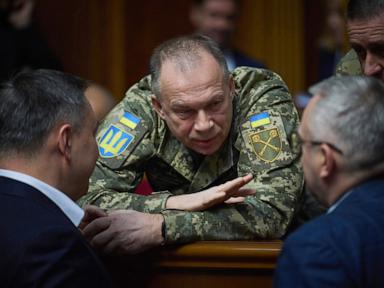
To understand why this shake-up happened, you have to look at the sharp contrast between the two men at the center of the conflict. Oleksandr Syrskyi, 60, represents a generation trained under legacy doctrines. He earned praise for leading the successful defense of Kyiv in 2022 and the surprise Kharkiv counteroffensive. But over time, rank-and-file soldiers and military observers grew critical of his top-down style.
Opponents argued that Syrskyi's operational choices placed too little weight on soldier survival during long, grueling attrition battles like Bakhmut. Complaints about bureaucratic delays and heavy casualties eroded confidence among front-line units.
Mykhailo Fedorov brought an entirely different philosophy to the defense ministry during his six-month tenure. As the former minister for digital transformation, Fedorov focused heavily on asymmetrical warfare. He championed deep-strike drone programs, electronic warfare tools, and automated battlefield tracking systems. His team actively worked to cut through traditional red tape, giving agile drone units direct funding and support.
The friction between the defense ministry and the general staff turned into a complete logjam. Fedorov publicly stated that his modernization initiatives were meeting constant roadblocks from senior officers who refused to adapt. When the conflict between Fedorov and Syrskyi reached a breaking point, both men reportedly asked Zelenskyy to fire the other. Zelenskyy initially backed Syrskyi, but the public backlash proved that the strategy of prioritizing traditional hierarchy over technological innovation was no longer politically or operationally viable.
Who Is Mykhailo Drapatyi
The choice of 43-year-old Major General Mykhailo Drapatyi as the new army chief signals a clear generational shift. Drapatyi belongs to a cohort of officers whose leadership style was forged entirely in combat against Russian forces since 2014, rather than in Soviet military academies.
Drapatyi first gained widespread national recognition in 2024 when he stepped up to stabilize front-line operations in the northeastern Kharkiv region during a major enemy push. Before his promotion to top general, he served as commander of Ukraine's ground forces and joint forces.
What sets Drapatyi apart is his emphasis on accountability and troop preservation. Over a year ago, he submitted his resignation following a Russian strike on a training ground that caused tragic losses, taking personal responsibility for systemic safety failures. That willingness to hold leadership accountable earned him substantial respect among soldiers and civic activists alike.
Drapatyi has consistently spoken about the need for military reform, better training standards, and stronger integration of wartime technology. Shortly after Fedorov's firing, Drapatyi posted on social media that the military desperately needed change, noting that without fairness and justice, no reform would make sense to the people carrying the war on their shoulders every day. His appointment is aimed directly at restoring morale and bringing the high command in line with modern battlefield requirements.
What This Leadership Shift Means for Ukraine's War Effort
Replacing a commander-in-chief in the middle of an active conflict carries serious tactical risks. However, leaving an unworkable feud unresolved at the highest levels of national security was far more dangerous.
The immediate priorities for Drapatyi and his leadership team are clear:
- Overhaul recruitment and frontline training programs to ensure better troop safety and operational efficiency.
- Accelerate the production, procurement, and deployment of long-range strike drones and robotic combat systems.
- Rebuild unified communication between the defense ministry and active battlefield commanders.
- Streamline military bureaucracy to allow rapid field-testing of new tactical gear without months of paperwork.
Zelenskyy has already instructed the new command to present an updated, comprehensive defense strategy. The goal is to maximize asymmetric advantages—using smart technology, deep strikes against enemy logistics, and flexible tactics to offset raw troop numbers.
The political situation in Kyiv remains active as lawmakers and citizens watch how the transition plays out. While Fedorov's exact future role in government is still being negotiated, the push for modernization has won out over entrenched military dogma. This leadership change demonstrates that public accountability and technological adaptation are now central to Ukraine's war strategy.