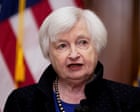
Janet Yellen isn't usually one for fiery rhetoric. She's the personification of the "cautious economist." So, when she warns that Donald Trump's relentless pressure on the Federal Reserve echoes a "banana republic," it's time to pay attention. This isn't just a political spat; it’s a warning about the fundamental stability of the U.S. dollar.
Speaking at a summit in Hong Kong recently, the former Treasury Secretary and Fed Chair didn't hold back. She's watched Trump use his Truth Social platform to demand the "LOWEST INTEREST RATE OF ANY COUNTRY IN THE WORLD." Her point is simple and terrifying. When a president demands lower rates just to make the government’s $39 trillion debt cheaper to carry, we've entered dangerous territory. That’s exactly how failing economies collapse into hyperinflation. If you enjoyed this post, you might want to read: this related article.
The Banana Republic Blueprint
What defines a "banana republic" in the economic sense? It’s not about the fruit. It’s about a system where the rule of law is flimsy and the central bank is just a piggy bank for the person in power. Historically, when politicians take over interest rate decisions, they choose short-term popularity over long-term stability. They print money, keep rates artificially low to fuel a boom, and then act surprised when the currency loses its value.
I've seen this play out in history books and emerging markets. The Federal Reserve was designed to be insulated from this exact pressure. If the Fed starts cutting rates because the President wants to lower the interest payments on the national debt, it signals to the world that the U.S. has given up on fighting inflation. For another perspective on this event, check out the latest coverage from The Motley Fool.
Why Debt Service Costs are a Trap
Trump’s logic seems straightforward to a businessman. Lower rates mean lower interest payments on the massive U.S. debt. But the Fed doesn't exist to balance the government's checkbook. Its job is "price stability"—keeping your groceries from doubling in price every few years.
If the Fed cuts rates while inflation is still a threat, simply to help the Treasury save money, investors will flee the dollar. They'll demand even higher interest rates to compensate for the risk of a devaluing currency. It’s a self-defeating cycle. You try to lower the cost of debt, but you end up destroying the value of the money you're using to pay it back.
The Warsh Factor and the AI Gamble
Trump's pick to lead the Fed, Kevin Warsh, is stepping into a hornets' nest. Warsh has suggested that maybe—just maybe—productivity gains from artificial intelligence mean we can afford lower rates without sparking inflation. It’s the "Greenspan Gamble" updated for 2026. Back in the late 90s, Alan Greenspan bet that the internet would make everyone so productive that the old rules of inflation wouldn't apply. He was right then, but it’s a massive risk to take now.
Yellen is skeptical. She’s pointed out that Warsh doesn't have the same "credibility" Greenspan had with the Federal Open Market Committee. If he walks in and tries to force a "pro-growth" agenda that looks like it's just doing the President's bidding, the markets will sniff it out instantly.
The Real Cost of a Political Fed
When the Fed loses its independence, you pay for it.
- Higher Long-term Rates: If the market thinks the Fed is a political tool, mortgage rates won't actually go down. Lenders will bake in "inflation protection," making your 30-year loan more expensive even if the Fed's short-term rate is low.
- Dollar Devaluation: Your savings buy less. Period.
- Global Instability: The U.S. dollar is the world’s reserve currency. If we start acting like a "banana republic," the global financial system loses its anchor.
What You Should Actually Do
Don't just watch the headlines and worry. If the wall between the White House and the Fed continues to crumble, you need to adjust your own financial strategy.
- Watch the Bond Market: Don't listen to what Trump says; watch what the 10-year Treasury yield does. If it starts spiking while the Fed is cutting rates, that’s the market telling you it doesn't trust the government.
- Diversify Your Assets: In a world where the dollar's credibility is questioned, owning "hard" assets or international equities becomes more important. Don't keep everything in a single bucket.
- Ignore the Noise: Politicians will always want lower rates. It makes them look good in the short term. Your job is to look at the underlying inflation data. If prices are still rising and the Fed is being bullied into cutting, it's time to get defensive.
The independence of the Fed isn't some boring administrative detail. It’s the only thing standing between a stable economy and the kind of chaos Yellen is rightfully shouting about. If we lose that, we lose the very thing that makes the U.S. economy the world's powerhouse. Keep your eyes on the data and don't let the political theater distract you from the real economic risks ahead.