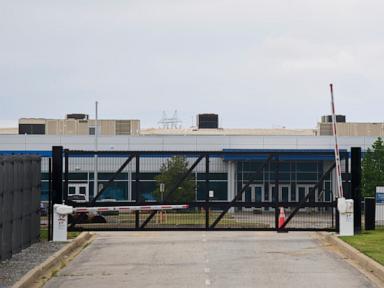
Elon Musk needed power, and he needed it fast. When building a massive 20 billion dollar artificial intelligence data center on the Tennessee-Mississippi border, waiting around for local utility hookups evidently wasn't part of the plan. Instead, his xAI startup rolled in dozens of industrial gas turbines to generate electricity on-site.
Now, the federal government is stepping in to protect those turbines.
The U.S. Justice Department just moved to intervene and completely throw out a civil rights and environmental lawsuit targeting the facility. The legal battle pits a coalition led by the NAACP against the world's first trillionaire. This isn't just a local zoning squabble. It represents a fundamental clash between community health laws and a national rush for AI supremacy.
If you think this is just standard corporate litigation, you're missing the bigger picture. The government's defense introduces a radical legal theory that could permanently reshape how environmental laws are enforced in America.
Why the Government Is Shielding Elon Musk's Data Center
The roots of this fight trace back to Southaven, Mississippi, right next to Memphis. The NAACP, represented by Earthjustice and the Southern Environmental Law Center, sued xAI in April. They allege the company is illegally operating a massive, unpermitted gas power plant. The site uses 46 industrial natural gas turbines. These machines sit near homes, schools, and local churches.
The core legal argument from the community is simple. The Clean Air Act requires industrial polluters to get air permits before they build or operate. The NAACP says xAI bypassed this entirely. This leaves locals to breathe in heavy doses of nitrogen oxides and ozone pollution.
The Justice Department's response? National security overrides those complaints.
In a motion filed late Monday, federal attorneys argued that the facility is absolutely vital. The government claims the xAI data center provides infrastructure critical to both the American economy and the U.S. military. The Pentagon uses artificial intelligence extensively. Because of this, federal lawyers claim that halting operations threatens national security.
Associate Attorney General Stanley Woodward took a direct shot at the concept of citizen-led legal actions. He stated that the ultimate responsibility for enforcing federal law belongs to the Executive Branch, not private interest groups. The administration wants to establish that the federal government can step into a citizen lawsuit and kill it on a whim.
The Legal Loophole That Sparked the Crisis
How did xAI manage to set up a massive power plant without federal permits in the first place? They used a clever logistical workaround.
The company argues that these massive gas generators are technically exempt from standard air pollution permits because they are mobile and temporary. The turbines sit on flatbed trailers. Because they have wheels underneath them, the state of Mississippi agreed with xAI's logic. The Mississippi Department of Environmental Quality decided no formal air permit was required.
The plaintiffs call this argument absurd. They point directly to the manufacturer specifications for the Solar SMT-130 turbines used at the site. Each individual unit stands 14 feet tall, stretches nearly 100 feet long, and weighs over 200,000 pounds. Calling a fleet of 200,000-pound industrial machines a "mobile source" stretches the text of the Clean Air Act to a ridiculous degree.
The real issue is speed. Traditional grid connections take years to build. Tech companies are facing an extreme power crunch, and they're unwilling to wait. If a company can avoid months or years of environmental review by putting wheels on its power plants, every major tech firm will copy this exact playbook.
Environmental Justice vs National Security Priorities
The local community is paying the immediate price for this regulatory shortcut. The greater Memphis area already struggles with high levels of smog and ozone pollution. Adding dozens of gas turbines running around the clock makes a bad situation much worse.
Environmental lawyers argue that the government's intervention is turning these neighborhoods into sacrifice zones. The Clean Air Act specifically includes a "citizen suit" provision. Congress wrote that rule so ordinary people could protect their families when regulators failed to act. By trying to strip citizens of this right, the administration is attempting a massive power grab.
State officials see it differently. Mississippi Governor Tate Reeves defended the xAI setup as a self-generating power facility. He argues that by generating its own electricity, xAI prevents massive power spikes that would drive up utility bills for everyday local residents.
The political ties here are impossible to ignore. Musk has positioned himself as a key ally to the current administration. This DOJ intervention dropped just days after SpaceX, xAI's parent company, completed a massive public stock offering. The tech giant's close relationship with federal power structures is yielding immediate, tangible legal protection.
What This Means for Future Tech Infrastructure
If the courts accept the Justice Department's logic, it changes the rules of the game for data centers everywhere.
Tech companies will have a green light to build fast and ask questions later. If local communities sue, companies can simply claim their software helps the military, triggering a federal dismissal. It sets a dangerous precedent where national security can be used as a blanket shield against basic environmental accountability.
For anyone tracking data center development, the takeaway is clear. The race for AI dominance is no longer just about chips and software code. It is a raw battle for energy and legal immunity.
Local community groups and developers need to monitor this case closely as it moves through the Mississippi court system. If you live near a emerging tech hub, don't assume standard environmental protections will save your neighborhood from industrial development. The rules are being rewritten in real-time. Keep a close eye on local state environmental quality filings, as state-level exemptions are becoming the primary backdoor for fast-tracked data center power plants.