For forty-two kilometers and one hundred ninety-five meters, the body betrays you.
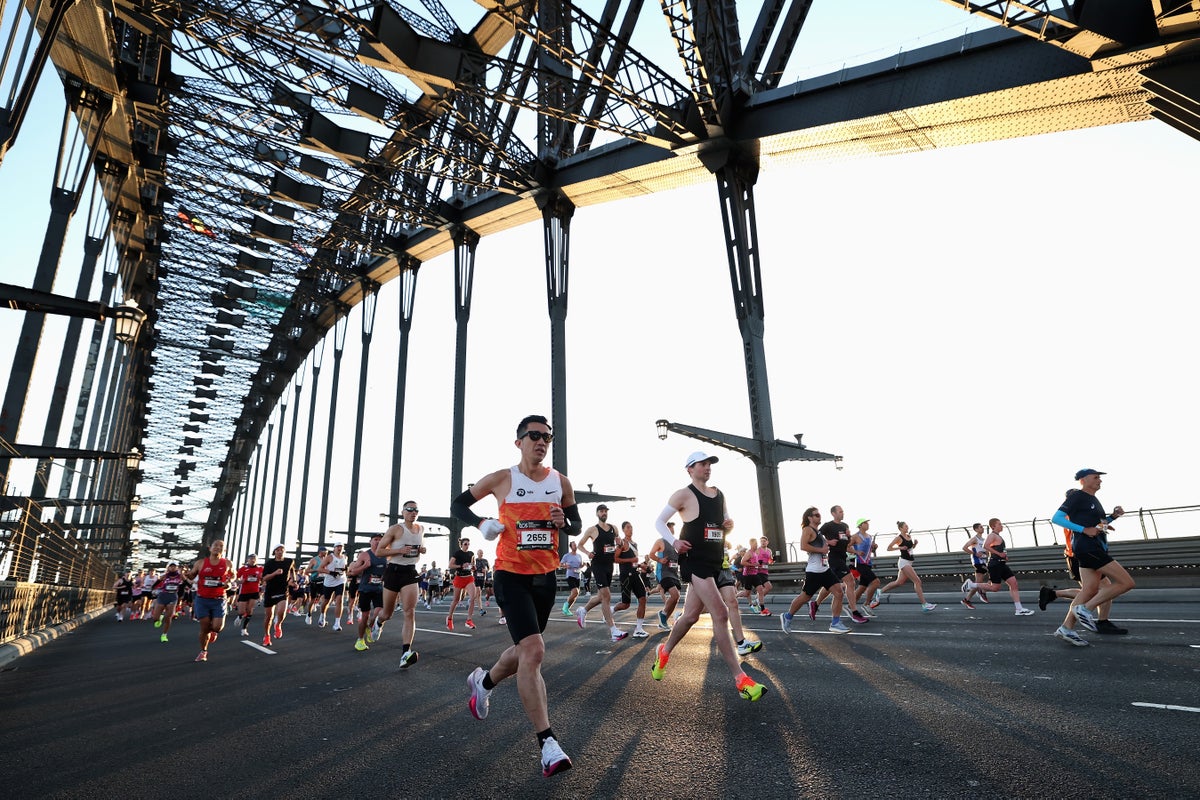
Your lungs burn with a metallic edge, a reminder that every breath requires raw negotiation. Your calves tighten into coiled steel cables, threatening to snap with every stride against the asphalt. You stare at the back of the runner ahead of you, measuring your existence in the rhythmic swing of their elbows, the damp salt staining their singlet, the relentless pounding of rubber on concrete. You are running through the morning pulse of a city built around a glittering harbor, past the white, swelling sails of an architectural masterpiece that seems ready to catch the wind and pull you out to sea.
You do this because you want a tangible receipt for your suffering.
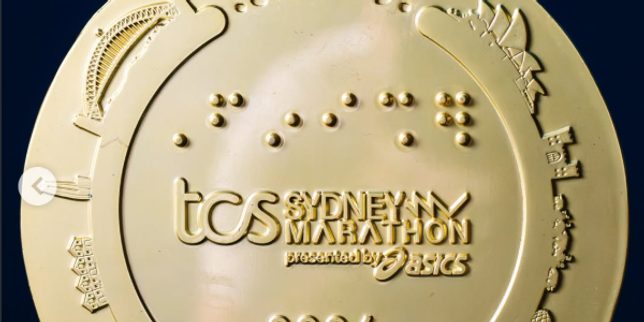
When the finish line finally shatters beneath your chest, you do not want words. You want weight. You want a heavy disk of cold metal pressed into your palm, scarred by your sweat, stamped with the permanent proof that you endured the burn, the doubt, and the distance.
Imagine holding that disk.
Imagine lifting it to your eyes, expecting the proud contours of the Sydney Opera House catching the dawn light. Expecting the familiar geography of the southern hemisphere etched into bronze or zinc. Instead, your thumb brushes against the unmistakable, bulbous, inflated geometry of a spaceship-like stadium nestled thousands of miles away in Europe.
That is not Sydney. That is Munich. Specifically, that is the Allianz Arena.
It sounds like an absurd punchline born of an exhausted night shift in a graphic design bullpen. Yet, for thousands of runners who poured their hearts, tears, and months of unglamorous training into the Sydney Marathon, it became an awkward, baffling reality.
Errors happen. We are human. We drop coffee mugs, misread spreadsheets, or type the wrong year on a check. But a marathon medal is not a casual receipt. It is an artifact. It is the sacred contract between a race director and a runner, signed in blisters and early morning alarms. When race organizers announced that the inclusion of the German football temple on the finisher medal was a "regrettable error," the confession hung heavy in the air.
How does a stadium in Bavaria sneak onto a medal meant to celebrate the pride of New South Wales?
To understand, you have to look past the pristine final product and into the chaotic machinery of modern mass-participation sports. A major world marathon is not just a race; it is a global logistical leviathan. Months before the first runner crosses the starting blocks, digital mockups are spun on screens in overseas factories. Designers juggle vector files, historical landmarks, font weights, and strict production deadlines. Somewhere in that digital ether, amid a dizzying folder of architectural icons intended to inspire the world, a stock image or a mislabeled template slipped through the net.
A click. A drag. An approval.
No one caught it. Not the junior designer rushing to meet a midnight deadline. Not the exhausted project manager reviewing proofs on a cracked smartphone screen. Not the quality assurance team staring at hundreds of tiny metallic renderings until every stadium began to blur into a generic silver dome.
Until the boxes arrived. Until the ribbons were threaded. Until the metal met the skin.
For the runner who crossed that finish line, the mistake stings in a way that non-runners might struggle to comprehend. A medal is a personal mythology. When you look at it years later hanging on a home office wall or tucked into a memory box, you want it to transport you backward. You want to smell the saltwater of Sydney Harbour, hear the roar of the crowds lining the bridge, and feel the specific, hard-earned exhaustion of your own physical triumph.
Staring at a German football stadium breaks that spell. It substitutes your sweat with someone else's stock art. It turns a deeply intimate moment of personal victory into a bureaucratic blooper.
Yet, there is a strange, poignant poetry in the blunder.
Marathons are celebrations of human imperfection. We do not run them because we are flawless machines; we run them because we are frail, stubborn creatures trying to push past our limits. We cramp, we stumble, we take wrong turns, and sometimes, we even design the wrong monuments onto our highest achievements.
The organizers of the Sydney Marathon moved quickly. Apologies were issued. Corrections were promised. Replacement medals, bearing the correct geography of the southern hemisphere, were mapped out for those who demanded absolute fidelity from their hard-earned hardware.
The metal will be melted down or corrected. The digital files will be scrubbed. The internet will cycle through its brief storm of amusement, confusion, and mild outrage before moving on to the next viral misstep.
But out there on the course, the truth of the marathon remains untouched by a stamping error. The distance was still forty-two kilometers and one hundred ninety-five meters. The lungs still burned. The crowd still roared.
No mistaken stadium can steal the morning you conquered yourself.