The wind does not stop in Stanley. It claws across the South Atlantic, scouring the corrugated tin roofs, whipping the cold sea spray against rusted fenders, and carrying the ghost of a war that most of the world has forgotten, but no one here ever will.
Walk down the harborfront on a Tuesday morning, and you will hear the crunch of gravel under boots and the low murmur of sheep farming traditions that have survived generations. To look at the Falkland Islands from the outside is to see a dot of green and gray on a Mercator projection. A footnote. A remote British overseas territory sitting eight thousand miles away from Whitehall, clinging to existence on the edge of the Patagonian shelf.
To the people who live here, though, it is the center of the universe. It is home. And right now, the wind isn't the only thing shifting.
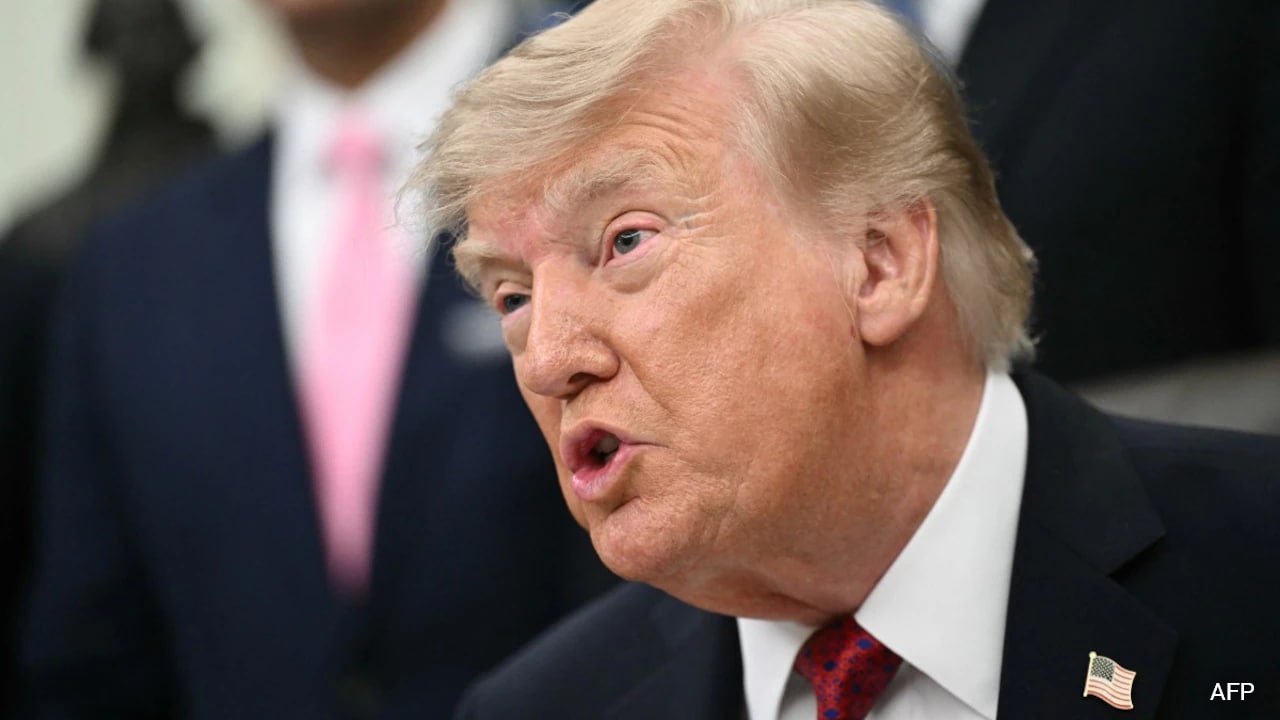
A quiet diplomatic tremor has started to rumble through Washington and London, sparked by a single, casual heavyweight pivot. Donald Trump has signaled that the United States is taking a fresh look at its position on the UK-controlled Falkland Islands. Just like that, the tectonic plates of geopolitics move beneath the peat.
Consider what happens next when a superpower turns its gaze toward a disputed archipelago.
For decades, the United States maintained a careful, diplomatic ambiguity on the sovereignty of the islands, officially recognizing British administration while avoiding a direct clash with Argentina's enduring, fierce territorial claims. It was a diplomatic tightrope walk designed to keep two vital allies—London and Buenos Aires—from tearing at each other's throats. But policy is never static. It breathes. It changes with administrations, with global ambition, and with the desperate hunt for natural resources.
The stakes here are not merely about national pride or lines drawn on antique maps. Beneath the freezing swells of the South Atlantic lie vast, untapped reserves of oil and natural gas. Fisheries teeming with squid and toothfish drive local economies. Strategic positioning matters in a world where maritime trade routes are increasingly contested. When a major player like the United States begins reviewing its stance, the ripple effects hit every kitchen table in Port Stanley.
Listen to the stories people tell in the local pubs when the weather turns foul.
There is Arthur, a third-generation sheep farmer whose hands look like weathered driftwood. His grandfather helped tend the flocks during the uneasy decades before the 1982 conflict. Arthur doesn't talk much about geopolitics until the third pint of bitter, and then his voice drops to a gravelly register.
"They talk about us in capitals we've never visited," he says, staring into his glass, watching the foam settle. "They draw maps in Washington and Buenos Aires. They debate our right to exist as if we're a line item on a trade ledger. But my family is buried in that hillside. My blood is in this dirt. We aren't a bargaining chip."
That is the human core that gets lost in the sterile press releases of international relations. Abstract sovereignty disputes become deeply personal when you are the one living under the shadow of them.
To understand why this review matters right now, we have to pull back the lens and look at the broader chess board. Argentina has never dropped its claim over what it calls Islas Malvinas. Generations of school children in Buenos Aires grow up looking at maps where the islands are painted in domestic colors, tagged as stolen territory waiting to be reclaimed. The emotional resonance of the Malvinas in Argentina is profound, capable of uniting a deeply fractured political landscape in a single burst of nationalist fervor.
For the United Kingdom, holding the islands is a matter of self-determination and post-imperial credibility. After the bruising fallout of Brexit and a shrunken global military footprint, London cannot afford to look weak. Abandoning or softening its stance on the Falklands would signal a terminal retreat from global commitments. Prime ministers rise and fall on the promise that British subjects anywhere in the world will be defended.
And then there is the United States, playing a long, cold game of hemispheric influence. Washington watches closely as rival global powers court Latin American governments through infrastructure investments and debt diplomacy. If a pivot on the Falklands can shore up relations with a key South American partner, or if shifting energy dynamics demand a new alignment, Washington has historically shown little hesitation in rewriting the playbook.
Yet, policy pivots have real-world velocity.
Imagine waking up to find that your passport, your currency, your government's legitimacy, and your very safety are suddenly up for renegotiation in a smoke-filled room thousands of miles away. That is the daily psychological reality for the roughly three thousand residents of the islands. They are fiercely British. They voted overwhelmingly in a 2013 referendum to remain an overseas territory of the United Kingdom—a staggering 99.8 percent chose to keep the status quo.
They do not want to change hands. They do not want to be a prize won in a diplomatic poker game.
Diplomacy is often described as the art of the possible, but it is frequently practiced with a staggering indifference to the impossible weight it places on ordinary lives. When a superpower reviews its position, it isn't an academic exercise. It is a signal. To Buenos Aires, it breathes new life into a dormant crusade. To London, it sounds a quiet alarm. To the Falklanders, it is the chilling sound of distant thunder.
The wind howls outside the window again. The sheep huddle against the stone walls. In the grand sweep of history, empires rise, fall, and redraw the boundaries of the earth, leaving ordinary people to pick up the pieces of decisions they never voted for. But as long as the Falklands remain what they are—proud, stubborn, and stubbornly tied to the past—the people living on the edge of the world will keep their eyes fixed on the horizon, waiting to see which way the storm breaks next.