The zipper makes a sound like a small, sharp intake of breath.
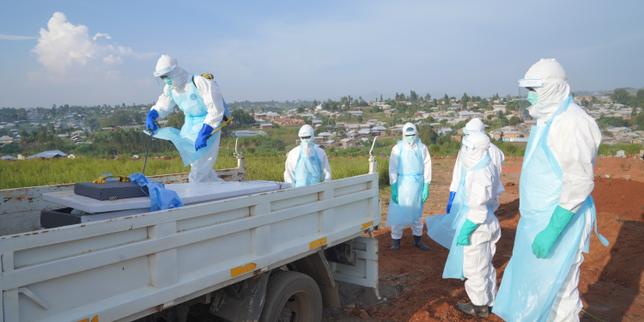
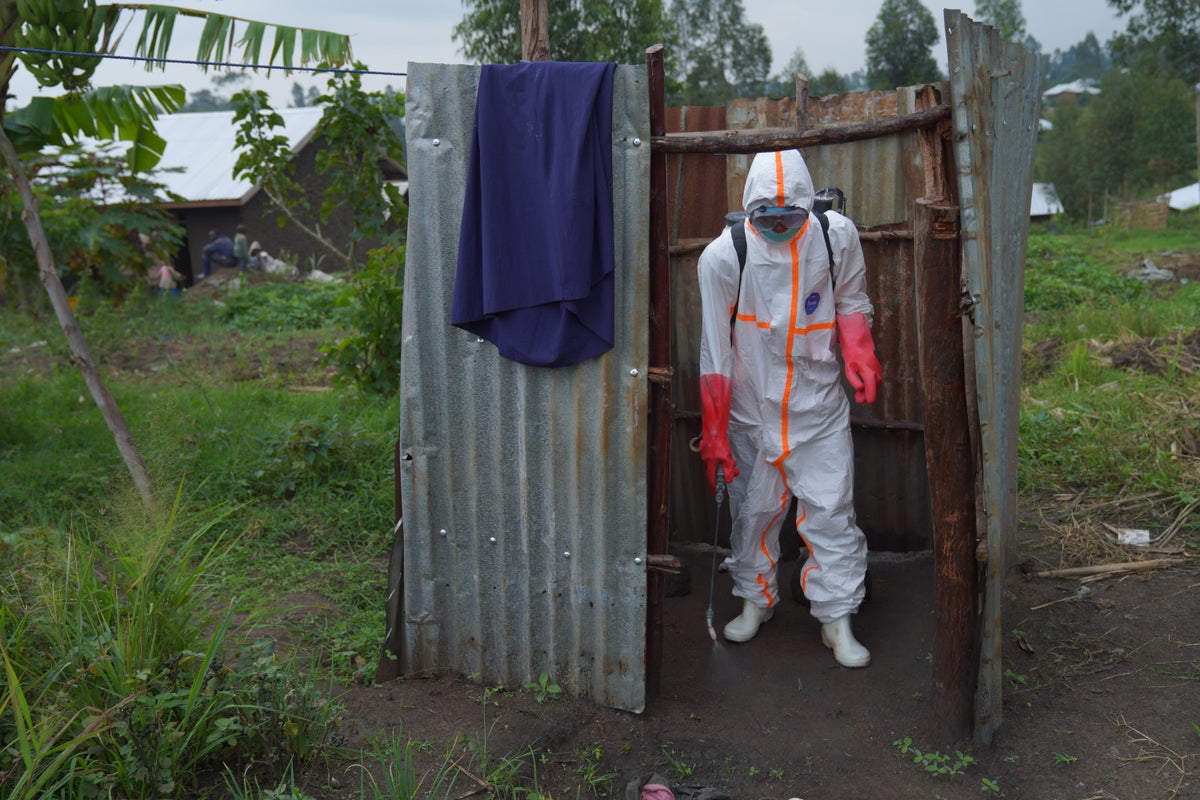
Inside the heavy layers of white polyvinyl, the air turns hot instantly. Within ten minutes, sweat pools in the rubber boots. Within twenty, the goggles fog, blurring the world into a landscape of shadows and harsh fluorescent glare. This is the uniform of the treatment center in the Democratic Republic of Congo. To the outside world, it looks like science fiction. To the patients lying on the canvas cots, it looks like the arrival of ghosts.
Outside the plastic sheeting of the isolation ward, the official tally crawls upward. The numbers arrive via crackling radio dispatches and scribbled clipboards. The Ebola case count is nudging toward 300. In the air-conditioned briefing rooms of international health agencies, 300 is a statistic, a milestone on a epidemiological curve, a data point to be plugged into a predictive model.
But models do not bleed. Graphs do not cry out for water in the middle of the night.
To understand what is happening in the red zones of the Congo, you have to look past the three-digit threshold. You have to look at the gloves. Specifically, the moment two layers of chlorinated rubber touch a patient's bare, feverish forehead.
Dr. Jean-Jacques Mubamba—a hypothetical composite of the extraordinary local physicians currently holding the line in North Kivu—knows the exact weight of that touch. He has spent twelve hours a day inside the suit. He knows that when a virus liquefies a person’s internal organs, the greatest enemy isn't always the pathogen. It is the absolute, terrifying isolation.
Imagine the terror of dying while surrounded only by people who look like spacemen. You cannot see their smiles. You cannot see their tears. You only see their eyes behind plastic lenses, wide with a caution that feels a lot like fear.
Then, the miracle happens.
The miracle does not arrive via a breakthrough serum or a sudden drop in the regional transmission rate. It arrives when a survivor walks backward out of the hot zone.
Consider the case of Kavira, a twenty-four-year-old nurse who contracted the virus while treating one of the earliest patients in her village. For two weeks, her life was measured in liters of intravenous fluid and the rhythmic, agonizing sound of her own labored breathing. Her family had already begun planning her funeral, gathering the white cloth required for a traditional burial. In many ways, the community had already crossed her name off the ledger of the living.
When she stood up from her cot, her legs shook like dry reeds. But she stood.
When a medical worker survives Ebola, the psychological landscape of the entire clinic shifts. The heavy, suffocating blanket of dread lifts, if only for an hour. The discharge of a recovered nurse is not a quiet administrative event. It is a riot of human joy.
Her colleagues, still trapped inside their stifling protective gear, gathered at the safe viewing glass. They didn’t just clap; they danced. They beat rhythmically on plastic water jerrycans, turning the sterile, bleach-scented air into a sanctuary of song.
"We are winning," one technician shouted through his mask, his voice muffled but unmistakable in its triumph. "She is dry. She is clear. She is ours again."
This is the hidden engine of the response. The numbers tell a story of a virus spreading, creeping through dense forests and along motorbike tracks, claiming victim after victim until the tally nears 300. But the survivors tell a story of resilience that the data completely misses.
Every recovered health worker is a living, breathing proof of concept. They are the evidence that the monster can be beaten.
There is a unique cruelty to Ebola. It exploits the finest parts of human nature. It spreads through love. It catches the mother wiping the sweat from her child’s brow. It infects the brother washing the body of his sibling for burial. It targets the nurse who refuses to walk away from a coughing patient. It turns our deepest instincts for empathy into a delivery system for death.
Because of this, the fear it breeds is systemic. When the outbreak hits a new village, the first reaction is often not compliance with medical guidelines, but deep, defensive denial. Rumors travel faster than the virus itself. The treatment centers are whispered to be organ-harvesting operations. The foreigners in the white suits are suspected of bringing the plague rather than curing it.
When a community believes the hospital is a slaughterhouse, they hide their sick. They bury their dead in secret under the cover of night. And the numbers jump from 200 to 250, then march relentlessly toward 300.
How do you break a cycle of fear that strong?
You do not do it with posters printed in Geneva. You do not do it with megaphones mounted on the back of UN pickup trucks.
You do it with Kavira.
Once she was discharged, she did not pack her bags to rest in the capital. She stayed. Because her blood now contained the rarest commodity in the entire region: antibodies. She was immune. She could walk into the highest-risk zones without the white vinyl suit. She could look a dying child in the eye, bare-faced, and offer a human smile. She could hold a patient's hand with her own skin, warm and unprotected, without an inch of latex standing between her compassion and their suffering.
The survivors become the ultimate bridge. When villagers see a woman who was reported dead walking among them, speaking their language, explaining that the doctors saved her life, the walls of suspicion crumble.
"I was where you are," she tells them. "The suit is scary, yes. But inside the suit is a person trying to save your life."
This is where the standard reporting on global health crises falls short. It focuses on the macro-mechanics of the disaster—the funding shortfalls, the logistics of cold-chain vaccine deployment, the geopolitical instability of the region. Those elements are real, and they are daunting. Operating a medical response in an active conflict zone, where armed militias control the roads, is a logistical nightmare that tests the limits of human ingenuity.
But the macro-mechanics are meaningless without the micro-moments of human will.
The battle against Ebola is fought in inches, in the stubborn refusal of local medical staff to run away when the sirens start. Most of these workers have not received their salaries in months. They lack the most basic equipment in their home clinics. Yet, when the call comes, they step into the vinyl.
The current outbreak is approaching 300 cases, and yes, that number should cause the world to pay attention. It should trigger the release of contingency funds and speed up the shipment of experimental therapeutics.
But let that number also represent something else. Let it represent nearly 300 individual battlegrounds where the human spirit is refusing to yield to a microscopic killer.
The real metric of hope is not found in the zeroing out of the chart, but in the noise of the jerrycan drums. It is found in the laughter of a recovered doctor embracing his children after weeks of isolation. It is found in the quiet determination of a nurse zipping up her suit for the afternoon shift, knowing the risks perfectly, and stepping back into the heat.
The sun sets over the hills of North Kivu, casting long, golden shadows across the dirt courtyard of the treatment center. The smell of chlorine hangs heavy in the damp evening air. Inside, a generator hums, keeping the lights alive over the cots.
A worker stands at the exit of the decontaminating station, waiting for the bleach spray to dry on her boots. She peels off her outer gloves, her hands pale and wrinkled from hours of trapped moisture. She takes off her goggles, leaving deep red ridges around her eyes.
She breathes the open air deeply. Tomorrow, she will put the suit back on.