The heavy curtains of the Beit-e Rahbari—the official residence of Iran’s Supreme Leader—do more than block the fierce Tehran sun. They swallow sound. In the heart of this sprawling, heavily fortified compound, decisions are made that ripple across the Middle East and send tremors through global oil markets. Yet, the most significant sound coming out of the compound right now is something entirely different.
Silence.
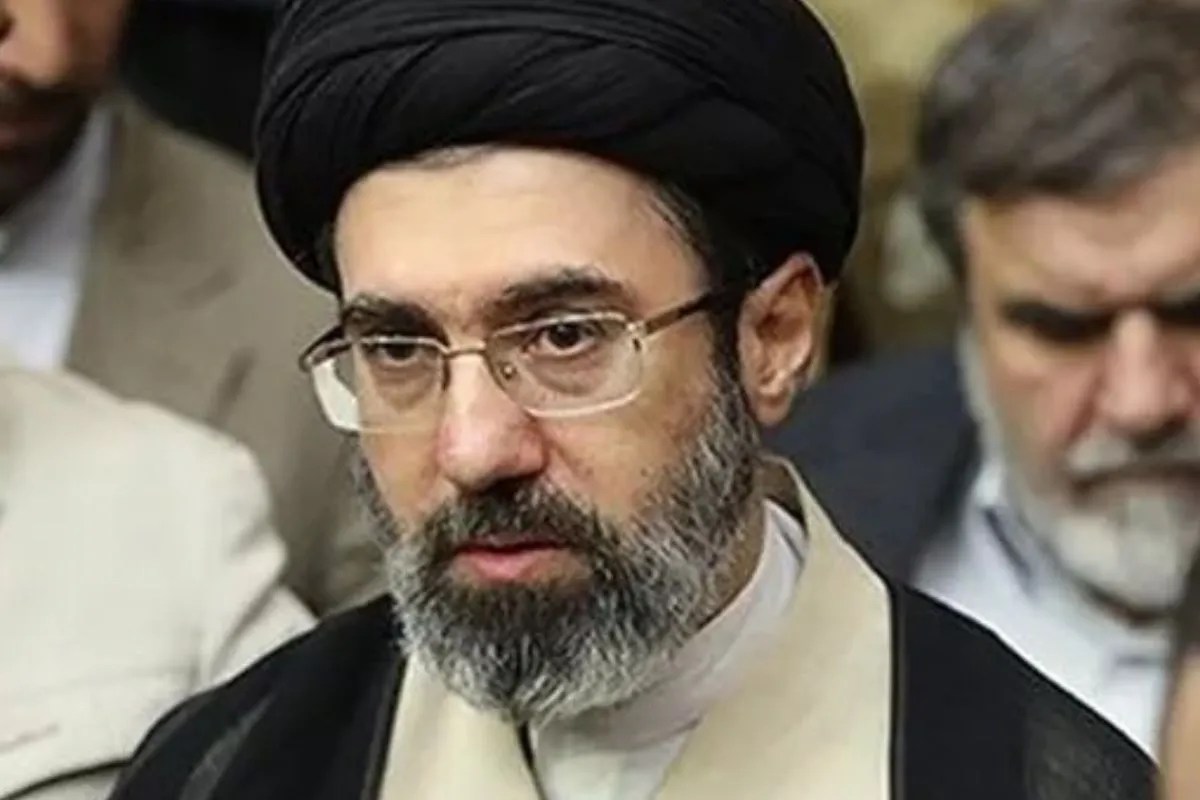
Specifically, the absolute, calculated silence of Mojtaba Khamenei.
For decades, the global intelligence community has watched the aging Supreme Leader, Ayatollah Ali Khamenei, with a collective, anxious breath. He is the ultimate arbiter of Iran's destiny. But as rumors regarding his health fluctuate, the question of succession has transformed from a distant constitutional checklist into an immediate, high-stakes geopolitical drama. At the center of this storm stands Mojtaba, the Ayatollah’s second son. He is a man who has managed to become the most talked-about figure in Iranian politics without uttering a single public word about his ambitions.
This is not a story about bureaucratic transition. It is a story about a family, a theology, and the invisible threads of power that hold a nation together—or threaten to snap it apart.
The Weight of the Turban
To understand the tension gripping Tehran, one must first understand the unique, almost impossible burden of the Supreme Leader's mantle. The position, known as Velayat-e Faqih or the Guardianship of the Islamic Jurist, is not supposed to be hereditary. The 1979 Islamic Revolution was, after all, fought to overthrow a monarchy. The idea of a son succeeding a father is a theological and political taboo. It risks making the Islamic Republic look exactly like the Shah’s regime it replaced.
Consider a hypothetical mid-level cleric sitting in the holy city of Qom. Let us call him Ahmad. Ahmad has spent his entire life studying Islamic jurisprudence. He teaches young seminarians that legitimacy comes from divine law and scholarly consensus, not bloodlines. For Ahmad, and thousands of traditionalists like him, the whisper of Mojtaba’s rise is deeply unsettling. It threatens the very ideological bedrock of the state.
But power has a logic that often overrides theology.
Mojtaba Khamenei is not just a son; he is a gatekeeper. For over two decades, he has quietly embedded himself within the security apparatus of the state. He is exceptionally close to the Islamic Revolutionary Guard Corps (IRGC), the elite military force that controls vast swaths of the Iranian economy and its external proxy networks. While the public rarely hears his voice, the commanders of the IRGC know his signature. They know his influence.
This creates a profound paradox. The very thing that makes Mojtaba a stable choice for the military elite—his predictability and continuity of the family line—makes him a volatile choice for the religious establishment.
The Empty Chairs of Power
The anxiety surrounding the succession grew exponentially following a series of sudden, violent disruptions in the Iranian political landscape. The most notable was the helicopter crash that claimed the life of President Ebrahim Raisi.
Raisi was not just a president. He was widely viewed as the frontrunner to succeed the elder Khamenei. He was a loyalist, a hardliner, and a man who had been carefully groomed for the ultimate seat of power. His sudden removal from the chessboard changed everything overnight. It left an empty chair at the worst possible moment.
When a regime faces external pressure—sanctions, regional conflict, proxy wars—it craves internal absolute certainty. With Raisi gone, the spotlight shifted directly, intensely, onto Mojtaba.
But instead of stepping into the light, Mojtaba retreated further into the shadows. He canceled his long-standing advanced religious lectures in Qom. These lectures were the primary vehicle he used to establish his credentials as an Ayatollah, a necessary prerequisite for the supreme leadership.
Why stop now?
In the opaque world of Iranian politics, a sudden retreat is rarely a sign of weakness. More often, it is a defensive maneuver. By stepping back from the public eye, Mojtaba removes himself as a direct target for rival factions. He creates a vacuum, forcing others to guess his intentions. In Tehran, the man who cannot be read is the man who cannot be defeated.
The Invisible Stakes
It is easy to look at Iran through the lens of geopolitics, missiles, and nuclear centrifuges. But the true volatility lies in the human element. The Iranian public is exhausted. Decades of economic isolation, soaring inflation, and social unrest have created a fragile domestic environment. The protests that have erupted across the country in recent years are a testament to a deep-seated disconnect between a young, connected population and an aging, clerical elite.
Now, imagine the transition of power occurring against this backdrop of domestic grievance.
If the Assembly of Experts—the body officially tasked with choosing the next leader—announces Mojtaba Khamenei as the successor, it could act as a lightning rod. It could ignite the very street protests the regime fears most, fueled by the narrative that the revolution has devolved into a family dynasty.
Conversely, if a weak or fractured figure is chosen to avoid the controversy of Mojtaba, the IRGC might feel compelled to take overt control of the state to maintain stability. This would effectively transform Iran from a theological republic into a military dictatorship.
Neither option offers an easy path forward. The stakes are not just about who sits in the big chair in Tehran. The stakes are about the survival of the system itself.
The Strategy of Echoes
Western intelligence agencies and regional neighbors watch the silence of Mojtaba with growing concern because silence is impossible to negotiate with. You can analyze a speech. You can parse a manifesto. You cannot track a shadow.
The current Supreme Leader is well aware of the delicate nature of this moment. He has historically dismissed rumors of nepotism, once reportedly stating that he opposed his sons seeking political office. Yet, he has allowed Mojtaba to accumulate unprecedented behind-the-scenes influence. It is a masterful display of ambiguity. It keeps rivals off balance and ensures that the family remains indispensable.
This ambiguity is felt deeply by the people living within the region. For a shopkeeper in Tehran, the silence means uncertainty about the price of bread tomorrow. For a diplomat in Washington or Riyadh, it means preparing for multiple, drastically different futures.
The silence is not empty. It is heavy with the weight of what comes next.
The world waits for a sign, a speech, a single public gesture from the son in the shadows. But the corridors of the Beit-e Rahbari remain quiet, keeping their secrets tightly held, while outside, the rest of the world braces for the moment the silence finally breaks.