The global commentary surrounding the Japanese imperial succession is lazy, superficial, and blinded by Western cultural imperialism.
Every few months, a fresh batch of international op-eds sounds the alarm. They warn that the Chrysanthemum Throne is on the verge of collapse. They point at the 1947 Imperial House Law, which limits succession to male descendants in the male line, and brand it an archaic, self-defeating relic. The prescription is always the same: Japan must modernize, embrace female succession, and let Princess Aiko rule. If it does not, we are told, a 1,500-year-old dynasty will simply vanish.
This narrative is flat-out wrong. It misdiagnoses the problem, misunderstands the nature of the institution, and offers a "cure" that would actually kill the patient.
Forcing modern, Western liberal democratic values onto the world’s oldest continuous hereditary monarchy will not preserve it. It will hollow it out, turning a sacred, ritualistic institution into a glorified, tourist-friendly reality show. The crisis facing the imperial house is real, but the solution is not progressive reform. The solution is reversing a historical injustice imposed by foreign occupiers nearly eighty years ago.
The Myth of the Progressive Fix
Commentators love to point out that Japan has had eight female reigning empresses in its history, as if this is a slam-dunk argument for modern female succession.
This is historically illiterate.
Those eight empresses—ruling between the 6th and 18th centuries—were not "progressive" breakthroughs. They were temporary, tactical placeholders. Every single one of them was either the widow or the daughter of an emperor. Crucially, none of them passed the throne to their own children. The succession always returned to a male heir in the male line (yosei).
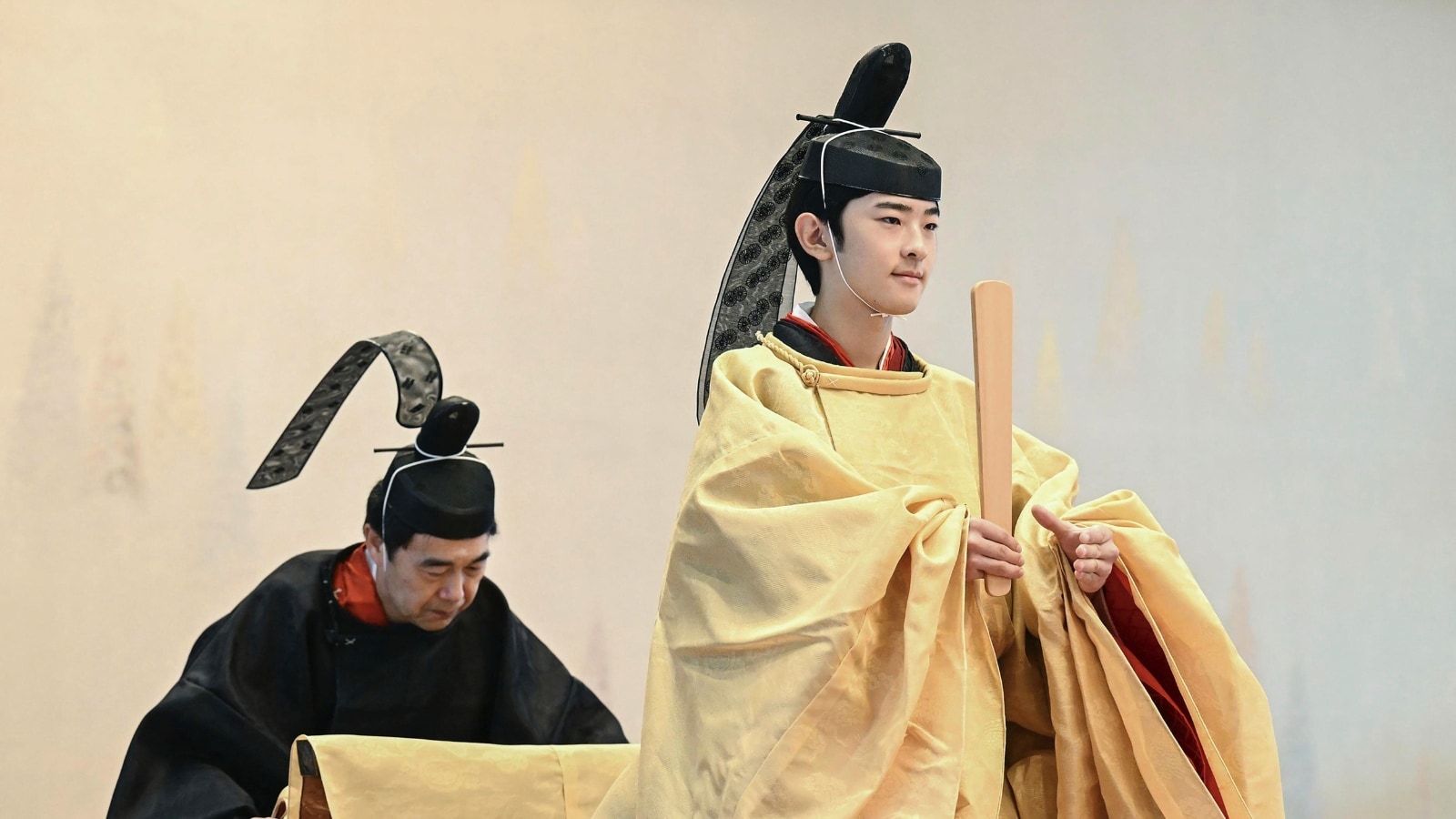
To understand why this matters, you must understand what the Japanese monarchy actually is. It is not the British royal family. It is not a political institution that needs to reflect the demography of its electorate. The Emperor of Japan is, fundamentally, the chief priest of Shinto. The legitimacy of the throne does not rest on popularity polls or progressive optics; it rests on the unbroken, patrilineal lineage (the bansei ikkei) stretching back, mythologically, to the sun goddess Amaterasu.
If you change the succession rules to allow female-line descendants to take the throne, you break that chain.
Once the chain is broken, the throne loses its unique ontological claim. It becomes just another European-style royal family, sustained only by public relations and tabloid fodder. If the Japanese monarchy becomes nothing more than a historical reenactment society, it loses its reason to exist. You do not save an ancient institution by stripping away the very thing that makes it unique.
The 1947 Traumatic Amputation
The real crisis of the imperial family is not a biological shortage of males. It is an artificial, political bottleneck created in the aftermath of World War II.
In 1947, during the Allied occupation of Japan, the Supreme Commander for the Allied Powers (SCAP), led by General Douglas MacArthur, forced a radical restructuring of the imperial household. The Americans wanted to weaken the traditional power structures that had sustained Japanese nationalism.
Their weapon of choice was financial and administrative castration.
Under American pressure, 11 collateral branches of the imperial family—known as the shinnoke and oke—were stripped of their imperial status, wealth, and titles. overnight, 51 royals became commoners. These branches had existed for centuries as biological backups, specifically designed to provide male heirs to the throne if the main line ever ran dry.
Imagine a scenario where a massive corporation suddenly fires its entire backup engineering team, deletes all redundant servers, and then complains twenty years later that its system is fragile. That is exactly what happened to the Chrysanthemum Throne.
The current shortage of heirs is not an inevitable tragedy of nature. It is the direct result of a foreign-imposed policy designed to make the monarchy fragile.
Today, the main imperial line has only one young male heir in the younger generation: Prince Hisahito. If the goal is genuinely to secure the future of the dynasty, the most logical, historically consistent path is not to reinvent the rules of succession. It is to undo the damage of 1947.
The Unpopular, Elegant Solution: Restoring the Collateral Branches
The media rarely mentions the collateral branches because doing so ruins the neat, progressive narrative of gender equality. But the descendants of those 11 purged branches are still alive today. They are young, they are integrated into Japanese society, and they share a common male-line ancestor (Emperor Suko, who reigned in the 14th century) with the current Emperor.
Restoring these collateral branches, or allowing male members of these families to be adopted by current imperial households, would instantly solve the succession crisis.
- It preserves the patrilineal chain: The bansei ikkei remains unbroken.
- It expands the pool of heirs: Dozens of eligible males would be restored to the line of succession.
- It respects historical precedent: Adoption (yoshi-engumi) has been used for centuries within the imperial family to secure the succession when a main line failed to produce an heir.
Is this solution complicated? Yes. Would it require these young men to undergo rigorous preparation to enter public life? Absolutely. But it is a solution grounded in Japanese history, law, and religious tradition, rather than the fleeting whims of 21st-century editorial boards.
The push to change the succession law is not about helping Japan; it is about making Western observers feel comfortable. It is an attempt to turn an ancient, sacred priesthood into a mirror that reflects contemporary globalist values.
If Japan capitulates to this pressure, it will not be saving its 1,500-year-old institution. It will be signing its death warrant. The Japanese people do not need to "modernize" their Emperor to satisfy the sensibilities of foreigners who do not understand Shinto. They need to look backward, remember their own history, and have the courage to restore what was stolen from them.