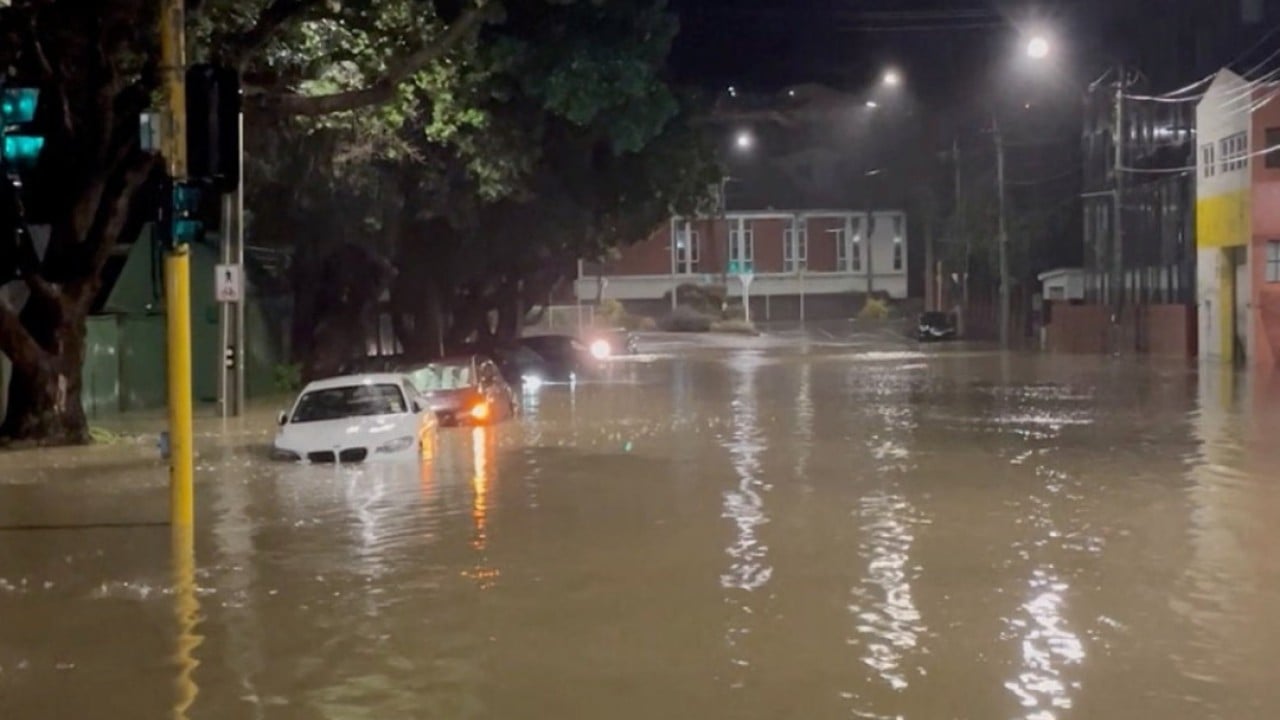
Wellington didn’t just have a "bad weather day."
The record rainfall that triggered flash floods and a state of emergency isn’t a freak of nature. It is a predictable audit of decades of municipal negligence. While the headlines scream about climate change—a convenient, untouchable villain—the reality is far more grounded and far more damnable. We are witnessing the physical manifestation of "kicking the can down the road" finally hitting a dead end.
The emergency isn’t the water. The emergency is the infrastructure.
The Hydrological Illusion of "Unprecedented"
Every time a storm hits New Zealand’s capital, officials scramble for the word "unprecedented." It’s a linguistic shield used to deflect accountability. If a disaster is unprecedented, after all, how could anyone have prepared?
Let’s look at the actual mechanics of a city built on hills and harbor. Wellington’s geography is a natural funnel. When you pave over that funnel with non-permeable surfaces and fail to upsize pipes designed for a 1950s population, you aren't a victim of a storm. You are the architect of a flood.
The "lazy consensus" blames the sky. The truth is found in the dirt. Most of Wellington’s stormwater network is past its theoretical lifespan. We have pipes in the CBD that are literally made of earthenware and cast iron from the Victorian era. When $100$ mm of rain falls in a condensed window, those pipes don't just "fail"—they cease to exist as a functional system.
Calling this a "natural disaster" is like driving a car with bald tires into a wall and blaming the rain for making the road slippery.
Why Your "Climate Resilience" Taxes Are Being Flushed
The public is being gaslit into believing that more "emergency declarations" and "resilience frameworks" will solve this. They won't. I have seen city councils across the globe burn through millions on "feasibility studies" and "impact reports" that serve as nothing more than expensive paperweights.
Wellington has spent years debating light rail and vanity projects while the literal foundation of the city rots. We are prioritizing the aesthetic of a "green city" over the engineering of a dry one.
- The Maintenance Debt: The city’s water infrastructure deficit is estimated in the billions.
- The Bureaucratic Bloat: For every dollar spent on actual pipe replacement, three are spent on consultants, "stakeholder engagement," and rebranding exercises.
- The Permitting Paradox: It is currently easier to get a permit for a high-density apartment block that adds massive load to the drainage system than it is to get the consent to upgrade the drainage itself.
We are densifying a city on a platform that is already collapsing. That isn't progress; it’s a Ponzi scheme where the "return" is a flooded basement for the next generation of homeowners.
Stop Asking if it’s "Climate Change" and Start Asking for the Ledger
The obsession with the why of the rain is a distraction from the how of the drainage.
If we accept the premise that extreme weather events are increasing in frequency—and the data suggests they are—then the "record-breaking" excuse becomes even more pathetic. If you know the frequency of 1-in-100-year events is now 1-in-10 years, then your 1-in-100-year design standard is a dereliction of duty.
The "status quo" response is to declare an emergency, hand out some sandbags, and wait for the sun to come out so everyone can forget until the next "unprecedented" event in eighteen months.
True resilience isn't found in a press conference. It’s found in the boring, unsexy, and incredibly expensive work of digging up streets.
The Cost of Cowardice
Politicians hate infrastructure. You can’t cut a ribbon on a new stormwater main. It’s buried underground. No one sees it. It doesn't get you re-elected. Consequently, the budget for "renewals" is always the first thing to be slashed when a council wants to keep rates low or fund a new library.
The result?
- Property devaluation: Entire suburbs in the Hutt Valley and Wellington proper are becoming uninsurable.
- Economic paralysis: Every hour the city sits under a "state of emergency," the local economy loses millions in productivity.
- Public health risks: Flash floods in Wellington aren't just rainwater; they are a toxic slurry of overflowed sewage and urban runoff.
The Counter-Intuitive Fix: De-pave or Die
If Wellington actually wanted to solve flash flooding, it would stop building more "gray" infrastructure and start aggressively implementing "green" engineering. But not the kind of "green" that involves a few potted plants on a sidewalk.
I’m talking about mandatory permeable paving for all new developments. I’m talking about daylighting piped streams that were buried a century ago. I’m talking about dynamic pricing for water use to fund the massive infrastructure hole.
But these solutions are unpopular. They require telling developers "no." They require telling homeowners they can't pave over their front yards for a car park. They require honesty about the fact that some parts of the city shouldn't have been built on in the first place.
The Brutal Reality of Wellington’s Geography
Let’s perform a thought experiment. Imagine a scenario where the city council actually admits that the current drainage system is beyond repair. What happens then?
Managed retreat.
That is the phrase no politician in New Zealand wants to utter. It means admitting defeat. It means telling people their multi-million dollar homes in flood-prone zones are liabilities, not assets.
But until we stop viewing these floods as "surprises," we are just LARPing as a functioning modern city. Wellington is a collection of steep hills and narrow valleys. Gravity is not a policy suggestion; it is a law. When the rain falls, it goes down. If there is nowhere for it to go because the pipes are blocked with silt or simply too small, it will go through your living room.
The Mirage of Government Assistance
People also ask: "Will the government bail out the flooded businesses?"
The answer is a brutal "no"—at least not in any way that matters. A few thousand dollars in emergency grants is a band-aid on a gunshot wound. The real cost is the rising insurance premiums that will eventually make Wellington a city for the ultra-wealthy or the extremely foolish.
The insurance industry is already ahead of the government. They have the models. They see the "record rainfall" and they see the Victorian pipes. They are already pricing Wellington out of existence.
The False Comfort of the "State of Emergency"
Declaring a state of emergency is an admission of systemic failure. It is the final "oh crap" button when the lack of planning meets the inevitable reality of nature.
Stop looking at the sky. Stop blaming the clouds. The water is just doing what water does. The real disaster is the decades of "pragmatic" budget cuts and the cowardice of leaders who would rather fund a "Vision 2050" brochure than a single 1200mm concrete pipe.
Wellington isn't being hit by a once-in-a-lifetime storm. It is being hit by the reality of its own neglect. Until we stop treating engineering like an optional luxury, the city will continue to drown in its own indecision.
The next "unprecedented" flood is already on the radar. The only question is how many more times we’re going to act surprised when gravity wins.
Stop building. Start digging.