Ink dries differently when it marks the end of an era.
Consider the quiet hum of a courtroom on a Thursday morning, the heavy wood of the bench, and the quiet finality of a gavel. For years, the political map of Singapore has been traced with a singular, sharp tension: the delicate dance between an entrenched ruling establishment and a persistent, rising opposition. At the center of that tension stood Pritam Singh. A leader. A politician. Once, simply a man studying the intricacies of legal argument. If you liked this piece, you might want to check out: this related article.
Then came the unraveling.
It did not begin with a grand betrayal or a sudden collapse of political philosophy. It began in the claustrophobic corridors of a parliamentary committee investigating a falsehood. Words spoken under oath. Words that, when weighed against the cold mechanics of truth, were found wanting. By the time a district court handed down its verdict, finding him guilty on two counts of giving false evidence, the trajectory had shifted. An appeal to the High Court dissolved into dismissal. A fine of fourteen thousand dollars was paid. For another perspective on this development, check out the recent coverage from Associated Press.
Yet, the legal profession has a memory that extends far beyond the ballot box.
When the Law Society of Singapore brought its application before the Court of Three Judges, asking for his name to be permanently removed from the roll of advocates and solicitors, the response was not a defiant roar. It was a quiet concession. Standing before Chief Justice Sundaresh Menon, Justice Kannan Ramesh, and Justice See Kee Oon, his legal counsel acknowledged an inescapable reality: dishonesty is an integral anchor of the offense, and the high threshold required to escape a striking-off order simply was not met.
He did not contest it.
There is a profound human weight in watching a professional identity evaporate. Long before he was the face of the Workers Party, steering the ship of parliamentary opposition through uncharted waters, he was trained in the language of the law. To be struck off the rolls is not merely a bureaucratic penalty or a footnote in legal history; it is the severing of an anchor. It means the parchment that once granted entry into an elite fraternity of advocates is effectively shredded by judicial order.
Chief Justice Menon noted that his public prominence as a leader and a Member of Parliament did not grant immunity; if anything, it heightened the public interest in maintaining the integrity of the bar. Rules are built to hold under pressure. When the pressure mounts, the structure either bends or breaks.
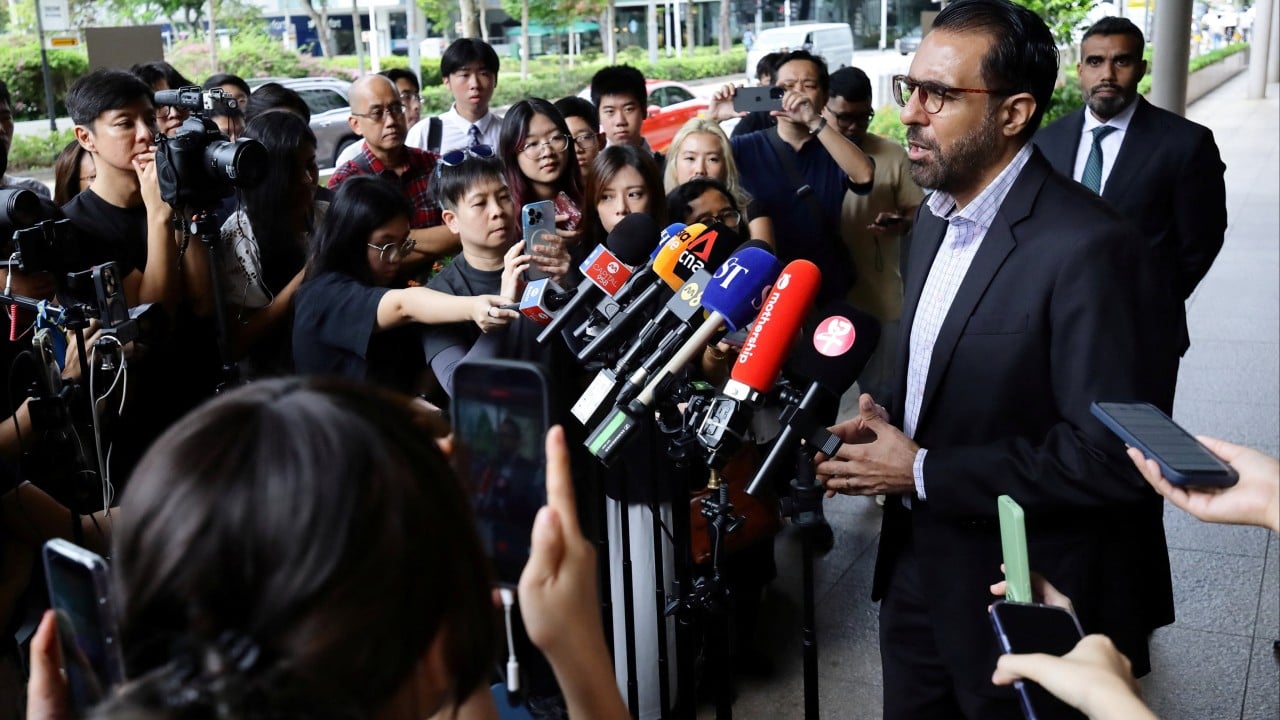
As he walked out of the Supreme Court building, flanked by legal counsel and facing a modest bill for costs and disbursements totaling five thousand eight hundred and eight dollars, the media shouted questions into the humid air. He offered no commentary. No grand political declarations. Just the silence of a chapter closed.
This moment does not rewrite the political ambitions of Singapore overnight, nor does it erase the constituency work or the years spent building an opposition presence. But it alters the coordinates. It reminds every person who steps into public life that the smallest cracks in absolute candor can eventually bring down the entire facade. The legal standing is gone, the title is stripped, and the ledger remains permanently balanced against the cost of an untruth.