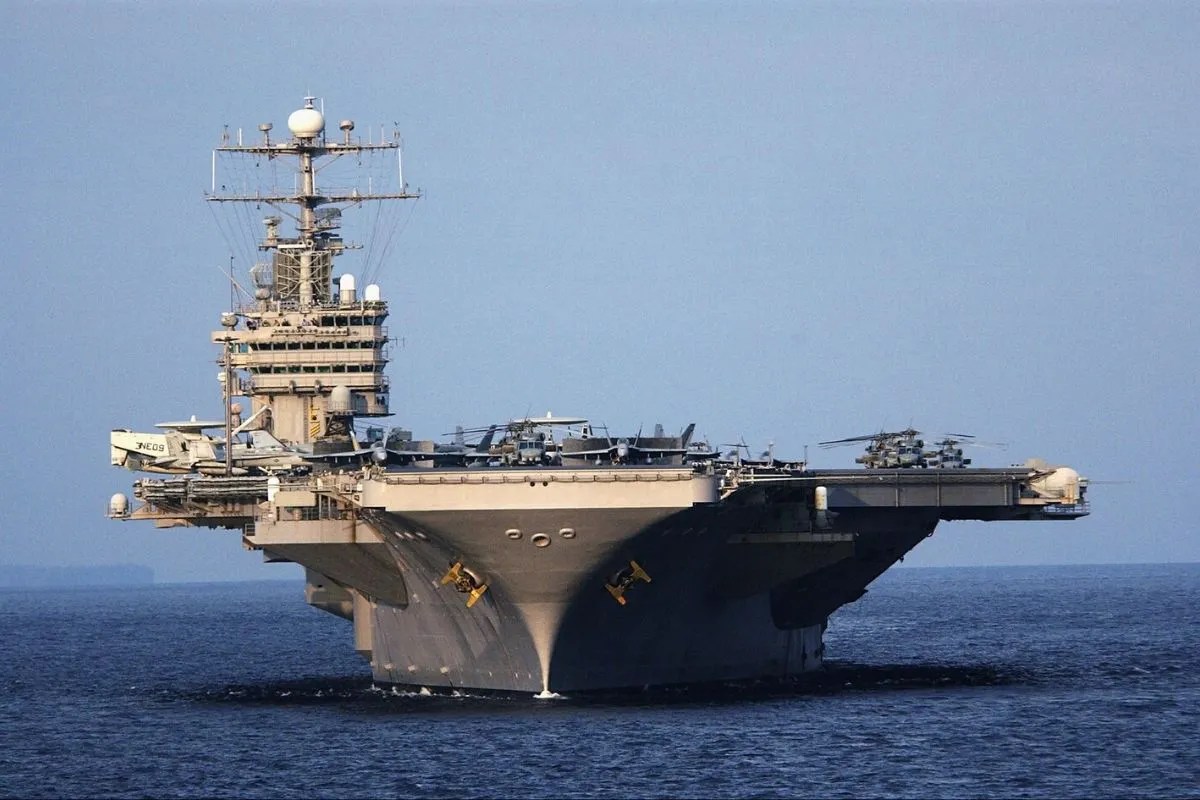
The sea is vast, indifferent, and loud. It roars against the hull of a United States Navy vessel deployed somewhere in the scorching expanse of the Middle East, a relentless metallic thrum that never truly stops. For months on end, sailors live inside that noise. They sleep in cramped racks, breathe recycled air, and stare at radar screens until their eyes blur. But the hardest part of the deployment is never the ocean. It is the silence from the other side of the world.
Twelve hours. That is how long a single shift lasts out here. Twelve hours of standing watch, monitoring systems, troubleshooting electrical anomalies, and pretending that home is a stable place waiting patiently in the rearview mirror.
Then the phone rings. Or the encrypted message drops.
Distance used to mean safety of a sort. When you were half a world away, routine emergencies back home felt manageable—a leaking roof, a car breakdown, a flu bug. You trusted the invisible social contract. You wore the uniform, stood your watch for Uncle Sam, and in exchange, the country you served wrapped an invisible shield of stability around your family.
That contract just snapped.
Imagine standing on a steel deck beneath a brutal desert sun while your father, the anchor of your entire existence, is pulled from his home by immigration enforcement officers.
Let that image settle.
Not a battlefield. Not a foreign theater of war. A living room. The sudden pounding on the door. The flash of badges. The demand for paperwork. The bureaucratic gears grinding into motion, treating a man who built a quiet, law-abiding life as if he were an immediate threat to public safety. He is detained. Handcuffed, perhaps. Flown away or locked behind a chain-link partition while his son is floating thousands of miles away on a floating gray fortress, sworn to defend a flag that suddenly feels heavy, distant, and bitterly ironic.
How do you man your post when your foundation has just been ripped out of the earth?
This is the hidden toll of modern immigration policy colliding with military service. We talk about troops in the abstract. We applaud them in airports, thank them for their service on Veterans Day, and treat their sacrifice as a clean, noble abstraction. We rarely talk about what happens when the geopolitical machinery of the state turns its domestic gaze inward and dismantles the very households that keep our service members anchored.
Consider what happens next in the mind of a young sailor.
The human brain can process physical danger. Training prepares you for incoming missiles, rough seas, and mechanical failures. Adrenaline spikes, muscle memory takes over, and you survive. But psychological helplessness is an entirely different poison. It sits in your chest like lead.
Every time he steps up to the control panel for another grueling twelve-hour watch, the equations in his head are no longer just tactical. They are impossibly fractured. If I am here, monitoring these systems, who is advocating for my father? If I request emergency leave, will it disrupt the mission? If I stay silent, will he be deported before I ever get to say goodbye?
Exhaustion takes on a new texture. It is no longer just physical sleep deprivation. It is moral and emotional erosion.
We have built a system that compartmentalizes human lives into convenient administrative categories. On one side, you have national security infrastructure—aircraft carriers, deployment schedules, strategic deterrence. On the other side, you have strict immigration enforcement protocols—deportation quotas, detention centers, zero-tolerance mandates.
They are treated as completely separate universes.
They are not. They share the same bloodline.
When a military member's family is fractured by sudden deportation actions, the shockwave travels straight through the fiber of military readiness. A distracted sailor is a vulnerable sailor. A grieving sailor whose mind is trapped in a domestic detention facility thousands of miles away cannot give one hundred percent to a combat-ready vessel. The military thrives on cohesion, trust, and absolute psychological buy-in. When the state takes away a soldier's father without warning, that trust fractures.
The uniform starts to feel less like an armor of honor and more like a straitjacket.
Walk through the quarters of any deployed ship, and you will find quiet pockets of invisible grief. Men and women who carry the weight of global superpowers on their shoulders while their personal worlds implode over a patchy Wi-Fi connection. They read choppy text messages from weeping mothers. They stare at photographs of empty chairs at kitchen tables. They realize, with a sickening jolt of clarity, that national borders and bureaucratic laws care very little about who you are defending when your own blood is being labeled an outsider.
We romanticize patriotism as a blind, unthinking devotion. True patriotism is far more complicated. It requires looking at a flawed system and demanding better, not just for oneself, but for the quiet, unsung support networks that make service possible in the first place. No soldier fights alone. They fight because they believe in the safety of the people they left behind.
When that safety is shattered from the inside, the twelve-hour shifts don't just become heavy.
They become impossible.
The ship keeps moving, cutting through the dark water of the Middle East, its radar spinning endlessly into the night. But inside, a young man looks out over the railing at the dark waves, wondering how a country can ask him to protect its borders while it tears down the walls of his own home.