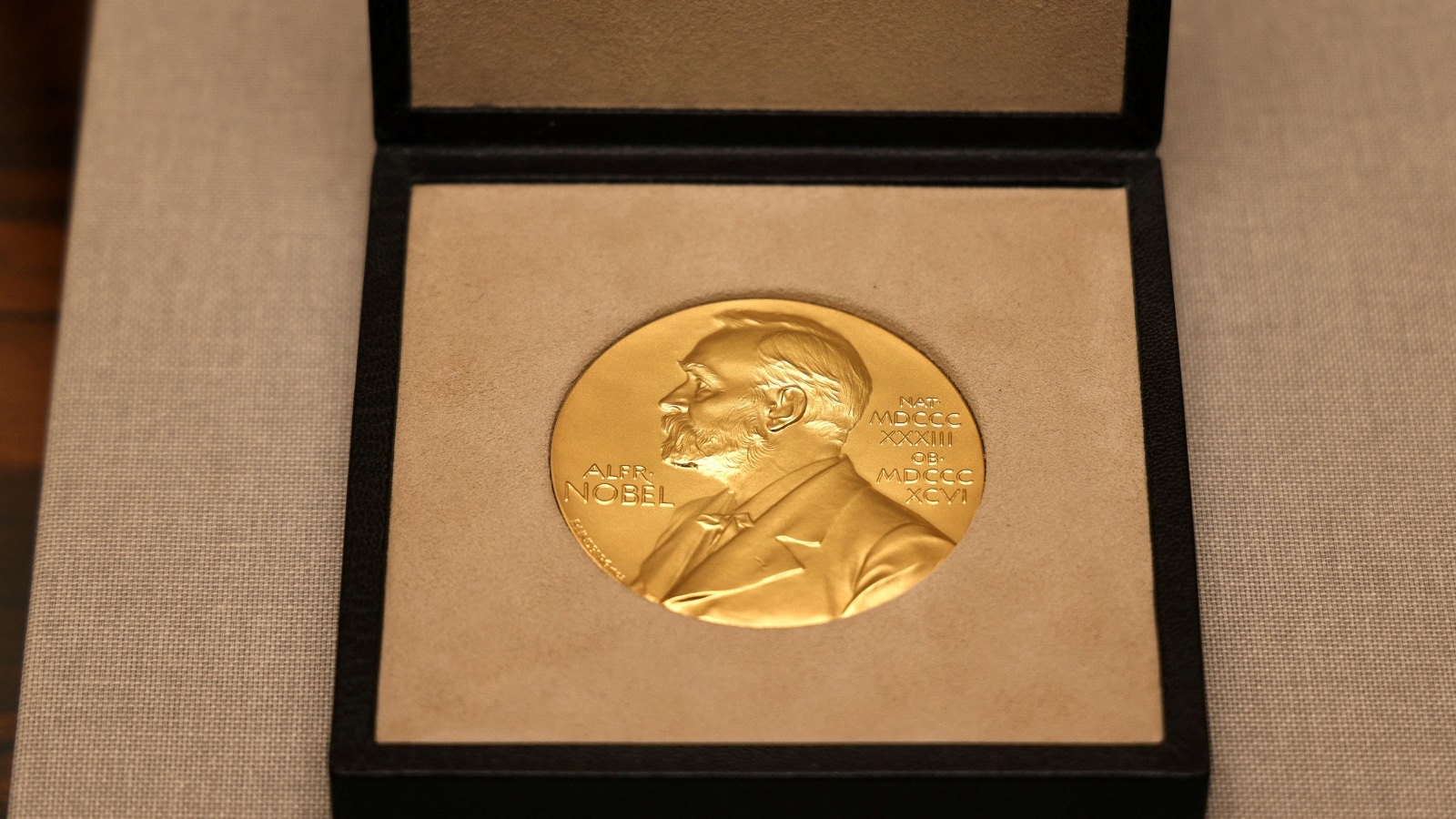
We think of glory as something clean. We imagine a theater draped in velvet, the swell of an orchestra, and a name called out into the quiet air of a Stockholm afternoon. We picture a pristine medal catching the winter light, heavy and bright, handed down like an heirloom from the future.
We forget that the man whose name anchors the entire enterprise spent his life manufacturing the means of our destruction.
Alfred Nobel built an empire on dynamite. He filled tin cans with nitroglycerin and sold them to miners who wanted to tear open the earth, and to generals who wanted to tear open each other. He grew fabulously wealthy on catastrophe. Then, one morning in 1888, he opened the newspaper and read his own obituary. His brother Ludvig had died in Cannes, but a French journalist mistook the death for Alfred's and published a blistering condemnation: The merchant of death is dead.
Imagine reading your own moral post-mortem while your coffee still steams on the table. Imagine realizing that history will remember you not as a man of intellect, but as a butcher who found a better way to package noise and blood.
Nobel panicked. He grabbed a pen and rewrote his will, funneling his vast fortune into a trust that would reward those who confer the greatest benefit on mankind. That is the origin story of the prize. It is not an immaculate conception born of pure philanthropy. It is an act of frantic redemption. It is a man buying an eraser for the slate of his life.
The Silence of the Youngest Winner
Consider what happens when that redemption reaches someone who never asked to carry the weight of the world.
October 2014. A sixteen-year-old girl sits in a chemistry classroom in Birmingham, England, trying to concentrate on organic molecules. Her teacher's voice fades. Her phone begins to vibrate against the grain of the wooden desk. Then it rings. Then the world changes shape.
Malala Yousafzai did not choose her heroism. Two years earlier, a masked gunman had stepped onto a school bus in the Swat Valley, asked "Who is Malala?", and fired a bullet through the left side of her head. She should have died in the dust. Instead, she woke up in a British hospital surrounded by the hum of ventilators and the cold comfort of survival.
When the Nobel Committee awarded her the Peace Prize alongside Kailash Satyarthi, she became the youngest laureate in history. At an age when most teenagers are worrying about algebra tests and weekend parties, Malala was standing at podiums beneath towering chandeliers, addressing world leaders with a terrifying, unblinking clarity.
There is a cruel irony in awarding a child a prize meant for statesmen. It suggests that our institutions have failed so completely that we must rely on the bloodied courage of the young to clean up our messes. When Malala spoke, her voice was steady, but her eyes held the exhaustion of someone who had already lived three lifetimes. The gold medal gleamed against her dress, a heavy metal anchor tethering her forever to a narrative of violence she had merely tried to survive.
The Ghostly Returns
We like our heroes to be present to receive their applause. We want the tuxedo, the bow, the warm handshake from the King of Sweden. But history is messy, and death rarely waits for the committee to finish its deliberations.
Take Marie Curie. She walked into a drafty shed in Paris and coaxed a phantom out of pitchblende. She isolated radium, burning her fingers in the process, boiling down tons of ore until she held a glowing blue vial of the unknown in her palm. She won the prize twice—first in physics in 1903, then in chemistry in 1911. She stood at the absolute zenith of human achievement.
Yet, by the time the second prize arrived, her life had fractured. Her beloved Pierre was gone, crushed beneath the iron wheels of a horse-drawn carriage on a slick Parisian street. Her name had been dragged through the mud by the tabloid press over a private affair. She attended the ceremonies, but she was already carrying the quiet, cellular rot of her own brilliance. The radiation that illuminated her discoveries was slowly destroying her bone marrow. She won the world, and it killed her.
And then there are those who did not even make it to the hospital bed.
Statute 4 of the Nobel Foundation statutes states quite plainly: if a person is awarded a prize and dies before receiving it, the prize may be issued. It sounds like a procedural footnote. It is actually a ghost story.
In 1931, the literature prize went to Erik Axel Karlfeldt. He was dead. He had died five months earlier. The Swedish Academy had actually wanted to give it to him years prior, but he had refused because he was a permanent secretary of the Academy himself—a conflict of interest too glaring even for the early twentieth century. Only when he passed away did the board feel free to bestow the honor posthumously, as if dropping flowers onto a grave they had neglected to water while he stood beside them.
A similar ghost walked the halls in 1961. Dag Hammarskjöld, the Secretary-General of the United Nations, was working tirelessly to broker a ceasefire in the Congo when his DC-6 aircraft plummeted into a dark forest in Northern Rhodesia. The crash killed everyone on board. Weeks later, the Norwegian Nobel Committee announced that Hammarskjöld had won the Peace Prize.
The prize cannot be awarded posthumously unless the recipient dies after the announcement is made. For Hammarskjöld, the timing missed by a fraction of eternity. They gave it to him anyway, bending the unwritten rules of grief to honor a man whose body was already cold.
The Poet Who Liked to Laugh
We imagine Nobel laureates as pale, humorless ascetics who subsist on black coffee and equations. We forget that Alfred Nobel himself wrote bad, melancholic poetry about unrequited love, and that the prize he funded has occasionally fallen into the hands of people who found the entire spectacle absurd.
Consider the literature prize winners who treated the honor with a magnificent, baffling indifference.
Jean-Paul Sartre received word in 1964 that he had won. He did not clear his schedule. He did not buy a tuxedo. He immediately released a public statement rejecting the prize, arguing that a writer must refuse to allow himself to be transformed into an institution. The committee was left standing in the cold, holding a million-franc check that nobody wanted to cash. Sartre understood something fundamental: the moment the establishment pats you on the head and calls you a genius, they have co-opted your rebellion.
Others took the money and bought goats.
We look at the list of laureates as a holy scripture of human progress. We trace the lineage from Röntgen's first X-ray of his wife's hand—where she wept upon seeing her own skeletal fingers, realizing she had seen her own death—to the modern breakthroughs in gene editing and quantum entanglement.
Every single name on that registry is a human being who woke up one day, stared at a problem that everyone else called impossible, and refused to look away. They fought with their spouses, forgot to eat lunch, worried about money, and occasionally wept in dark laboratories when the data refused to cooperate.
The True Ledger
Alfred Nobel wanted to buy his way out of hell. He poured his blood-money into a vault and tasked the wisest minds in Europe with finding the people who made the world slightly less terrible.
Every December, the ceremony repeats. The king smiles. The cameras flash. The orchestra plays a dignified march.
But beneath the velvet and the gold lies the raw, jagged reality of what it costs to move humanity forward. It costs a sixteen-year-old girl her childhood in the Swat Valley. It costs a brilliant Polish woman the very cells of her fingers. It costs a Swedish diplomat his life in an African jungle.
The prize is not a reward for perfection. It is a monument to our persistence. It reminds us that for every barrel of dynamite we invent to tear each other apart, someone somewhere is sitting in a cold room, striking a match against the dark, trying desperately to figure out how to put the pieces back together.