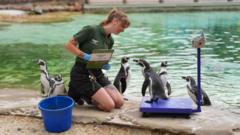
Every January, London Zoo releases the same set of photographs. A keeper stands beside an electronic platform while a giraffe stretches its neck downward for an acacia pellet, or a penguin waddles onto a metal plate for a herring. Public relations teams package these moments as whimsical winter traditions. People share the images online because animals acting like compliant toddlers make for easy digital distraction.
The media treats the annual stocktake as a charming photo opportunity. Beneath the publicity stunt lies a rigorous, high-stakes medical operation driven by strict zoological compliance.
Animal husbandry at this scale requires absolute precision. Zookeepers and veterinary pathologists do not coax a four-hundred-pound Sumatran tiger onto a scale because they want a cute picture for social media. They do it because a two-kilogram weight fluctuation can mean the difference between an early catch on renal failure and a fatal metabolic crash.
The Logistics of Captive Mass Measurement
Measuring wild species in an urban enclosure presents immediate logistical hurdles. You cannot simply ask an endangered Malayan tapir to step on a bathroom scale. Every gram recorded requires months of behavioral conditioning, specialized equipment design, and significant personal risk for the handlers involved.
Positive reinforcement training forms the bedrock of modern zoological medicine. Keepers spend hours using target poles and clickers to teach animals that stepping onto a platform equals a high-value food reward.
Consider the mechanics of weighing a Western lowland gorilla. A standard veterinary scale would be smashed to pieces by a mature silverback flexing his explosive musculature. Instead, facilities embed industrial-grade weighing plates directly into the concrete flooring of indoor dens. These plates must withstand heavy impact, corrosive waste, and frequent washdowns with industrial sanitizers without losing calibration.
The data collected feeds directly into international species management databases like the Zoological Information Management System. When a breeding program coordinator in San Diego needs to know if a female Amur leopard is gaining appropriate mass ahead of a gestation period, they pull exact longitudinal data from London. Without precise mass tracking, modern conservation breeding programs would operate in the dark, risking genetic bottlenecks and medication overdosing.
Pharmacology and the Margin for Error
Dosage calculation in exotic veterinary medicine is an unforgiving discipline. Humans take standardized pharmaceutical doses based on vast clinical trial data compiled across decades. Veterinarians treating exotic species often work with extrapolated guidelines.
A standard anesthetic protocol for a large mammal requires exact weight metrics to calculate milligrams per kilogram of body mass. Underestimate the weight by ten percent, and the animal wakes up mid-procedure on the operating table, endangering veterinary staff. Overestimate the weight, and the heavy sedation depresses respiratory function beyond recovery.
Metabolic tracking acts as the primary early warning system for subclinical disease. Carnivores in managed care often exhibit stoic behavioral traits, masking pain or systemic illness until the condition reaches an advanced stage. A gradual, unexplained drop in muscle mass or fat reserves might be the only outward indicator of chronic dental abscesses, early-stage arthritis, or organ dysfunction.
Dietary formulations change weekly based on these numbers. If an aging Humboldt penguin drops below its optimal winter mass, nutritionists immediately adjust fat content in the daily fish supply. The scale serves as the final arbiter of dietary success or failure.
Moving Past the Publicity Stunt
The public obsession with cute weigh-in photographs masks a serious professional reality. Zoos operate under intense scrutiny regarding animal welfare standards. Regulatory bodies require transparent record-keeping, and mass verification is a mandatory audit metric.
When a facility fails to manage nutritional baselines, the consequences extend far beyond aesthetic neglect. Obesity in captive carnivores leads to joint degeneration, reproductive failure, and shortened lifespans. Conversely, under-conditioning indicates underlying behavioral stress or pathogenic load.
The media cycle treats these events as fleeting entertainment. The veterinary teams executing the protocols view them as vital diagnostics.
Every numerical entry logged on those cold winter mornings represents months of patient training, precise biochemical calculations, and constant vigilance against the slow creep of captive pathology. The giraffe standing on the platform is not performing a trick for the cameras. It is participating in a quiet, calculated defense against extinction.