The air in New Orleans during the French Quarter Festival doesn't just sit; it pulses. It carries the scent of fried oysters, the metallic tang of brass instruments, and the humid breath of a hundred thousand people dancing on cobblestones that have seen centuries of both sin and celebration. For most, this is the soul of the city laid bare. For a man named Brandon Bentley, it was a grid. It was a kill zone.
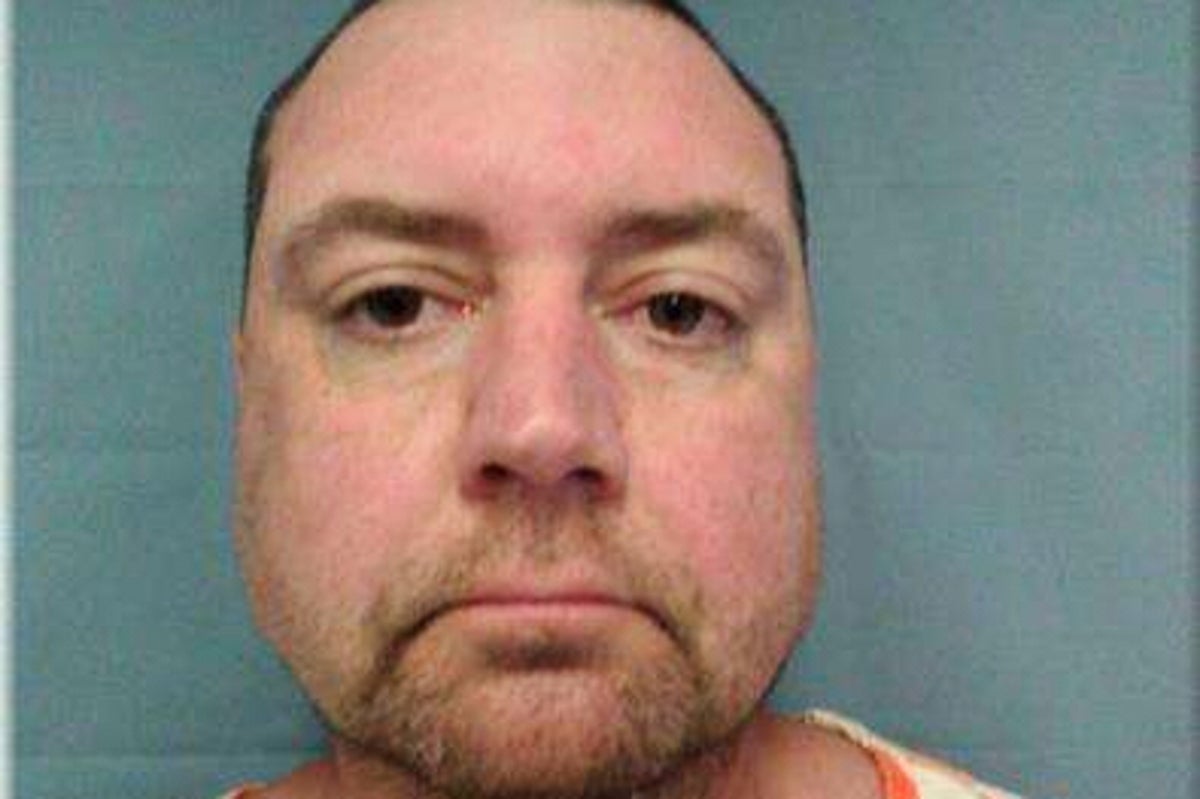
Bentley wasn't a stranger to the mechanics of order. He had worn the badge. He had walked the beat as a Jefferson Parish Sheriff’s deputy. He understood the rhythm of a crowd, the way people move in schools like fish, and how easily that rhythm can be shattered. When the news broke that Bentley had been arrested for plotting a mass shooting at one of the city’s most beloved gatherings, the shock wasn't just about the violence. It was about the betrayal of the eyes that were supposed to be watching over us.
Consider the irony of the thin blue line. We are taught to look toward it for safety. But what happens when the line curves inward? What happens when the training provided by the state to protect the public is repurposed to dismantle it?
The Architecture of a Nightmare
The plan wasn't a vague whim whispered into the void of the internet. It was meticulous. It was cold. According to investigators, Bentley hadn’t just daydreamed about chaos; he had staged the equipment for it. When federal and local authorities moved in, they found a literal arsenal. We aren't talking about a single handgun tucked into a waistband. We are talking about an inventory built for war: assault rifles, high-capacity magazines, and armor-piercing rounds.
Bentley had been conducting reconnaissance. He spent time at the festival sites, not as a reveler, but as a predator measuring distances. He was looking at sightlines. He was calculating the "funnel effect" of the narrow Vieux Carré streets, where a crowd has nowhere to run when the air turns to lead.
Imagine, for a moment, a hypothetical family—let’s call them the Millers. They’ve saved up for six months to bring their kids to the festival. They’re standing near the Woldenberg Park stage, eating Roman Candy, oblivious to the fact that someone with professional tactical training is watching them through a lens, wondering how many of them he can take down before the first siren screams. That is the invisible stake. It isn’t just the loss of life; it’s the permanent theft of our ability to feel safe in a crowd of our neighbors.
The Fractured Mind of the Law
Why does a man who once swore an oath to "serve and protect" decide to become the monster under the bed?
Bentley’s history is a map of red flags that were either missed or ignored until they became a crimson banner. His departure from the Jefferson Parish Sheriff’s Office wasn't a quiet retirement. It was the beginning of a descent. To understand this, we have to look at the psychological toll of the job, but also the darker corners of the modern "tactical" subculture. There is a specific kind of radicalization that happens when a person trained in violence loses their sense of purpose. They still have the skills. They still have the gear. All they lack is a target.
The evidence suggests Bentley had become obsessed with a perceived collapse of society. He wasn't just a disgruntled ex-employee. He was a man who had replaced his badge with a manifesto of malice. He spoke of "cleansing" and "justice," words that have been twisted by domestic extremists to justify the unjustifiable.
When a person with a background in law enforcement turns, the danger is multiplied by an order of magnitude. They know the radio frequencies. They know where the perimeters will be set up. They know the response times. They aren't just fighting the police; they are outthinking them using the same manual.
The Midnight Knock
The arrest didn't happen in a vacuum. It was the result of a rare, high-stakes alignment of intelligence and timing. Usually, these stories end with a "we should have known" after the candles have already been lit at a vigil. This time, the system worked.
Federal agents, tipped off by a combination of digital footprints and community reports, intercepted Bentley before the first trumpet sounded on Jackson Square. They found him in a state of readiness that sent chills through the veteran officers on the scene. He had even prepared "go-bags" and tactical vests, items that suggest he didn't plan on being a casualty; he planned on being a survivor of his own massacre.
But the real problem lies elsewhere. It’s not just about one man in a room full of guns. It’s about the ease with which that room was filled.
Louisiana’s gun laws are some of the most permissive in the country. To a man like Bentley, the legal landscape was a playground. He didn't have to skulk through dark alleys to find his weapons. He could buy them with the same ease one might buy a lawnmower. The fact that a man with a documented history of instability could amass a stockpile capable of leveling a city block is a failure of policy, yes, but it’s also a failure of our collective imagination. We keep expecting the "lone wolf" to look like a stranger, when often, he looks like the guy who used to hand out tickets on the highway.
The Weight of the Unseen
What is the cost of a tragedy that never happened?
It’s hard to measure relief. You can't photograph a bullet that wasn't fired. You can't interview a victim who is still alive and eating a po-boy three blocks away, unaware that their life was ever in the balance. But the trauma ripples out nonetheless.
For the officers who arrested their former colleague, there is a specific kind of grief. It’s the realization that the person standing next to you in the roll-call room might be harboring a darkness that mocks everything you stand for. It erodes the trust that is the only thing keeping a city like New Orleans from sliding into the river.
There is a metaphor here for the state of our modern world. We are living in a time where the threats are internal. The walls we built to keep the "bad guys" out are useless when the bad guy already has the keys to the gate. Bentley didn't have to scale a fence; he was already inside.
The Silence After the Brass
As the festival season continues, the music will play on. The tuba will oom-pah, and the singers will belt out blues songs that have survived hurricanes and plagues. But there is a new shadow over the festivities. It’s the shadow of the man who watched from the periphery.
We like to think of peace as a natural state, but it’s actually a fragile, manufactured thing. It’s held together by the thin thread of the social contract—the idea that we won't hurt each other, and that those with the power to hurt us will use it for our benefit. Brandon Bentley didn't just try to kill people; he tried to snap that thread.
He is currently sitting in a cell, facing a litany of charges that will likely ensure he never sees the sun on Bourbon Street again. But the arsenal he built still exists somewhere in an evidence locker, a cold reminder of how close the city came to a different kind of history.
The next time you find yourself in a crowd, feeling the heat of the people around you and the rhythm of the drums in your chest, look at the officers on the corner. They are there to watch the shadows. And we are left to hope that they are watching each other just as closely as they are watching us.
The music is loud, the drinks are cold, and for now, the streets belong to the dancers, not the marksman. But the cobblestones remember the weight of the boots that didn't come to join the party. They remember the silence that almost was.