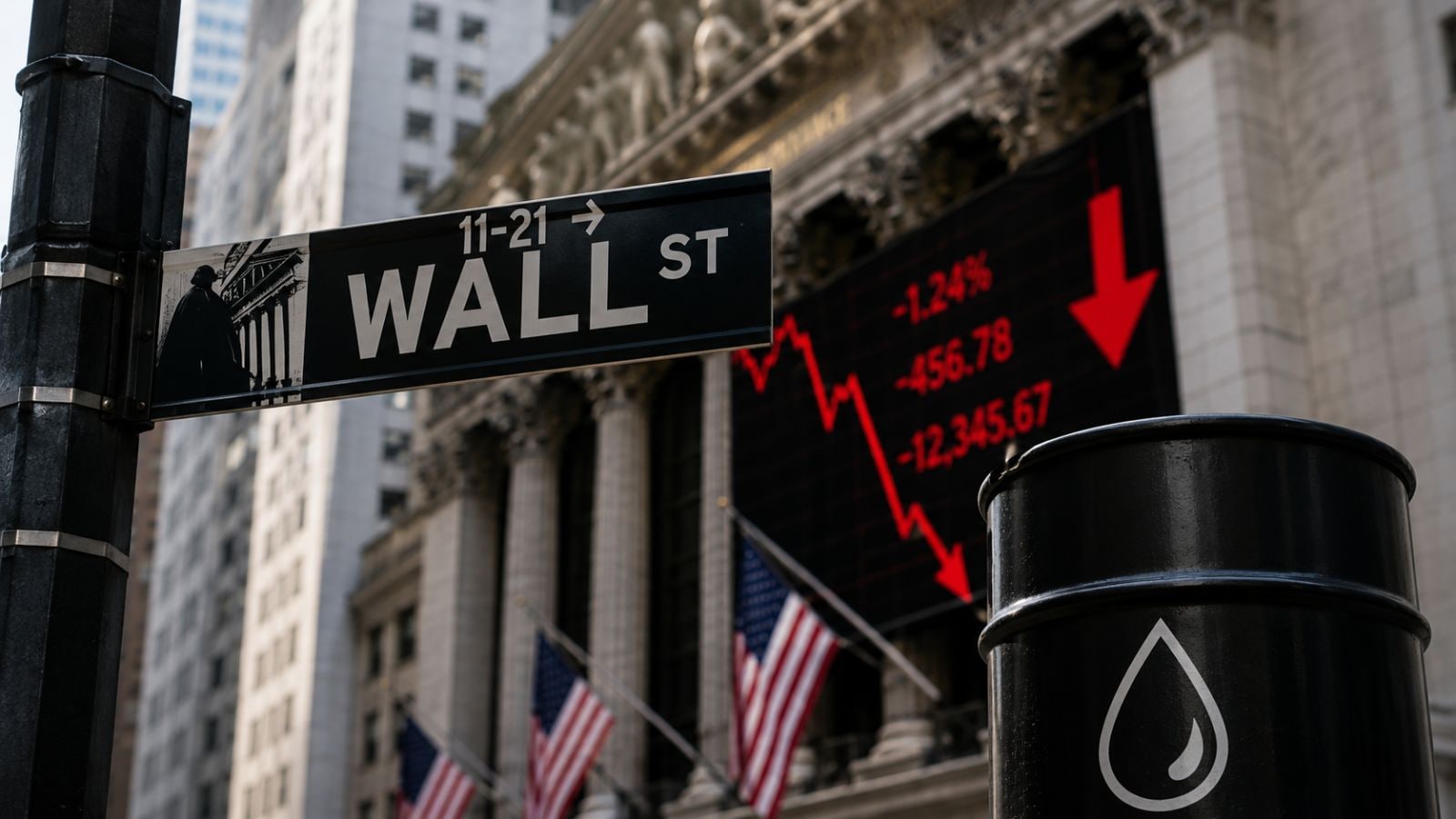
Financial journalism is lazy. Every time the Dow Jones Industrial Average rips higher by a thousand points the morning after an election, cable news anchors and click-hungry headlines trot out the exact same narrative. They look at the ballot results, look at the green numbers on the Bloomberg terminal, and draw a straight, simplistic line between the two.
"Investors love the Democrats' midterm sweep."
It is an easy story to sell. It fits neatly into a push notification. And it is completely detached from how institutional capital actually allocates risk.
If you believe that hedge fund managers, pension allocators, and algorithmic trading desks woke up the morning after the midterms and aggressively bought equities because they suddenly fell in love with progressive tax policy or expanded regulatory oversight, you do not understand how Wall Street functions. Institutional money does not have political allegiances. It has a mandate to price risk. And the single greatest risk to corporate valuations is not a specific political party; it is legislative surprises.
The Anatomy of a Post-Election Relief Rally
To understand why the market explodes upward after a major midterm shift, you have to look at the mechanics of modern market structure rather than political ideology. Days before any major election, institutional desks hedge their books. They buy put options. They raise cash. They reduce gross exposure because the binary outcome of an election creates a massive spike in implied volatility.
Think of the options market like a coiled spring. When millions of dollars pour into downside protection—specifically through vehicles like the CBOE Volatility Index (VIX)—market makers have to delta-hedge those positions by selling underlying equities or index futures. This creates an artificial downward pressure on stock prices leading up to election day.
The moment the votes are counted and a clear winner emerges, that binary event is over. The uncertainty vanishes.
What happens next has nothing to do with political affection and everything to do with plumbing. Volatility collapses. The VIX gets crushed. Market makers who were short volatility and holding short stock hedges are suddenly forced to unwind those positions. They have to buy back the futures and equities they shorted to stay neutral.
This phenomenon, known as a vanna and charm rally, forces billions of dollars of mechanical buying into the market within hours. The Dow surges 1,000 points not because portfolio managers are celebrating a Democratic sweep, but because the cost of hedging against the unknown just dropped to zero.
I have sat on institutional desks during four different election cycles and watched traders who despise the incoming administration's platform smash the buy button at 9:31 AM. They aren't voting with their capital. They are front-running the volatility crush. If you confuse mechanical short-covering with ideological endorsement, you will lose your shirt trying to trade political headlines.
Why Gridlock Is the Real Bullish Catalyst
When a midterm election flips a chamber of Congress or creates a split government, the media frames it as a victory for the winning party. Wall Street frames it as the death of major legislation.
Capital markets hate change. A massive corporate tax hike is bad for earnings per share, sure, but a massive, unpredictable overhaul of healthcare, energy, or antitrust law is worse because analysts cannot model it into a discounted cash flow sheet. When one party controls the White House, the Senate, and the House of Representatives, the tail risk of radical legislative swings is high.
A midterm sweep that breaks single-party control—or narrows margins to the point where passing controversial bills becomes impossible—locks in the status quo.
- Tax rates remain predictable. Corporate CFOs know exact effective tax rates for the next two years, allowing them to greenlight share buybacks and capital expenditures.
- Regulatory threats stall. Major overhauls to banking, tech, or energy face immediate congressional roadblocks and budget constraints.
- Fiscal spending hits a ceiling. Without unified control, massive new spending packages require bipartisan compromise, which usually means they get watered down or die in committee.
Historically, the S&P 500 has delivered its strongest annualized returns under a divided government. According to long-term market data analyzed by firms like LPL Financial and CFRA Research, periods where a Democratic president faces a Republican or split Congress—or vice versa—consistently outperform periods of unified single-party rule.
Wall Street isn't cheering for blue or red. Wall Street is cheering for gridlock. A paralyzed Washington is a predictable Washington, and predictability is the oxygen of equity valuations.
The Bond Market Tells a Different Story
If you want to know what the smartest money in the world actually thinks about a political outcome, stop looking at the Dow Jones Industrial Average. The Dow is a price-weighted relic of 30 stocks that routinely gets pushed around by retail sentiment and high-priced components like UnitedHealth or Goldman Sachs.
Look at the Treasury market instead.
Bond traders do not care about party slogans. They care about inflation, deficit spending, and Federal Reserve policy. Imagine a scenario where a political party sweeps the midterms on a promise of massive fiscal stimulus, infrastructure spending, or sweeping tax cuts. Equity traders might initially bid up stocks on the sugar high of short-term demand. Meanwhile, the 10-year Treasury yield will spike aggressively as bond traders price in higher inflation, increased Treasury issuance to fund the deficit, and a more hawkish Federal Reserve.
When yields rise too fast, the discount rate applied to future corporate earnings goes up, eventually crushing high-multiple growth stocks.
In almost every post-midterm rally where the headlines scream about Wall Street loving the winners, a closer look at fixed-income flows reveals a much more cynical reality. Treasury yields often flatten or drop slightly immediately following a split-government result because fixed-income desks realize the legislative gridlock will prevent runaway deficit spending. The equity rally is merely a secondary reaction to the bond market breathing a sigh of relief that Congress won't be able to pass another multi-trillion-dollar spending bill.
Dismantling the "Presidential Cycle" Myth
Retail investors love simple rules of thumb. One of the most persistent myths in finance is the Presidential Election Cycle Theory, popularized decades ago by Yale Hirsch, founder of the Stock Trader's Almanac. The theory suggests that stock market returns follow a predictable four-year pattern, with the weakest performance occurring in the first two years of a presidential term and the strongest performance happening in the third year—right after the midterm elections.
Data backs up the historical pattern: the twelve months following a midterm election have overwhelmingly produced positive returns for the S&P 500 going back to World War II.
However, attributing this winning streak to the brilliance of the newly elected midterm politicians is a textbook case of confusing correlation with causation.
The post-midterm rally happens for two structural reasons that have nothing to do with who won the seats:
- The End of Fiscal Tightening: Presidents typically push their most painful, market-unfriendly policies—like tax increases or strict regulatory shifts—during their first two years in office when their political capital is highest. By year three, the focus shifts entirely to re-election, meaning the administration pivots toward stimulus and market-friendly rhetoric.
- Monetary Policy Lag: The Federal Reserve frequently adjusts interest rates early in a presidential cycle to cool off an overheating economy, creating a drag on equities during year two. By the time the midterms roll around, those rate hikes have usually peaked, and the market begins pricing in future rate cuts.
Blaming or crediting the midterm winners for the ensuing rally is like crediting a rooster for the sunrise. The macro cycle was already turning; the election just happened to sit on the calendar at the exact moment the tide came in.
The Hidden Downside of Betting on Political Gridlock
Before you liquidate your cash reserves and go all-in every time Washington deadlocks, you need to recognize the severe risks of this thesis. Relying on political paralysis as an investment strategy has a massive blind spot: crisis response.
Gridlock is fantastic when the economy is humming along at 2.5% GDP growth and inflation is tame. It keeps politicians from breaking things that already work.
Gridlock is catastrophic when a genuine black swan event hits the financial system.
If a major regional banking crisis erupts, a sovereign debt shock hits Europe, or a geopolitical conflict severs global supply chains, the market suddenly demands immediate, unified fiscal action. When Congress is bitterly divided and locked in partisan warfare, passing an emergency liquidity package or raising the debt ceiling turns into a high-stakes game of chicken.
During the 2011 debt ceiling standoff—a direct result of a newly divided government following the 2010 midterms—Standard & Poor's downgraded the United States' sovereign credit rating for the first time in history. The S&P 500 plunged nearly 17% in a matter of weeks. The very paralysis that investors celebrated nine months earlier became a wrecking ball for their portfolios.
Furthermore, when legislative avenues are blocked, presidents do not simply pack up and go home. They govern by executive order and regulatory agency enforcement. Even if Democrats or Republicans cannot pass a single bill through a divided Congress, the Department of Justice, the Federal Trade Commission, the SEC, and the EPA can still wage aggressive regulatory campaigns against specific sectors. Tech giants, energy producers, and healthcare conglomerates can still see their margins compressed by rule-making, regardless of who holds the gavel on Capitol Hill.
How to Actually Position Capital Around Elections
Stop trading the narrative. If you are making portfolio decisions based on whether a headline says Wall Street loves Democrats or Republicans, you are providing exit liquidity for algorithms that stripped the emotion out of political trading twenty years ago.
Here is how professional allocators actually play election cycles:
1. Fade the Pre-Election Panic
When implied volatility spikes in October ahead of a major vote, stop buying expensive downside protection. The insurance is already overpriced. Instead, look for quality companies with strong free cash flow that have been dragged down solely by broad index hedging. Selling cash-secured puts into peak election fear allows you to collect inflated premiums from panicked retail traders.
2. Separate Headline Risk from Earnings Reality
Politicians campaign on extreme rhetoric because outrage drives turnout. Once in office, the realities of narrow margins, lobbying pressure, and procedural bottlenecks like the Senate filibuster water down 90% of campaign promises. When a sector sells off sharply because a winning candidate threatened price controls or windfall taxes, check the math. Unless the party holds a filibuster-proof majority in the Senate, those threats rarely become law.
3. Follow the Appropriations, Not the Speeches
Ignore floor speeches and cable news interviews. Track actual committee assignments and defense/infrastructure appropriations. Regardless of which party sweeps an election, defense spending, semiconductor subsidies, and grid modernization tend to receive quiet, bipartisan backing. Capital flows where the government checks actually clear, not where the cameras are pointed.
4. Watch the Currency and Credit Spreads
If a post-election stock rally is truly built on economic optimism, high-yield corporate credit spreads will tighten alongside rising equities. If the Dow is up 1,000 points while junk bond spreads are widening and the US dollar is surging violently against emerging market currencies, the equity rally is a head-fake driven by short-covering. Trust the credit market over the stock market every single time.
Stop Reading the Financial Press Like a Sports Page
The fundamental flaw in mainstream market coverage is that it treats investing like a spectator sport with clear heroes and villains. Journalists need a protagonist for every price movement. If the market goes up, someone must have done something right. If it goes down, someone is to blame.
Markets are cold, indifferent discounting mechanisms. They do not care about social progress, conservative values, or campaign slogans. When the Dow surges 1,000 points after a midterm election, Wall Street is not throwing a party for the winners. It is simply taking off its hedges, celebrating the fact that politicians will be too busy fighting each other to pass new laws, and getting back to the business of extracting yield.
Turn off the political commentary, look at the volatility curve, and never mistake a mechanical short squeeze for a vote of confidence.