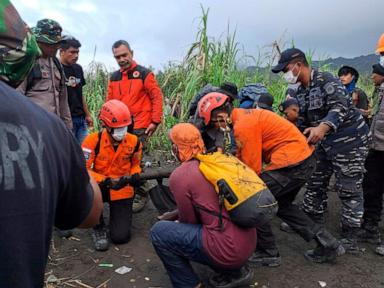
Mount Marapi’s recent eruptive cycle, resulting in the recovery of three hikers’ bodies from its upper slopes, highlights a failure in the predictive and operational risk frameworks governing Indonesian volcanology. The incident is not a random tragedy but the result of a quantifiable intersection between phreatic activity, human exposure time, and the physical constraints of high-altitude extraction. To understand why hikers continue to die on active peaks, one must deconstruct the mechanical properties of an eruption and the logistical bottlenecks that dictate the success or failure of Search and Rescue (SAR) operations in volcanic terrain.
The Triad of Volcanic Fatality
Fatality in volcanic environments is rarely a monolithic event. It is the product of three distinct mechanical variables that determine the survivability of an ascent.
- Thermal Pulse and Ballistic Impact: During a phreatic eruption—driven by steam rather than magma—the primary killers are lithic fragments ejected at high velocities. These "volcanic bombs" follow parabolic trajectories, making the crater rim a high-probability impact zone. The hikers recovered near the summit were positioned within this lethal radius, where the kinetic energy of falling rock exceeds the protective capacity of standard trekking gear.
- Atmospheric Toxicity and Hypoxia: Eruptions instantly displace breathable air with a mixture of sulfur dioxide ($SO_2$), carbon dioxide ($CO_2$), and volcanic ash. Ash is not soft; it is pulverized volcanic glass with a high silica content. Once inhaled, it reacts with lung moisture to create a cement-like slurry, inducing rapid respiratory failure. In Marapi’s case, the proximity of the bodies to the vents suggests that gas concentration levels likely reached lethal thresholds within seconds of the initial blast.
- The Visibility Vacuum: Volcanic plumes create instantaneous "white-out" or "gray-out" conditions. This eliminates the possibility of self-evacuation for anyone within the immediate tephra fall zone. The spatial disorientation caused by thick ash deposits masks trail markers, leading survivors into drainage gullies where toxic gases often settle due to their density relative to oxygen.
Logistical Friction in Extraction Operations
The recovery of the three hikers from Mount Marapi was delayed not by a lack of will, but by the physical laws of the mountain environment. Extraction logic is governed by a decaying efficiency curve where the difficulty of the terrain increases exponentially with the weight of the payload.
The Vertical Bottleneck
Evacuating a body from a 2,891-meter peak involves a specialized set of physics. A standard recovery team requires a 6-to-1 ratio: six rescuers for every one casualty. On Marapi’s steep, ash-slicked incline, this ratio increases. The footing becomes non-Newtonian; volcanic ash mixed with rain behaves like quicksand, absorbing the energy of each step and doubling the caloric output required for ascent and descent.
Aerial Limitations
Helicopter intervention is frequently cited as a solution, yet it is often functionally impossible in active volcanic zones. Three factors create this constraint:
- Turbine Erosion: Volcanic ash is highly abrasive. If ingested into a jet turbine, it melts and coats the internal components, causing total engine failure.
- Density Altitude: High temperatures near the vent, combined with elevation, reduce air density, stripping the aircraft of necessary lift.
- Thermo-convective Turbulence: The heat from the eruption creates localized updrafts and unpredictable wind shears that make hovering near the crater rim a high-risk maneuver for the flight crew.
The Asymmetry of Indonesian Volcano Monitoring
Indonesia sits atop the Sunda Arc, a subduction zone that creates a high density of active volcanoes. The monitoring of these peaks relies on the Center for Volcanology and Geological Hazard Mitigation (PVMBG), which utilizes a four-tier alert system. However, a structural flaw exists in how this data is communicated to and acted upon by the trekking community.
Mount Marapi has been on Level II (Waspada/Alert) since 2011. This status signifies that an eruption could occur at any time, yet it is often treated as a "static" risk by local authorities and tour operators. This creates a "normalization of deviance," where a constant state of alert leads to a decrease in perceived danger. The gap between the scientific measurement of seismic tremors and the administrative enforcement of "no-go" zones represents a critical failure in the risk-management chain.
Predicting phreatic eruptions—those caused by water hitting hot rock—is notoriously difficult. Unlike magmatic eruptions, which are preceded by significant ground swelling and long-period seismic events, phreatic blasts can be near-instantaneous. The pressure builds in hydrothermal pockets until the overlying rock fails. For a hiker, the warning time is measured in seconds, not hours.
The Cost Function of Recovery
The recovery of the final three hikers involved over 200 personnel, including members of Basarnas (the national search and rescue agency), the military, and local volunteers. The economic and human cost of these operations is significant.
- Risk Transfer: When hikers enter a restricted zone, they effectively transfer the risk of their decisions onto the recovery teams. Every hour a rescuer spends in the "Red Zone" increases their cumulative exposure to secondary eruptions, slope instability, and toxic gas pockets.
- Operational Fatigue: SAR missions in volcanic ash are high-attrition events. The equipment—radios, respirators, and clothing—is rapidly degraded by the acidic and abrasive environment. This necessitates a deep supply chain and frequent rotation of personnel, which slows the recovery timeline.
Structural Requirements for Future Mitigation
To prevent the recurrence of the Marapi fatalities, the strategy must shift from reactive recovery to proactive exclusion and technological hardening.
Automated Exclusion Zones
Physical barriers are impossible on a mountain, but geofencing represents a viable technological substitute. Integrating GPS-based alert systems into hiker registration processes could trigger immediate, loud-speaker or mobile-phone warnings if a trekker crosses into high-risk coordinates during periods of increased seismicity.
Hardened Shelters
On high-traffic peaks like Marapi, the construction of "volcanic bunkers"—reinforced concrete structures partially buried in the mountainside—could provide a survival pocket against ballistic impacts and thermal pulses. These are common on Japanese volcanoes like Mount Ontake but are currently absent in the Indonesian trekking infrastructure.
The Enforcement Protocol
The most significant bottleneck remains the legal enforcement of trekking bans. The economic incentive for local guides and regional tourism often conflicts with the safety mandates issued by the PVMBG. A centralized, digital registry for hikers that is hard-linked to the current seismic status of the mountain would remove the subjective element from the decision-to-climb process.
The recovery of the three hikers marks the end of the tactical phase of this event. The strategic challenge now lies in addressing the systemic complacency that allows human density to remain high in zones where the geological probability of a lethal event is a mathematical certainty. Future safety depends on acknowledging that on a Level II volcano, the margin between a successful trek and a recovery operation is a single, unpredictable steam blast.
The immediate mandate for regional authorities is the implementation of a zero-tolerance exclusion radius around the crater rim, backed by physical checkpoints at trailheads and a mandatory, standardized briefing on phreatic blast dynamics for all permit holders. Failure to decouple the local tourism economy from high-risk summit access will ensure that the next eruption follows the same fatal trajectory.