Most people walking the chalk paths above the English Channel have zero idea what sits directly beneath their boots. They stare out toward France on a clear day, snap a photo of the ferry terminal, and head back to their cars. That's a massive mistake.
Hidden deep inside the White Cliffs of Dover lies one of the most important command centers of the twentieth century, and parts of it have finally opened to the public. Known historically as the Dumpy level—or more broadly as the secret wartime tunnels beneath Dover Castle—this subterranean network acted as the literal "brain" of Allied defense and naval operations during World War II. While the upper levels of the Secret Wartime Tunnels have drawn crowds for years, the deeper, restricted technical chambers where intelligence officers plotted naval movements and coordinated Operation Dynamo are what actually kept Britain from collapsing in 1940.
If you're planning a trip to Kent, or if you just care about how real military intelligence worked before computers existed, you need to understand what happened down in the chalk. It wasn't glamorous. It was damp, deafening, and claustrophobic.
Why Dover's Cliffs Became Britain's Underground Nervous System
Geography dictated everything in 1939. Dover sits just 21 miles from Calais, making the Strait of Dover the narrowest point of the English Channel and the absolute frontline of any German invasion.
Above ground, Dover Castle looked imposing with its medieval keep, but stone walls meant nothing against Luftwaffe bombers and cross-Channel heavy artillery stationed on the French coast. The British military needed a headquarters that could survive direct hits from high-explosive shells while maintaining uninterrupted communication with ships at sea, fighter squadrons in the air, and Whitehall in London.
The solution was already partially there. During the Napoleonic Wars in the late 18th and early 19th centuries, military engineers had carved barracks tunnels into the soft Cretaceous chalk to house thousands of troops. When World War II broke out, Royal Engineers expanded those old chambers downward and outward, digging new levels deeper into the cliff face.
They created a stacked subterranean city:
- Annexe Level functioned as a fully equipped underground hospital and dressing station, complete with operating theaters and wards for wounded soldiers evacuated from the beaches.
- Casemate Level served as the primary operational hub, where Vice-Admiral Bertram Ramsay set up his headquarters in May 1940.
- Dumpy Level sat even deeper, housing the massive telephone exchanges, teleprinter rooms, and cryptographic machinery that earned the complex its "brain" nickname.
- Bastion Point provided observation posts cut straight through the cliff face, giving spotters a direct line of sight across the Channel.
This wasn't just a bomb shelter. It was a live tactical switchboard. Every radar blip picked up by the Chain Home stations along the coast, every submarine sighting, and every distress call from the Channel routed straight into these chalk rooms.
Inside the Dumpy Level and the Communications Brain
The newly accessible sections of the complex peel back the curtain on how information moved during a crisis. Honestly, when you stand in the communication rooms today, the first thing that hits you isn't the history—it's the sheer physical scale of the analog infrastructure required to fight a modern war.
Before fiber optics or satellite links, command and control meant miles of heavy copper cable, banks of mechanical switches, and dozens of operators working in brutal heat. Women from the Women's Royal Naval Service (WRNS, commonly called Wrens) and the Auxiliary Territorial Service (ATS) staffed the switchboards and teleprinters around the clock. They worked in shifts inside cramped rooms where the ventilation system constantly hummed just to keep carbon dioxide levels safe and prevent the machinery from overheating.
Think about the pressure in those rooms. A single misrouted message or a delayed teleprinter strip could send a destroyer into a minefield or leave a convoy exposed to E-boat attacks.
The Dynamo Room and the Dunkirk Miracle
You can't talk about Dover's cliff tunnels without talking about May 1940. When the British Expeditionary Force and hundreds of thousands of French and Belgian troops became trapped on the beaches of Dunkirk, Vice-Admiral Bertram Ramsay ran the entire evacuation—Operation Dynamo—from a small, sparse room inside the Dover cliffs.
Military planners initially hoped to rescue maybe 45,000 men over two days. Over nine days, Ramsay and his staff coordinated an improvised armada of naval vessels, merchant ships, fishing trawlers, and private pleasure craft to pull 338,226 Allied soldiers off the beaches.
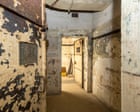
Visitors looking into the Dynamo Room often expect a massive, Hollywood-style war room with glowing glass maps and towering balconies. The reality is way more humble. It's a narrow chalk chamber with a low ceiling, painted cream and green to fight off the oppressive feeling of being buried alive. Ramsay worked at a basic wooden desk, tracking ship movements on paper charts while German shells literally shook dust from the ceiling above him.
What English Heritage Actually Opened to the Public
For decades, large sections of the lower levels remained off-limits due to structural instability, water ingress, and the presence of fragile postwar infrastructure. During the Cold War, the British government actually repurposed parts of the Dover tunnels as a Regional Seat of Government—a nuclear bunker designed to house regional administrators in the event of a Soviet strike.
When the Cold War ended and the site was decommissioned in the 1990s, massive amounts of electrical gear, ventilation ducts, and asbestos had to be carefully assessed before anyone could safely walk through. Conservation teams led by English Heritage spent years stabilizing the chalk walls, installing safe lighting, and preserving the original wartime paintwork without stripping away the authentic grit of the space.
The expanded public access lets visitors step into spaces that were previously locked behind steel blast doors:
- The Deep Telephone Exchange where hundreds of lines connected Dover directly to the Admiralty in London and coastal batteries across Kent.
- The Radar Plot and Filter Rooms where raw signals from early radar towers were translated into actionable intercept coordinates for RAF fighter pilots.
- The Generator Chambers that kept the entire underground brain running even when German bombing raids knocked out the local civilian power grid.
- The Living Quarters where exhausted signalers and officers tried to grab four hours of sleep on triple-stacked metal bunks while diesel engines vibrated through the floor.
Seeing these rooms in their preserved state changes how you view the war. Museums usually clean everything up, put artifacts behind thick glass, and sanitize the environment. Down in the cliffs, you still see the grease stains near the machinery, the hand-painted directional signs on the chalk walls, and the rust on the heavy blast doors.
What Most Tourists Get Completely Wrong About the Tunnels
I've watched plenty of people rush through the Dover Castle grounds, treating the tunnels like a quick 20-minute side quest before grabbing lunch. That approach ruins the experience. Because the site is layered across different centuries, visitors constantly confuse what they're looking at.
Here are the three biggest misconceptions people bring into the cliffs:
Misconception 1 The Tunnels Were Built From Scratch for WWII
People assume the British Army arrived in 1939 with massive boring machines and carved the whole thing out in six months. They didn't. The 1939 engineers piggybacked heavily on the Napoleonic tunnels dug between 1797 and 1805. You can actually spot the difference in the brickwork and the ceiling arches as you walk from one section to the next. The Napoleonic sections have wider, vaulted brick linings designed to move infantry companies quickly, while the World War II extensions are tighter, reinforced with corrugated steel sheeting, and packed with overhead cable trays.
Misconception 2 Only Soldiers Worked Underground
If you picture a bunch of grizzled infantrymen with rifles hanging out in the tunnels, you're picturing the wrong war. The "brain" bunker was overwhelmingly staffed by specialists, technicians, and young women in the WRNS and ATS. Many of these women were barely out of their teens, recruited for their typing speed, mathematical aptitude, or ability to stay calm under extreme stress. They didn't carry weapons, yet their work on the plotting tables and cipher machines was arguably more lethal to the German war effort than an artillery battery.
Misconception 3 The Bunker Went Quiet After D-Day
Once Allied forces landed in Normandy in June 1944, Dover stopped being the primary staging point for cross-Channel amphibious assaults, so people assume the tunnels were abandoned. Not even close. Through late 1944 and early 1945, the intelligence units inside the cliffs shifted focus to tracking V-1 flying bombs and V-2 rockets launched from occupied Europe toward London, while also coordinating massive logistical supply lines feeding the Allied advance across France and Belgium.
How to Plan Your Visit Without Getting Stuck in the Crowds
Dover Castle is huge, and the underground tunnels have strict capacity limits because of narrow corridors and air circulation rules. If you just show up at noon on a Saturday in July expecting to walk straight into the lower levels, you're going to spend half your afternoon standing in a queue on a windy cliffside.
Book your tickets online directly through English Heritage at least two weeks ahead of your trip, and grab the earliest morning entry slot available—usually 10:00 AM. Head straight down to the Secret Wartime Tunnels the second you pass through the main gate. Most visitors stop at the Great Tower (the medieval keep) first because it's the biggest building in sight, which means the tunnels stay remarkably quiet for the first 45 minutes of the day.
Dress for the environment, regardless of what the weather looks like outside. Even if it's 75°F and sunny on the cliffs above, the chalk tunnels hover around a steady, damp 52°F (11°C) year-round. Bring a light waterproof jacket or a heavy sweater, and wear shoes with actual grip. Moisture condenses on the concrete floors and metal stairways, making smooth-soled sneakers surprisingly slick.
Give yourself at least three full hours for the underground sections alone if you want to read the technical displays, listen to the archival audio recordings of the Wrens who worked the switchboards, and inspect the newly opened communication chambers properly. Once you come back up into the daylight, walk out to the cliff edge near the Admiralty Lookout—standing right above the chalk roof of the bunker while looking across the Channel toward France connects every map, radar plot, and telephone cable you just saw underground to the real geography that made it all necessary.


