Media coverage of seismic events follows a script written in 1950.
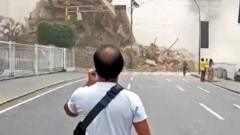
A fault line slips near Caracas. The ground shakes. Camera feeds capture panicked crowds sprinting out of high-rises and pouring into the avenues. Within hours, standard news outlets publish breathless headlines about the "moment quakes hit Venezuela" and laud the quick reflexes of citizens rushing onto the streets. Also making news recently: The Mechanics of Nuclear Verification Strategic Volatility in IAEA Iran Inspections.
They call it survival instinct. I call it a failure of public education that will eventually get thousands of people killed.
The lazy consensus driving global breaking news is simple: inside bad, outside good. If the ground moves, you run. It sounds logical, it looks dramatic on video, and it is fundamentally wrong. More information on this are covered by TIME.
Having analyzed structural failure points and disaster response protocols for over fifteen years, I can tell you that the scramble for the exit is often the most dangerous choice you can make during a major seismic event. The media treats these panicked mass evacuations as a triumph of human survival. In reality, they are showcasing a collective gamble against physics—one where the odds are heavily stacked against the pedestrian.
The Illusion of the Safe Street
Let’s dismantle the premise that the street is a sanctuary.
When a structural engineer looks at a modern urban center like Caracas or any major metropolitan area, they do not see a flat open space. They see a vertical canyon of glass, aluminum, masonry, and high-voltage infrastructure.
When a quake strikes, buildings rarely collapse instantly like a house of cards. Modern building codes, even poorly enforced ones, usually prevent total structural failure in the initial seconds. What fails immediately are the non-structural elements.
- Façade Shedding: Glass windows, decorative concrete panels, and air conditioning units detach from the upper stories.
- The Terminal Velocity Factor: A single piece of ornamental masonry falling from the twelfth floor of an apartment building transforms into a lethal missile by the time it reaches the pavement.
- Infrastructure Collapse: Streetlights, overhead power lines, and commercial signage are not designed to withstand severe lateral displacement. They come down directly onto the sidewalks.
If you are inside a building, you have a ceiling over your head. If you run into the street during the shaking, you are walking directly into a firing squad of falling debris.
Data from major global seismic events, from the 1994 Northridge quake to the more recent shocks across Latin America and the Mediterranean, consistently reveals a grim pattern: a massive percentage of severe trauma injuries occur not to people trapped in collapsed buildings, but to people hit by falling objects while attempting to flee the structure.
The Fatal Physics of the Stairwell
Imagine a scenario where you are on the fourth floor of an office building when the shaking starts. Your instinct says "get out." You run for the stairwell. You have just entered the deadliest zone in the entire architectural blueprint.
Stairwells are structurally distinct from the rest of a building. They are rigid vertical shafts designed to offer fire protection, but during an earthquake, they behave differently than the surrounding floors. As the building sways to absorb the kinetic energy of the seismic waves, the stairwell shaft experiences immense torsional strain.
They crack. They separate from the main floor slabs. They compress.
Trying to navigate a descending concrete staircase while the earth is moving laterally at several feet per second is physically impossible. You will be thrown down the stairs. Even worse, if a structural failure occurs, stairwells are notorious for pancaking independently of the main building frame.
The media loves the narrative of the brave escape down the dark stairwell. The structural data says you just walked into a trash compactor.
Drop, Cover, and Hold On Is Not a Suggestion
The international standard for seismic safety is not a polite recommendation; it is an absolute operational requirement.
- Drop: Get down on your hands and knees before the earthquake knocks you down. This positions you to move if needed and lowers your center of gravity.
- Cover: Take shelter under a sturdy desk or table to shield yourself from falling plaster, light fixtures, and glass.
- Hold On: Grip the leg of your shelter with one hand and protect your head and neck with the other. If the shelter moves, move with it.
The downside to this approach? It requires nerves of steel. It forces you to sit tight while the world screams around you. It feels passive. Humans hate feeling passive during a crisis. We want to run, we want to act, we want to fight the invisible force shaking our walls.
But running during a quake is an illusion of control. You cannot outrun a seismic wave that travels through the earth at miles per second.
The Myth of the "Triangle of Life"
We cannot discuss earthquake misconceptions without executing the "Triangle of Life" theory. This viral piece of pseudo-science claims that instead of getting under furniture, you should lay down next to large objects (like sofas or refrigerators), because when the ceiling falls, it will crush the object but leave a triangular void next to it where you can survive.
This theory is built on a profound misunderstanding of modern engineering. It assumes that every building collapse is a total structural pancake where roofs drop flat onto the floor.
First, total collapses are rare in modern buildings. Second, heavy objects like refrigerators and large sofas do not stay static during a major quake; they slide, tip, and turn into massive internal battering rams. If you lie down next to a heavy appliance, there is a high probability that the appliance will roll over and crush you long before the ceiling ever moves.
Organizations like the Red Cross, the USGS, and structural engineering associations worldwide have explicitly condemned this theory. Yet, every time an article covers a Venezuelan tremor or an Asian quake, the comment sections fill with people parroting this debunked survival hack. It is dangerous misinformation wrapped in a comforting narrative of secret knowledge.
Realism Over Rhetoric: The Urban Reality
Let's be brutally honest about the trade-offs. If you stay inside, can a building collapse on you? Yes. If the structure is ancient, unreinforced adobe, or a makeshift settlement on a steep hillside—common in parts of Caracas—the structural integrity is drastically lower than a steel-reinforced concrete tower.
In low-quality, informal settlements, getting outside to an open space if it is immediately accessible within two seconds can sometimes make sense. But for anyone inside a engineered commercial or residential building, the calculus completely flips. The interior remains vastly safer than the perimeter zone outside the front door.
The next time a major news platform publishes dramatic footage of crowds running through the streets of a shaking city, do not look at it as a blueprint for survival. Look at it for what it truly is: a terrifying display of luck overcoming terrible strategy.
Stop running. Find a table. Protect your head. Let the building do the work it was engineered to do.