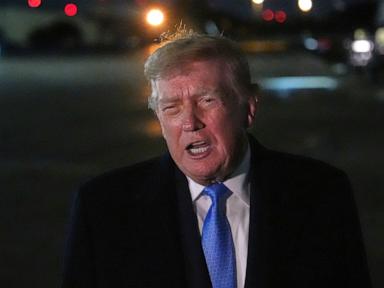
Silverware clinks against fine china in a quiet room somewhere in Florida. Outside, the world argues on Twitter about silicon chips, job losses, and superintelligence. Inside, the noise vanishes. There is only the low murmur of voices, the scent of expensive wine, and a plate of food cooling while two very different definitions of tomorrow collide across a white tablecloth.
Donald Trump sits at one end. Dario Amodei, the soft-spoken physicist who helped build Anthropic and then walked away from OpenAI because he feared the velocity of his own creation, sits at the other.
This is not a casual supper. It is an inflection point.
For months, the national conversation around artificial intelligence has swung wildly between two paralyzing extremes. On one side, tech evangelists promise a frictionless utopia where disease is cured by breakfast and poverty is solved by lunch. On the other side, doomsayers whisper of autonomous weapons, mass economic displacement, and a future where human agency is quietly written out of the source code.
Reality, as usual, is messier. It smells like roasted beef and sounds like cautious men trying to figure out who holds the steering wheel when the vehicle starts driving itself.
Consider what happens when power meets acceleration.
When you spend your life studying quantum mechanics, you develop a healthy respect for tipping points. You learn that systems remain stable until, suddenly, they do not. Amodei understands this math better than most. His company built Claude not merely to write poems or debug code, but to reason with an eerie, human-like cadence. Yet, unlike some of his peers in the valley who treat safety as an afterthought, he has spent years warning that building minds smarter than our own without a robust safety architecture is akin to playing Russian roulette with civilization.
Trump understands a different kind of math. It is the math of leverage, borders, and national dominance. To a former president whose entire political identity is built on keeping America first, artificial intelligence is not a philosophical parlor game. It is the ultimate geopolitical chess match. If the United States does not command the high ground of computation, someone else will. China is watching. The venture capitalists are pushing. The energy grids are groaning under the sheer electricity demand of data centers that consume as much power as small cities.
So they break bread.
The dinner invitation is an acknowledgment that the era of tech companies operating as garage-startup dreamers is over. Silicon Valley has outgrown its hoodies. It is now a sovereign state of mind, wielding budgets larger than small nations and datasets that map the collective psychology of eight billion people. When the political establishment sits down with the architects of generative models, they are not just discussing tax policy or antitrust regulations. They are negotiating the terms of human relevance.
Step back for a moment and look at the broader pattern. History is a graveyard of technologies that humans welcomed with open arms before realizing they had invited wolves into the fold. The printing press unlocked literacy, but it also fueled decades of religious war through unchecked propaganda. The internal combustion engine conquered distance, but it rewrote the climate of a planet.
Artificial intelligence is an amplification of both impulses. It is the most powerful tool humanity has ever forged, and it comes with an astonishingly steep entrance fee.
The tension in that dining room stems from a fundamental disagreement over who gets to define safety. Is safety a speed bump designed by bureaucrats to protect legacy industries, or is it an essential anchor to keep a runaway train from derailing?
Anthropic has long positioned itself as the cautious player in the room, emphasizing constitutional AI and alignment research—efforts to bake human values directly into the mathematics of the model. Critics call it a clever marketing ploy, a way to pull up the ladder behind them by advocating for regulations that only multi-billion-dollar labs can afford to comply with. Supporters call it moral responsibility.
The political calculus adds another layer of friction. A government focused on deregulation and American supremacy looks at safety guardrails with suspicion. If American labs are bogged down by ethical reviews, foreign competitors will seize the crown. Yet, a total free-for-all carries risks that even the most hardened political strategist cannot ignore. When algorithms can generate convincing deepfakes of candidates, manipulate financial markets in milliseconds, or assist in designing novel pathogens, the stakes shift from economic competition to national survival.
This is the invisible architecture of our current moment.
We live between the speed of software and the inertia of human institutions. Software moves at the speed of light, doubling in capability every few months. Politics moves at the speed of a rusted bureaucracy, constrained by elections, compromises, and human stubbornness.
When Trump engages with the leaders of this revolution, he is attempting to bridge that terrifying chasm. He wants to ensure the machine works for the country, and more importantly, that the country works for him and his vision of power. Amodei wants to ensure the machine does not inadvertently unmake the world while trying to optimize a spreadsheet.
They are looking at the same horizon, but they see completely different ghosts.
There is a quiet tragedy in how ordinary people experience this shift. Most of us are not sitting at white tablecloth dinners in Florida. We are sitting at kitchen tables, staring at glowing screens, wondering if the job we spent twenty years mastering will exist next year. We watch the headlines about billions of dollars pouring into data centers while local schools struggle to buy textbooks. We feel the subtle, creeping vertigo of a world changing too fast for memory to keep up.
The debate over artificial intelligence is frequently framed as a technical dispute about parameters, weights, and neural networks. It is not. It is a spiritual crisis disguised as a software update. It forces us to ask an ancient, uncomfortable question in a brand-new dialect: What makes us irreplaceable?
If a machine can write a better essay, diagnose a rare disease with higher accuracy, compose a symphony that moves you to tears, and negotiate a geopolitical treaty without losing its temper, what is left for the human being at the end of the line?
The answer cannot be found in a press release. It certainly cannot be found in the talking points of Silicon Valley marketing teams or the rally speeches of populist politicians.
It is forged in moments like that private dinner. Behind closed doors, away from the cameras, two forces—raw political will and unyielding technological momentum—are trying to find a language they both understand.
The meal ends. The plates are cleared. The bill is paid. But the question remains suspended in the air long after the car doors slam and the motorcades dissolve into the night.
We built the oracle. Now we have to live with what it tells us.